

Greetings to new readers and welcome all to the latest edition of the weekly ASEAN Wonk BulletBrief! If you haven’t already, you can upgrade to a paid subscription for $5 a month/$50 a year below to receive full posts by inserting your email address and then selecting an annual or monthly option. You can visit this page for more on pricing for institutions, groups as well as discounts. For current paid subscribers, please make sure you’re hitting the “view entire message” prompt if it comes up at the end of a post to see the full version.
For this iteration of ASEAN Wonk BulletBrief, we are looking at:
Assessing the geopolitical and geoeconomic significance of Thailand’s coming foreign policy signposts and wider regional and global implications;
Mapping of regional developments, including twin maritime exercises and Global South voyages;
Charting evolving geopolitical, geoeconomic and security trends such as new foreign aid strategy; EV policy pivot and coming AI framework;
Tracking and analysis of industry developments and quantitative indicators including outer space boost; nuclear radar; new sectoral vision and more;
And much more! ICYMI, check out our ASEAN Wonk review earlier this week of a new book on China’s engineering quest and US competition futures.
This Week’s WonkCount: 2,138 words (~10 minutes)


Twin Maritime Exercises; Global South Voyages & More


New Middle Power Diplomacy; ASEAN Scoping Challenge & Fractured Conflict Dynamics
“These powers, unlike yesterday’s Non-Aligned Movement, are not content merely to retreat from the growing polarization of the world or stay out of the way of the United States and China…these countries are forming issue-based and broader partnerships to address problems,” argues the introduction of a new series of case studies on middle powers produced by Harvard University. This studies include over a dozen countries such as Brazil, India, Indonesia, Kazakhstan, Nigeria, Saudi Arabia, Singapore, South Africa, Turkey, the United Arab Emirates and Vietnam (link).

“To operationalize the ASEAN Outlook on the Indo-Pacific (AOIP) effectively, ASEAN must, therefore, confront and clarify its geographical scope,“ notes a commentary over at The Jakarta Post on ASEAN’s role after the latest round of regional summitry. The piece notes tensions between different conceptions within the grouping including AOIP and the ASEAN Community Vision 2045 (link).

“China’s growing role as powerbroker has curbed but not stopped the fighting, while entrenching a fragmented order,” warns a new report released by the International Crisis Group on Shan politics and conflict in post-coup Myanmar. The report includes several recommendations, including for foreign donors such as extending support for efforts to build local administrations as well as local media and Shan civil society — including women-led organizations — which can provide a counterbalance by giving communities a stronger voice (link).
Map Depicting Shan State And Bordering Countries


Taiwan Caution Amid Coming Thailand Foreign Policy Signposts
What’s Behind It
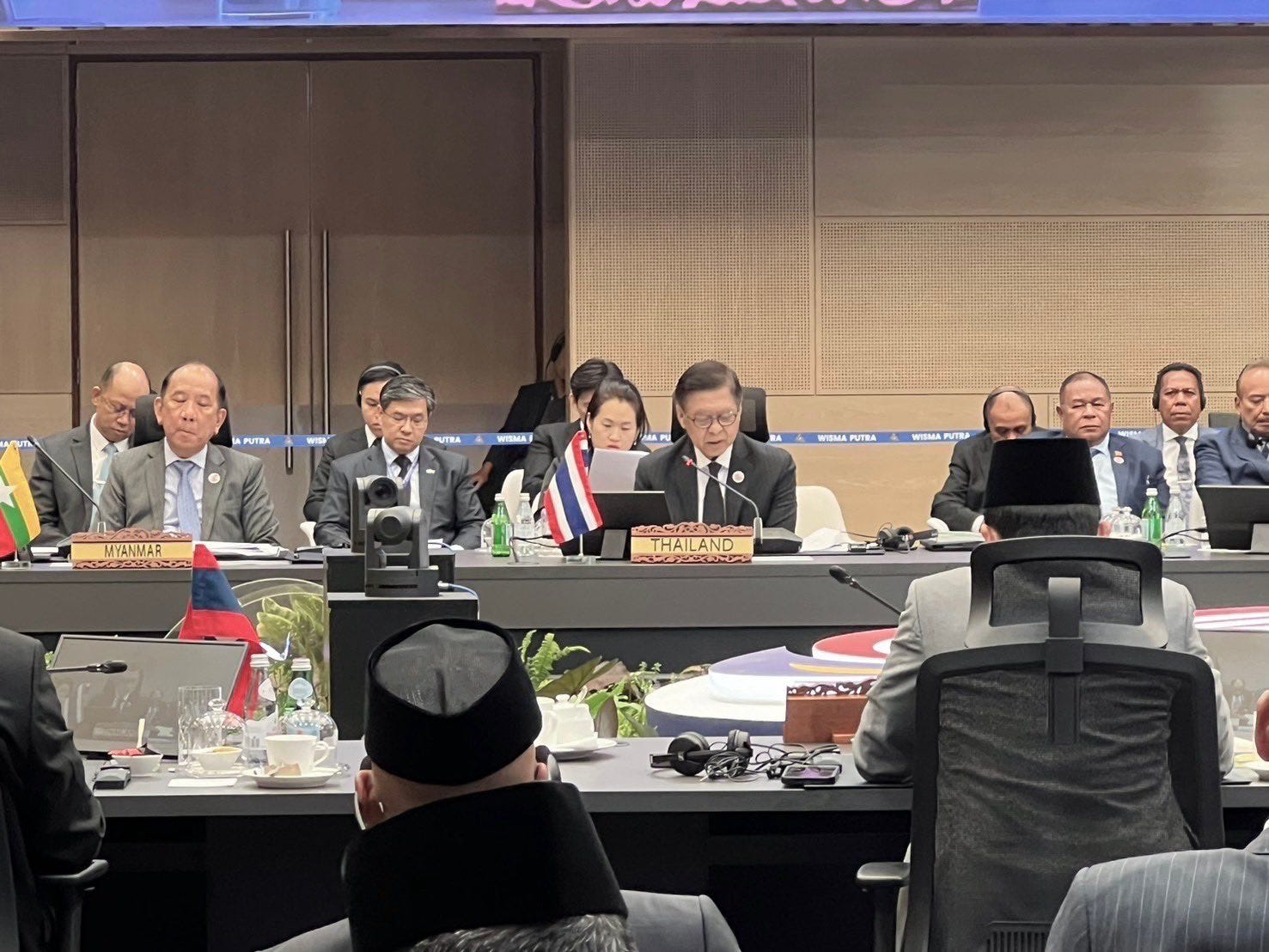
A clarification from Thailand’s government on its position with respect to the recent China-Japan dispute on Taiwan comes following an engagement by its active foreign minister and ahead of upcoming summit meetings it is set to host in the next few weeks1. One Thai diplomat told ASEAN Wonk that December will serve as an “important month” in the country’s efforts to increase visibility on the “global radar screen” in areas such as navigating shifting U.S.-China ties and giant scam networks. This is despite the reality that periodic crises such as recent floods have resulted in some trip cancelations and Thailand’s public diplomacy has been weighed down by managing the border dispute with Cambodia, as evidenced by a new round of barb-trading by both sides over the weekend on allegations surrounding a Chinese man involved in a landmine incident2.
Recent Indo-Pacific Geopolitical and Geoeconomic Developments Amid Upcoming Thailand Foreign Policy-Related Engagements

The coming engagements are also being carefully watched due to their broader effects on the Indo-Pacific and the globe more generally. A case in point is Foreign Minister Sihasak Phuangketkeow’s visit to India that just kicked off, which comes just before Myanmar’s upcoming elections and after New Delhi and Bangkok upgraded their relationship to the status of a strategic partnership earlier this year during the visit of Indian Prime Minister Narendra Modi for the summit of the BIMSTEC subregional meeting3. Thailand has also positioned itself — not without its share of risks — as playing a diplomatic role in addressing concerns by Southeast Asian partners like India, the United States and South Korea on giant scam networks centered in mainland Southeast Asia, despite maintaining that the root causes of scam activities themselves lie principally outside of its own borders. Noting that this was a principal concern raised in the latest round of diplomatic meetings with partners in ASEAN, APEC and even the European Union, Sihasak recently revealed that a senior Thai police official had put the backlog in scam-related cases at “one million cases…in Thailand alone.”4
Why It Matters
The engagements also pointed to priority datapoints to watch with wider regional and global implications (see originally generated ASEAN Wonk table below on notable areas to monitor and additional specifics. Paying subscribers can read on for more on what to expect and future implications in the rest of the “Why It Matters” and “Where It’s Headed” sections, along with paid-only sections of the newsletter as usual).
Future Policy Datapoints to Watch, Alongside Key Foreign Policy Areas and Select Major Priorities
