

A new book by a sitting president reveals future pathways for new world order power rebalancing, with implications for the Global South, the Indo-Pacific, Southeast Asia and beyond.
WonkCount: 1,658 words (~7 minutes)

Review: New World Order, Triangle of Power and Asia Futures
Context
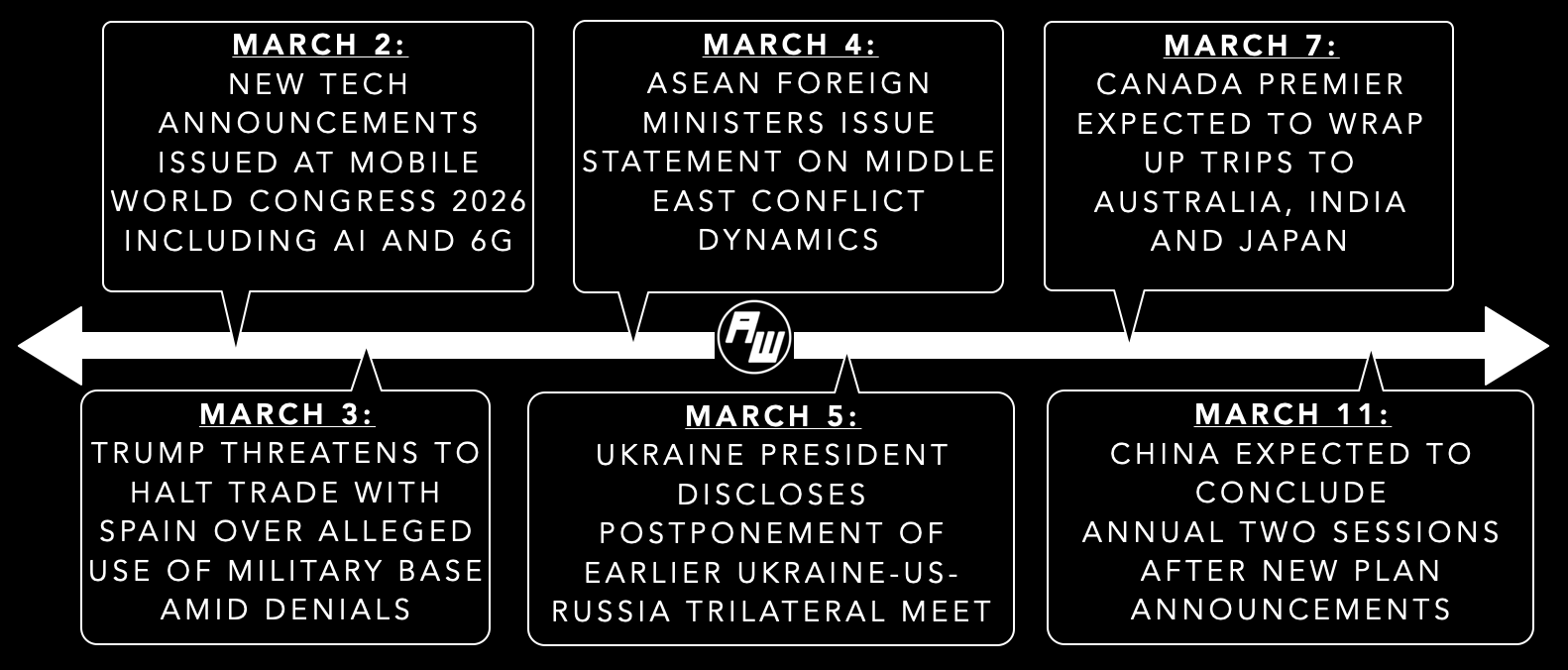
“[T]he current conflict is another example of the failure of the international order,” Canada Prime Minister Mark Carney noted regarding ongoing Middle East conflict earlier this week while on an Indo-Pacific swing across Australia, India and Japan1. The statements coming out of key Indo-Pacific capitals over the past few days including Southeast Asia have echoed concerns about the deteriorating situation following initial strikes on Iran by Israel and the United States and Tehran’s subsequent retaliation, even if they have not been as blunt as Carney’s statements around a “post-rupture” world that consumed headlines in Davos earlier this year2. More fundamentally, this is also just the latest datapoint in a global conversation grappling with the shifting world order and how policymakers can shape it.
Select Key Recent Global and Regional Geopolitical and Geoeconomic Developments
A new book The Triangle of Power by Finland President Alexander Stubb reveals future pathways for new world order power rebalancing, with implications for the Global South, the Indo-Pacific, Southeast Asia and beyond3. In doing so, it adds to a series of books released within the past year that have attempted to shed light on shifting global geopolitics and geoeconomics and Asia’s evolving role in it, including ones by former officials we have recently reviewed here on ASEAN Wonk such as Bilahari Kausikan’s The Myth of the Asian Century and Edward Fishman’s Chokepoints. The Triangle of Power issues a new blueprint for policymakers across competing power centers to both avoid conflict and forge selective cooperation on core geoeconomic and geopolitical challenges. Along the way, Stubb also recounts revealing personal reflections of global interest on topics ranging from the cutting of undersea cables to a call he received to “f*** the Global South.”4 “We cannot sit this new contest out…we need to engage with our colleagues from all corners of the globe,” the book argues before going on to define what global futures may look like5.
Analysis
The book also highlights key datapoints to watch on potential futures (see originally-generated ASEAN Wonk table below for a summary of important contours. Paying subscribers can also read the rest of the “Analysis” section and “Implications” section looking at how these dynamics play out in the future).
Order Scenarios, Major Outlook Features and Future Policy Implications to Watch
