

A new book by a former top diplomat questions the utility of the “Asian Century”
prism in forecasting regional futures in Southeast Asia and beyond in a more complex global environment and contested geopolitical and geoeconomic visions.
WonkCount: 1,557 words (~6 minutes)

Review: Myth of the Asian Century in Regional Futures?

Context
“[P]eople have been saying that the next century will be the century of Asia and the Pacific, as if that were sure to be the case. I disagree with this view,” Chinese leader Deng Xiaoping noted to Indian Prime Minister Rajiv Gandhi in 1988 in one of the earliest prominent leader exchanges on the “Asian Century”1. Today, nearly four decades later, the contested term continues to be utilized by policymakers and analysts with various futures in mind, be it sobering geoeconomic projections of the region’s remarkable growth trajectory to date amid intensified competition or a China-led geopolitical order that understates the role of powers like the United States2.
Select Key Recent Geopolitical and Geoeconomic Developments in the Indo-Pacific
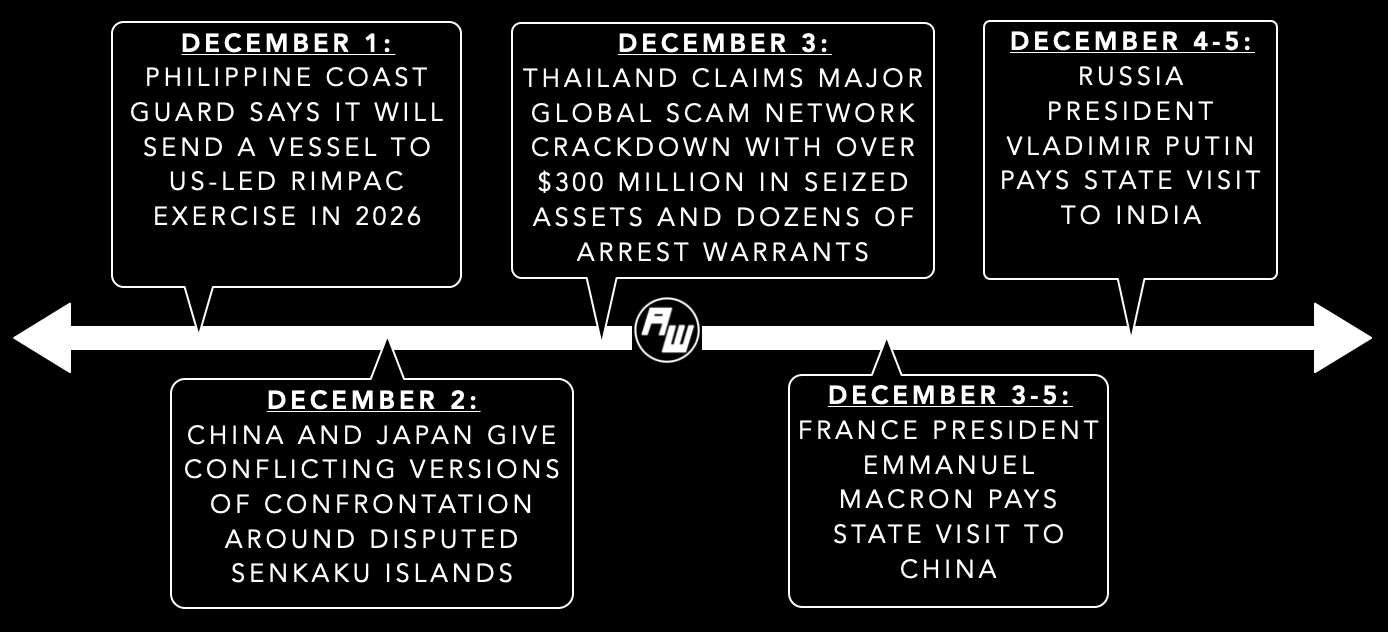
A new book The Myth of the Asian Century by former top Singapore diplomat Bilahari Kausikan challenges the utility of the “Asian Century” frame as a way to analyze regional futures3. In doing so, it adds a more centrist take to the spectrum of views on Asia’s future some of which can verge on either triumphalism or cynicism, and attempts to transcend concepts in other books we have reviewed here on ASEAN Wonk such as nonalignment as well as multipolarity4. Revisiting a concept that the author first explored in a thesis dating back to the early 1970s, The Myth of the Asian Century argues that the “Asian Century” frame needs to be viewed from the perspective of centuries of evolving and heavily geopoliticized conceptions of an extremely diverse region — from a more Eurocentric prism during the age of colonialism to contemporary debates around the Indo-Pacific concept. “[T]he idea of an ‘Asian century’ is not particularly useful in advancing understanding of Asia’s place in the world and its implications,” the book notes before laying out regional futures5.
Analysis
The book also highlights key datapoints to watch in Asia’s evolution and prospects along with potential regional futures (see originally-generated ASEAN Wonk table below for a summary of important contours. Paying subscribers can also read the rest of the “Analysis” section and “Implications” section looking at how these dynamics play out in the future).
Key Datapoints to Watch, Potential Regional Futures and Major Actors in Asia’s Evolution and Prospects
