

A new and rare insider look by an ex-official reveals how geoeconomic tools are utilized in age of economic warfare and future prospects in regions like the Indo-Pacific in the coming years.
WonkCount: 1,538 words (~6 minutes)

Review: Chokepoints, Geoeconomic War and Indo-Pacific Lens

Context
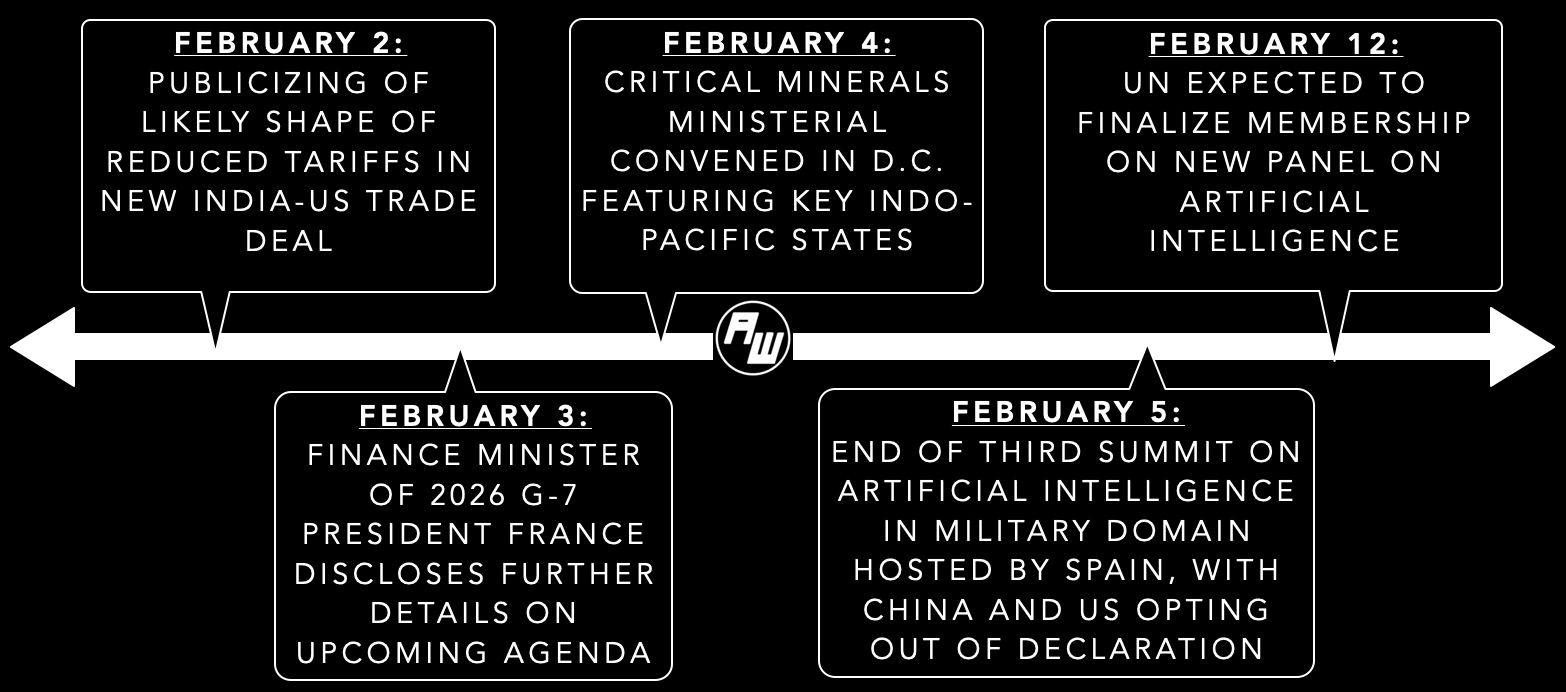
“Diversity only comes from a collective action,” Japan’s state minister for foreign affairs noted in opening remarks at the critical minerals ministerial convened this week in Washington, D.C.1 The ministerial engagement — featuring other key Indo-Pacific delegations as well including four from Southeast Asia in Malaysia, the Philippines, Singapore and Thailand — was just the latest sectoral datapoint revealing how geoeconomic tools of statecraft are being increasingly and more explicitly leveraged by governments for geopolitical ends2. This is occurring as sectoral developments continue to play out both among Indo-Pacific economies as well as across global fora such as the G-7 and United Nations (see snapshot graphic below).
Select Key Recent Global and Indo-Pacific Geoeconomic Developments and Datapoints
A new book Chokepoints by ex-U.S. official Edward Fishman provides a rare insider look at how modern-day geoeconomic tools of statecraft are utilized and how they will shape the world and regions like the Indo-Pacific in the coming years3. In doing so, it adds to a series of books over the past few years that focus on evolving geoeconomic dynamics in areas like critical minerals and payment systems, including The War Below by journalist Ernest Scheyder and Underground Empire by scholars Abraham L. Newman and Henry Farrell4. Chokepoints sheds light on what it terms as the “invisible infrastructure” great powers are utilizing to in a new “Age of Economic Warfare” beyond the battlefield — with impacts far more consequential than tariff weaponization or dollar-dominance challenge fears in institutions like the BRICS. “In the years to come, fighting and winning economic wars will only get harder,” the book argues before delving into future dynamics and recommendations5.
Analysis
The book also highlights key datapoints to watch on potential futures (see originally-generated ASEAN Wonk table below for a summary of important contours. Paying subscribers can also read the rest of the “Analysis” section and “Implications” section looking at how these dynamics play out in the future).
Future Datapoints to Watch, Along with Critical Domains and Priority Cooperation Areas
