

Greetings to new readers and welcome all to the latest edition of the weekly ASEAN Wonk BulletBrief! If you haven’t already, you can upgrade to a paid subscription for $5 a month/$50 a year below to receive full posts by inserting your email address and then selecting an annual or monthly option. You can visit this page for more on pricing for institutions, groups as well as discounts. For current paid subscribers, please make sure you’re hitting the “view entire message” prompt if it comes up at the end of a post to see the full version.
For this iteration of ASEAN Wonk BulletBrief, we are looking at:
Assessing the geopolitical and geoeconomic significance of trade and Board of Peace Southeast Asia engagement futures and wider global implications;
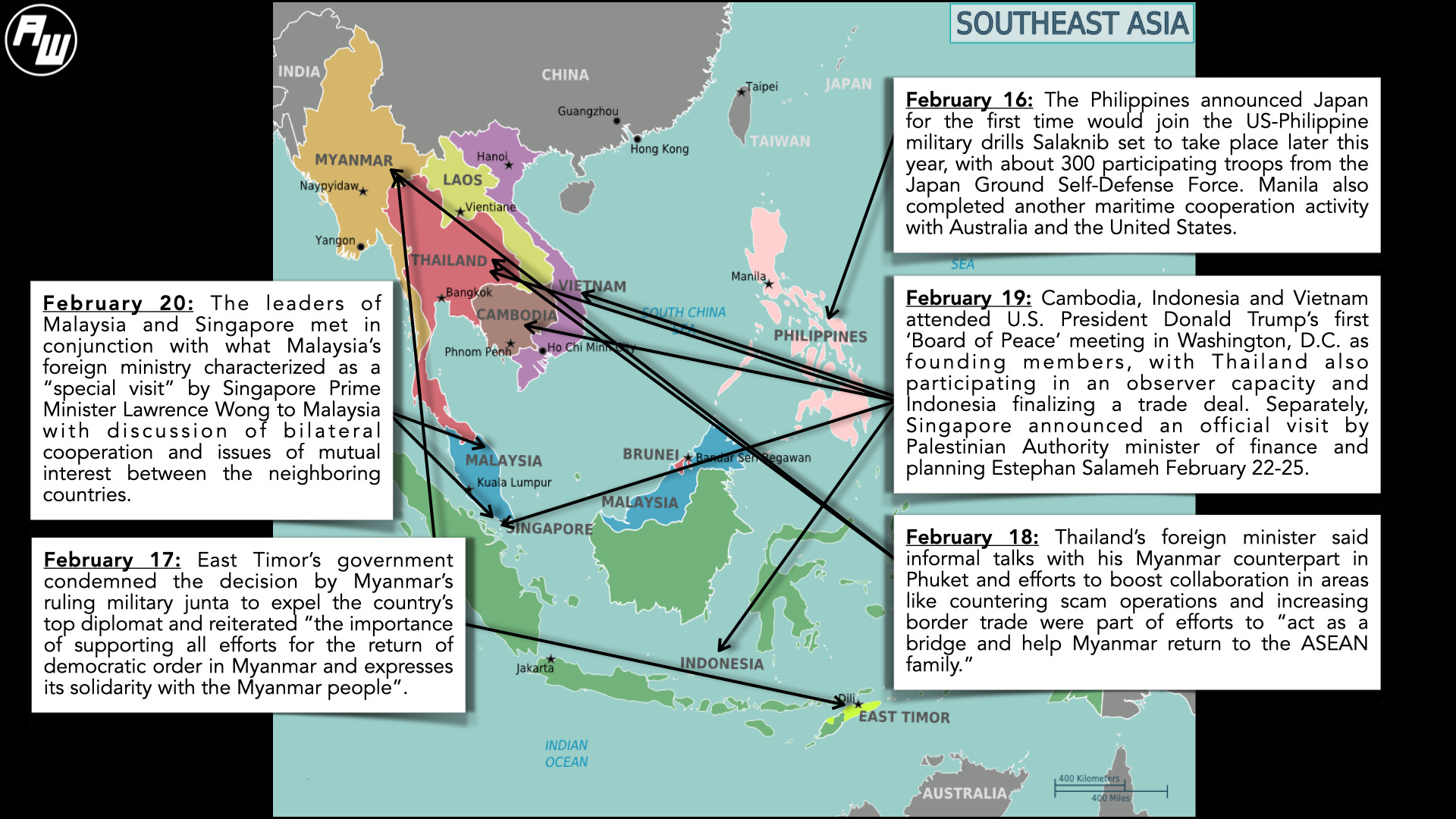
Mapping of regional developments, such as new minilateral security datapoint and cross-border summitry in focus;
Charting evolving geopolitical, geoeconomic and security trends such as new coming artificial intelligence center rollout; megaproject deadlock breaking and geoeconomic blacklist update;
Tracking and analysis of industry developments and quantitative indicators including new joint humanitarian center chatter; maritime governance framework launch; election infrastructure spotlight and more;
And much more! ICYMI, check out the latest episode of our ASEAN Wonk Podcast covering the recent global middle power call and Europe’s future with Southeast Asia and the wider Indo-Pacific region.
This Week’s WonkCount: 2,437 words (~11 minutes)


New Minilateral Datapoint; Cross-Border Summitry & More

Global Contestation Fallout; Energy Transition Futures & Broadening the Statecraft Lens
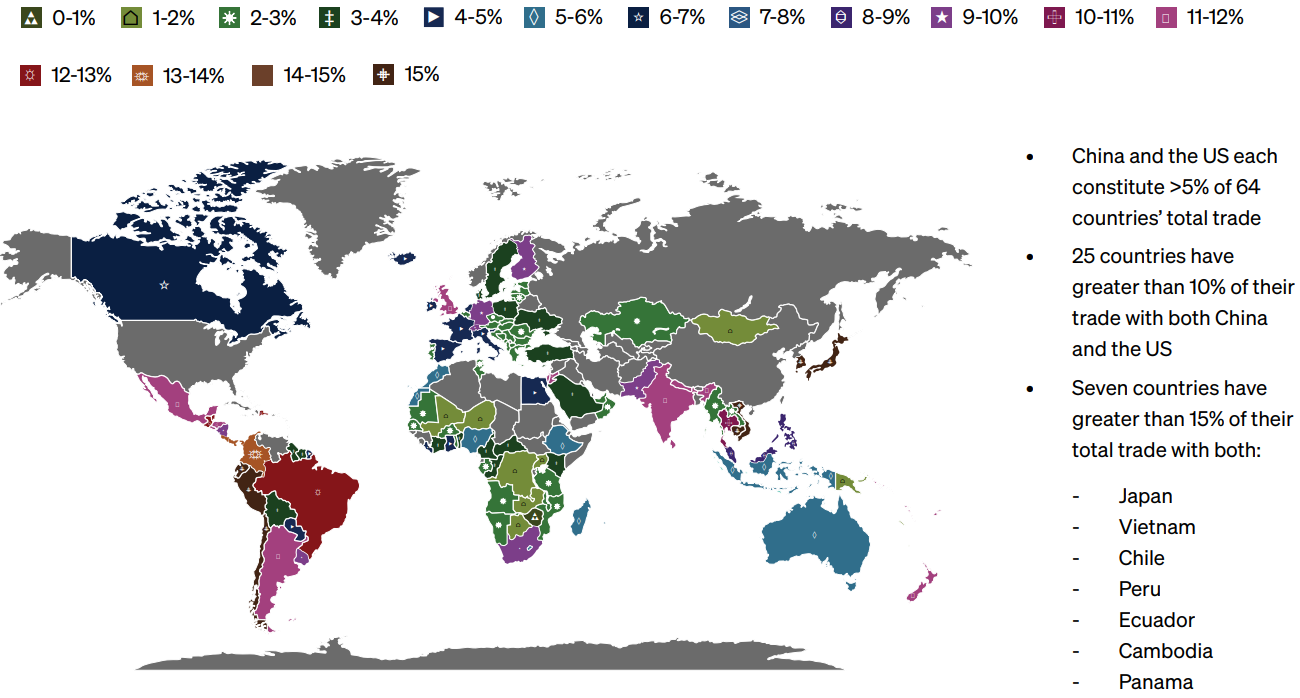
“[T]he ripple effects extend far beyond semiconductors and artificial intelligence,” argues a new report published by JPMorgan Chase on how U.S.-China competition is disrupting global business and investment. The report makes reference to impacts affecting Southeast Asian states, including the relocation of companies to hubs like Singapore and the effects of geopolitics on evolving domestic politics in the Philippines (link to PDF).
Country Relative Share of Trade with US and China
“[A]SEAN’s growing reliance on LNG coincides with a period of unprecedented instability in global gas markets,” according to a new policy brief released by the Economic Research Institute for ASEAN and East Asia (ERIA). The brief highlights insights from expert dialogues which point to the role of variables such as affordability, volatility in both demand and supply as well as tradeoffs for greenhouse gas emissions reductions (link).
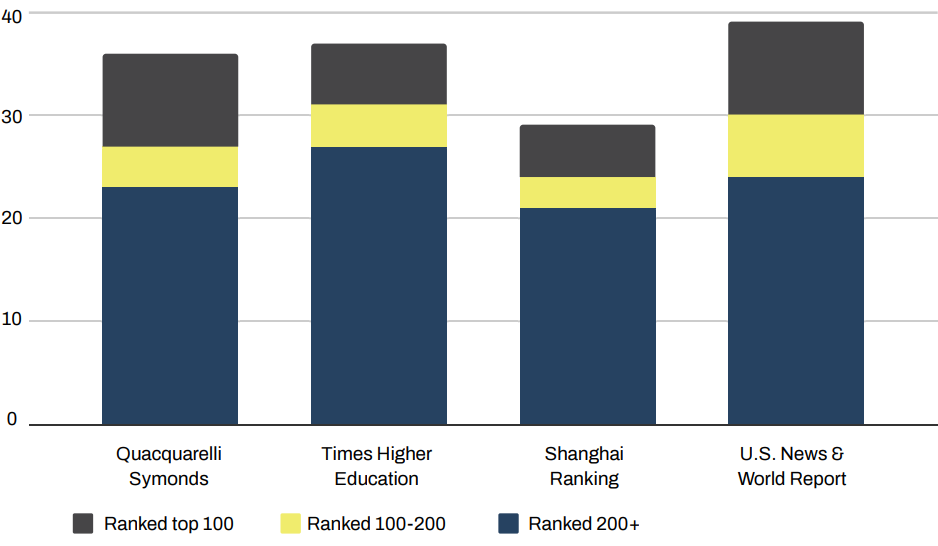
“Education capacity deficits in Southeast Asia and the Pacific are viewed as an opportunity for Australia to be innovative with education in the international development space,” notes a new report published by the Asia-Pacific Development, Diplomacy & Defense Dialogue (AP4D). The report observes that Australia could be among the countries capitalizing on growing intra-Asian student mobility evident in regions like Southeast Asia, which ranks third within Asia for outward student mobility after China and India (link).
Australia in Global University Ranking Systems

Trade Turn and Board of Peace Push in US Southeast Asia Ties
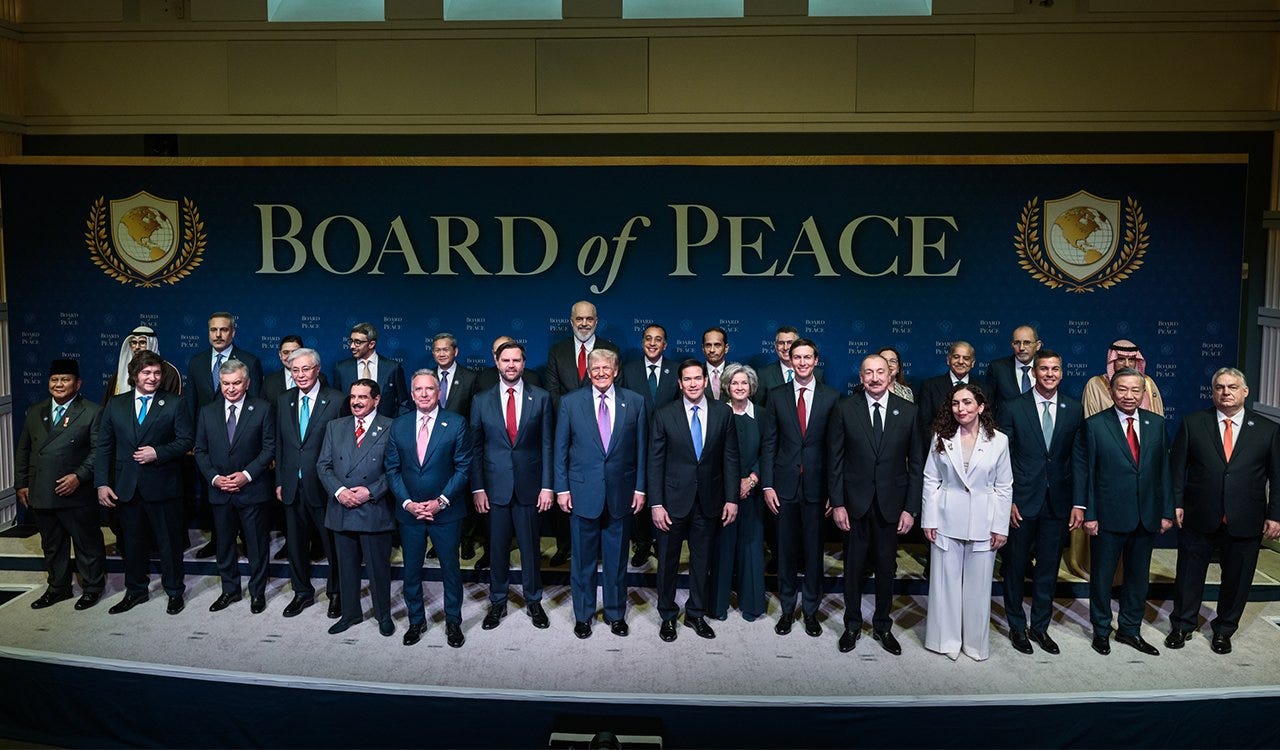
What’s Behind It
Southeast Asia engagement in the United States was on display in developments tied to the Board of Peace and trade deals. While the leaders of Cambodia, Indonesia and Vietnam were in attendance at the Board of Peace (BoP) launch event in Washington, D.C. — with Indonesia signing a trade deal just before the Supreme Court had struck down the administration’s initial round of tariffs — scrutiny has also been on non-members including treaty ally Thailand (officially at observer status along with several U.S. Indo-Pacific treaty allies like Japan and South Korea)1. Geopolitical questions were raised around the rollout of some of the deliverables. One datapoint officials pointed out to ASEAN Wonk was the (unsurprisingly) hyperbolic White House statement declaring a “NEW GOLDEN AGE for the U.S.-Indonesian Alliance” — terminology Indonesia has traditionally avoided as part of its “free and active” foreign policy — amid a recent heated domestic debate back in Jakarta on U.S. engagement that had spilled over into the public domain and involved several former top diplomats2.
Select Key Recent Geoeconomic and Geopolitical Developments Related to US Policy and Southeast Asia
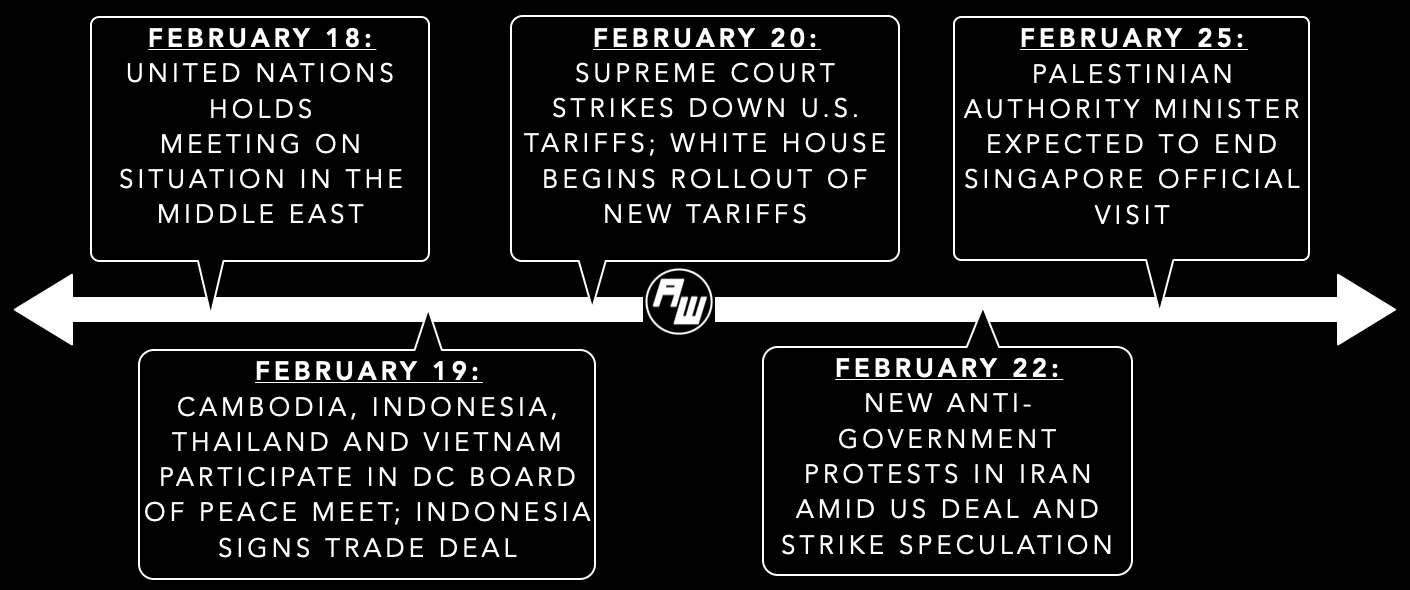
The developments also highlighted lingering uncertainties for Southeast Asian states despite policy inroads. Some countries issued clarifications following new White House policy announcements, even though they had already somewhat baked in this year’s flurry of U.S.-China summit diplomacy and the Supreme Court’s tariff decision into their calculations (it is no coincidence that trade deals to date have explicitly referenced how compliance may either affect future U.S. trade actions under so-called ‘triple number section authorities’ or be seen relative to country dealings with other states without directly referencing Beijing). Vietnam, which had been downplaying prospects for a full trade deal announcement, was nonetheless able to announce already agreed commercial pacts during party chief To Lam’s first U.S. visit during his new term after its party congress3. At a rescheduled United Nations session ahead of the U.S. BoP engagement, Indonesia joined some countries in raising the need for it not to move in “different directions” from the UN Charter which officials say is among the conditions for Jakarta’s commitment to the so-called Gaza stabilization force beyond the headline “8,000 troops” number4.
Why It Matters
The dynamics also spotlighted future policy datapoints to watch with wider regional and global implications (see originally generated ASEAN Wonk table below on notable areas to monitor and additional specifics. Paying subscribers can read on for more on what to expect and future implications in the rest of the “Why It Matters” and “Where It’s Headed” sections, along with paid-only sections of the newsletter as usual).
Future Priority Policy Datapoints to Watch, Dealmaking Status Shifts and Major Countries
