

Greetings to new readers and welcome all to the latest edition of the weekly ASEAN Wonk BulletBrief! If you haven’t already, you can upgrade to a paid subscription for $5 a month/$50 a year below to receive full posts by inserting your email address and then selecting an annual or monthly option. You can visit this page for more on pricing for institutions, groups as well as discounts. For current paid subscribers, please make sure you’re hitting the “view entire message” prompt if it comes up at the end of a post to see the full version.
For this iteration of ASEAN Wonk BulletBrief, we are looking at:
Assessing the geopolitical and geoeconomic significance of commemorations around the tenth anniversary of the South China Sea arbitral tribunal award and their strategic implications;
Mapping of regional developments, including new Indo-Pacific summit diplomacy and new dialogue partner status in Southeast Asia;
Charting evolving geopolitical, geoeconomic and security trends such as new artificial intelligence risk disclosure; illegal China influence claim; and coming military space center development;
Tracking and analysis of industry developments and quantitative indicators including twin China infrastructure inroads; major rare earths partnership launch and new media ecosystem metrics and more;
And much more! ICYMI, check out our ASEAN Wonk review earlier this week of a new book by a longtime government advisor on futures in US military strategy and implications for individual regions including the Indo-Pacific.
This Week’s WonkCount: 2,278 words (~10 minutes)


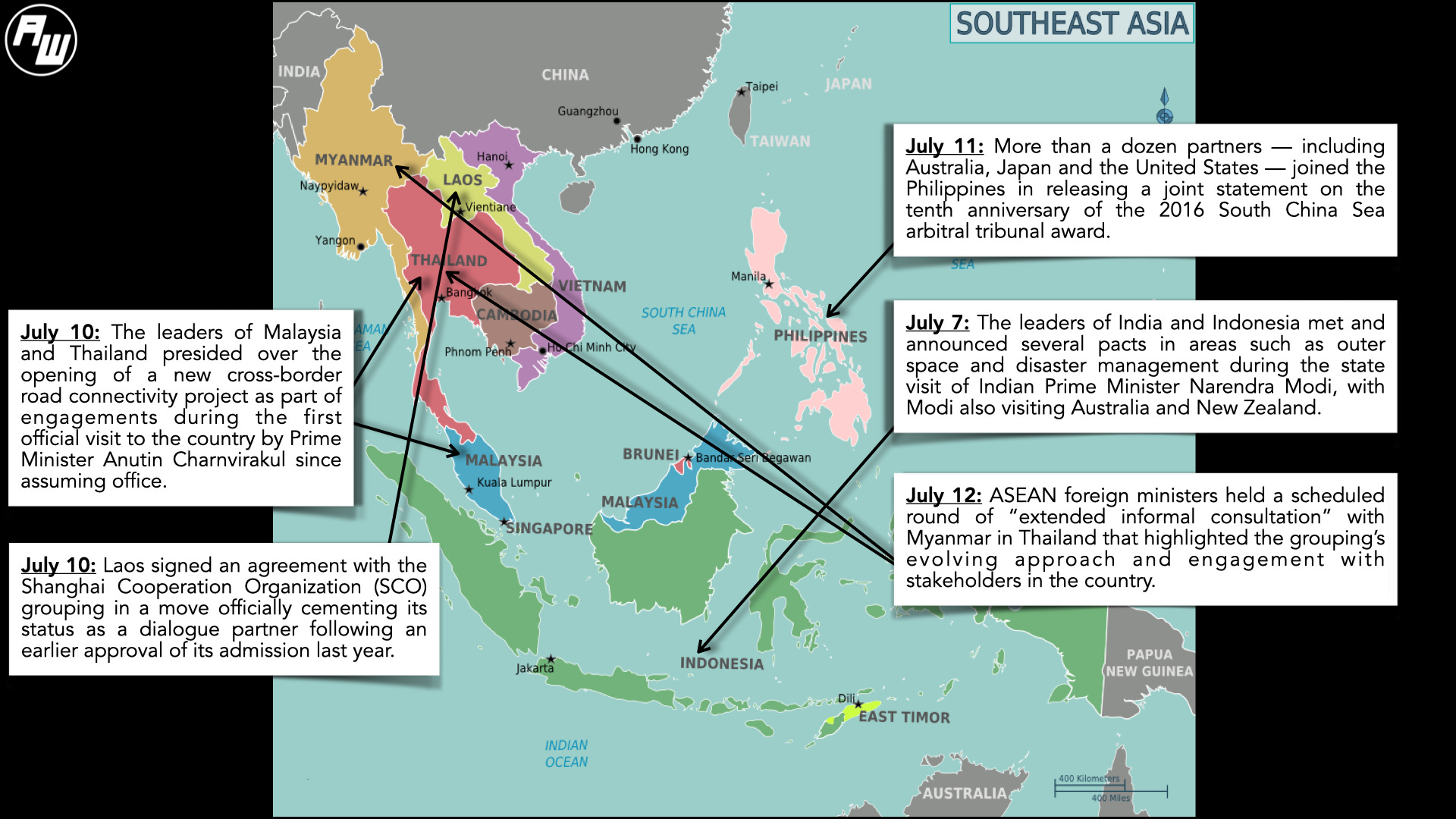
Indo-Pacific Summit Diplomacy; New Dialogue Partner Status & More

Diverging Global Investment Patterns; Partnership Futures & Cyber Accountability Mechanisms
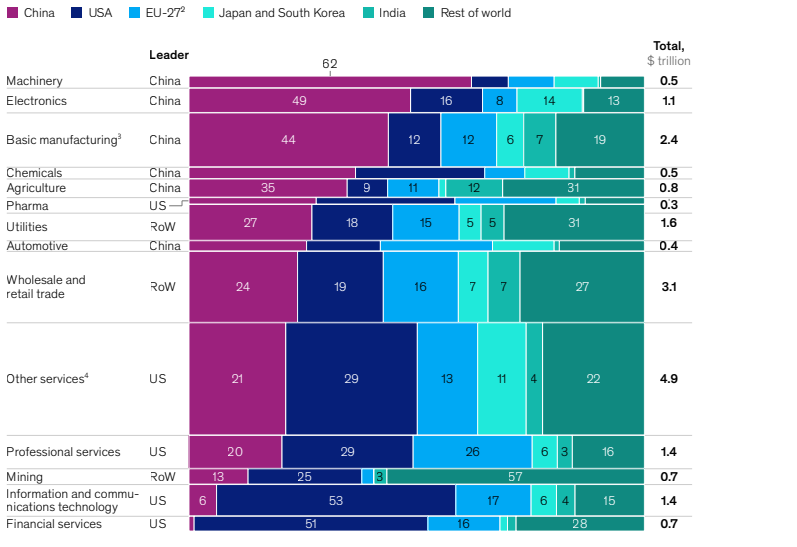
“Investment has stalled in Europe, shifted in the United States, and pulled away from the pack in China,” according to a new report by the McKinsey Global Institute which examines diverging global investment patterns and levers for countries to boost competitiveness including changes in production factors, innovation, specialization (link).
Graphic Showing Gross Productive Investment by Economy and Sector (By Percent)
“Southeast Asia’s digital economies are booming, yet a gap persists between ambitious growth and the tools and frameworks needed to govern cyberspace responsibly,” argues a new report released by the Stimson Center on cyber accountability — focused on Cambodia, Laos, the Philippines, Thailand and Vietnam — suggesting a number of recommendations across areas like capacity-building and international law (link).

“Japan will advance these efforts by working closely with the partner countries, including Timor-Leste to provide the cooperation tailored to their needs and continue to fulfill its responsibilities in building an international order,” according to a new commentary published by Japan’s ambassador to Timor-Leste in the country’s official state run news agency TATOLI addressing the state of bilateral ties within the context of evolving regional dynamics including Japan’s own update to its free and open Indo-Pacific approach under the government of Prime Minister Sanae Takaichi (link).


New South China Sea Statement Marks Arbitral Award Milestone
What’s Behind It
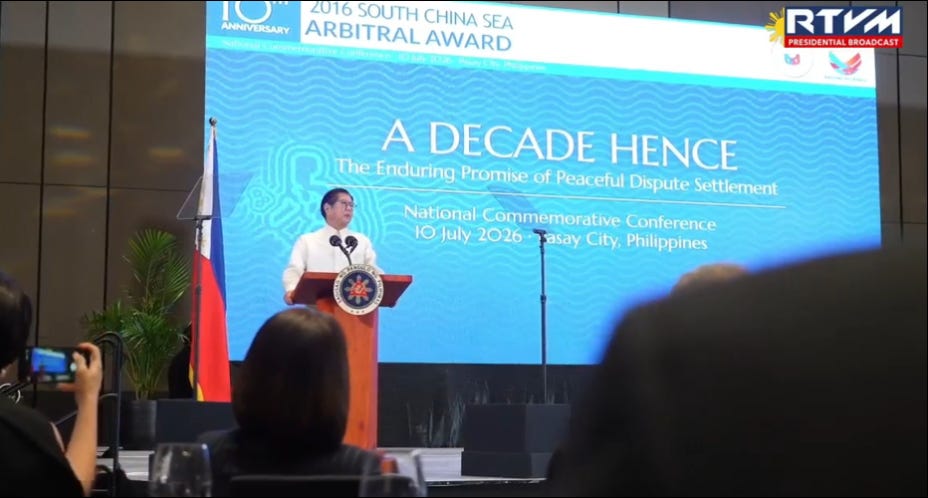
A joint statement by over a dozen countries was among a series of datapoints commemorating a key datapoint in the South China Sea disputes1. The marking of the tenth anniversary of the 2016 arbitral tribunal award — accompanied by commemorative engagements in some key Indo-Pacific capitals as well as in the Philippines featuring top officials including President Ferdinand Marcos Jr. — came amid a series of other global maritime-related developments. This included the adoption of a new resolution on protecting vital shipping lanes co-sponsored by dozens of other countries including Indonesia, Malaysia, the Philippines and Singapore from within Southeast Asia, with the objective being deemed as “never been more critical” reflecting regional anxieties on this front2.
The development came alongside wider scrutiny around flashpoint management. Regionally, Southeast Asian ministers have had to address concerns around the lack of specific timelines and benchmarks being used to hold Myanmar’s government accountable amid scheduled informal consultations this past week leading up to the next round of ASEAN summitry later this year3. Globally, there have also been a flurry of statements released from some Southeast Asian governments following a return this past week to hostilities between Iran and the United States, following earlier attention to aspects such as the extent and degree of representation from individual Southeast Asian countries at the state funeral for Iran’s supreme leader Ayatollah Ali Khamenei4.
Why It Matters
The dynamics also spotlighted datapoints to watch with wider implications (see originally generated ASEAN Wonk table below on notable areas to monitor and additional specifics. Paying subscribers can read on for more on what to expect and future implications in the rest of the “Why It Matters” and “Where It’s Headed” sections, along with paid-only sections of the newsletter as usual).
Notable Policy Datapoints, Along With Select Issue Aspects And Key Domains
