

Greetings to new readers and welcome all to the latest edition of the weekly ASEAN Wonk BulletBrief! If you haven’t already, you can upgrade to a paid subscription for $5 a month/$50 a year below to receive full posts by inserting your email address and then selecting an annual or monthly option. You can visit this page for more on pricing for institutions, groups as well as discounts. For current paid subscribers, please make sure you’re hitting the “view entire message” prompt if it comes up at the end of a post to see the full version.
For this iteration of ASEAN Wonk BulletBrief, we are looking at:
Assessing the geopolitical and geoeconomic significance of the lost Philippines UN Security Council bid amid Manila’s ASEAN chairmanship;
Mapping of regional developments, including major dispute pivot as well as new declared summit wins;
Charting evolving geopolitical, geoeconomic and security trends such as new anti-scam center; big defense first and counting geoeconomic disruption;
Tracking and analysis of industry developments and quantitative indicators including megaproject blow; media ban; anti-disinformation bid and more;
And much more! ICYMI, check out our ASEAN Wonk review of a new book mapping out futures for Asia’s geopolitical and geoeconomic outlook.
This Week’s WonkCount: 2,147 words (~10 minutes)


Major Dispute Pivot; Summit Win Declarations & More

Countering Coercion; Satellite Futures & Partnership Prospects
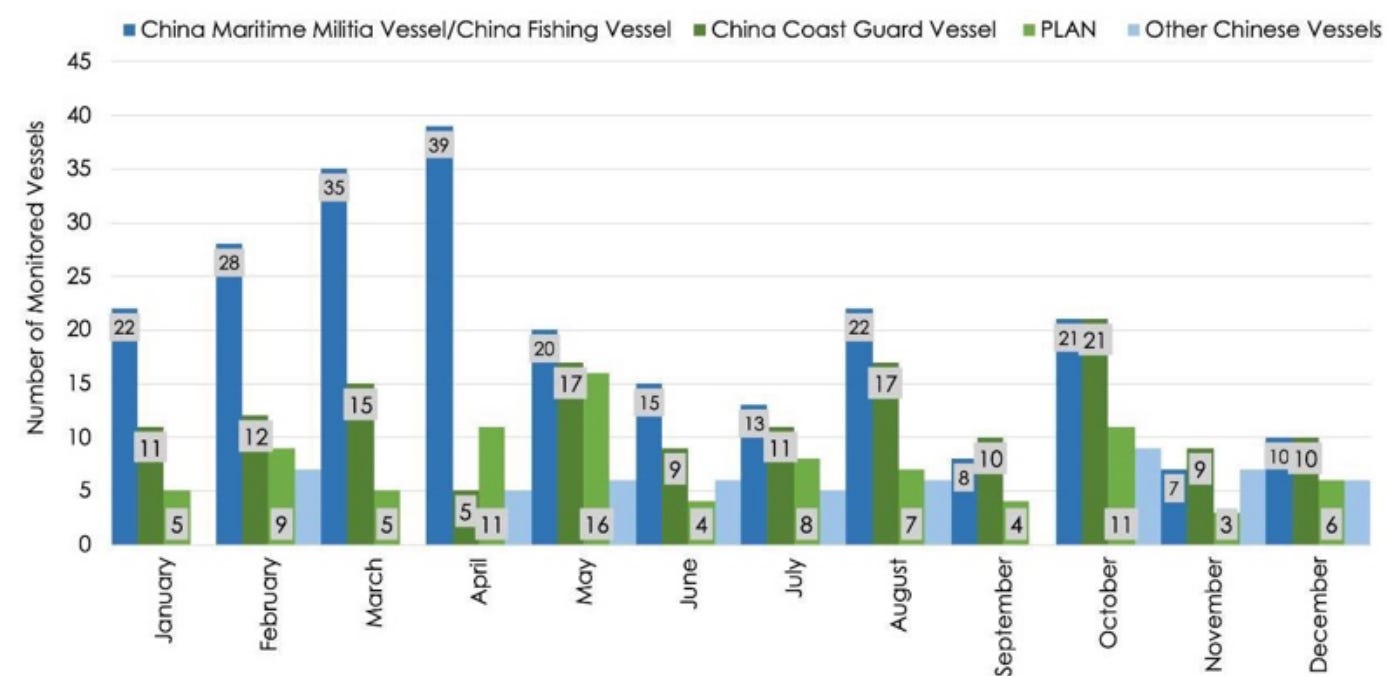
“There is growing awareness in the Philippines and in Taiwan of common security challenges, but differences in perception, capability, and political constraints continue to influence their responses,” notes a report by NGO We Protect our Seas (WPS) on countering maritime aggression which offers recommendations on future steps in this realm (link).
Graphic Outlining Chinese Vessel Activity Documented By Philippine Coast Guard
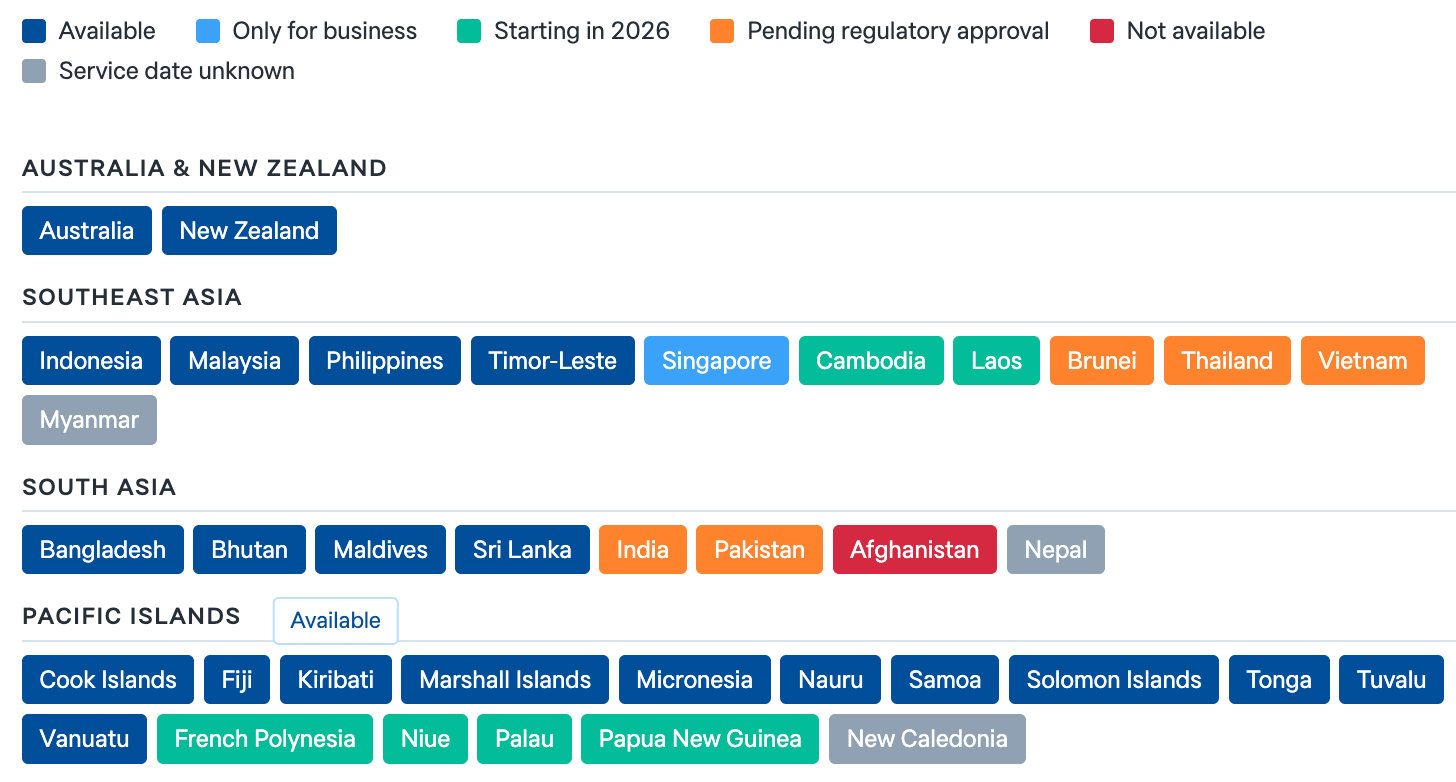
“Deployment is accelerating…yet affordability remains a barrier for the communities that would benefit most, and the technology is moving faster than the policy frameworks needed to govern it,” notes a policy brief on Low Earth Orbit (LEO) satellite technology in the Indo-Pacific by the Lowy Institute think tank (link).
Status of Starlink Availability Across the Indo-Pacific
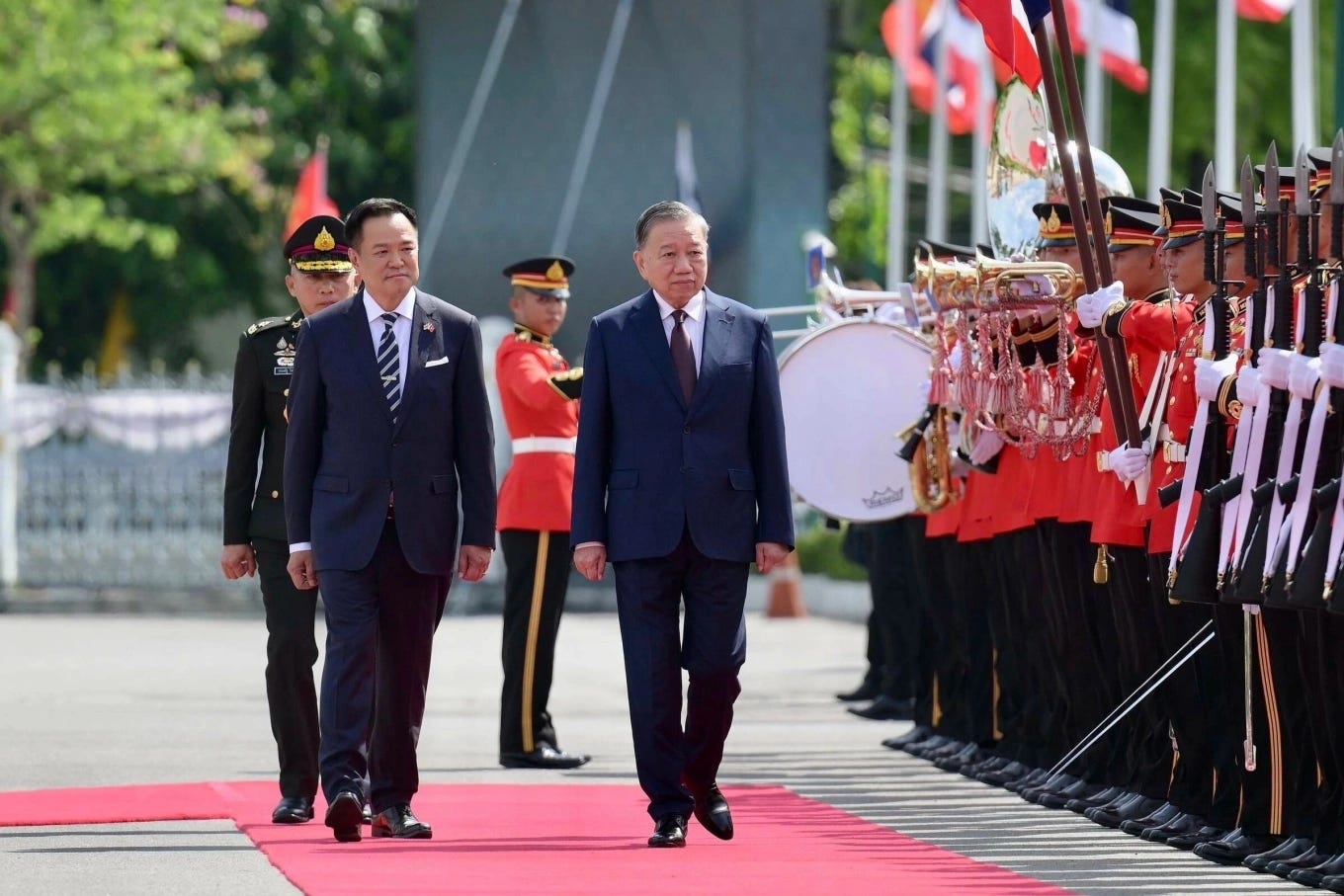
“Notably, attitudes in Thailand towards Vietnam have also changed significantly,” observes an op-ed published in The Bangkok Post on the prospects for Thailand-Vietnam relations which were in the spotlight with the recent visit by communist party chief President To Lam to Thailand (link).

What Does Lost Philippines UN Security Council Bid Signal?
What’s Behind It
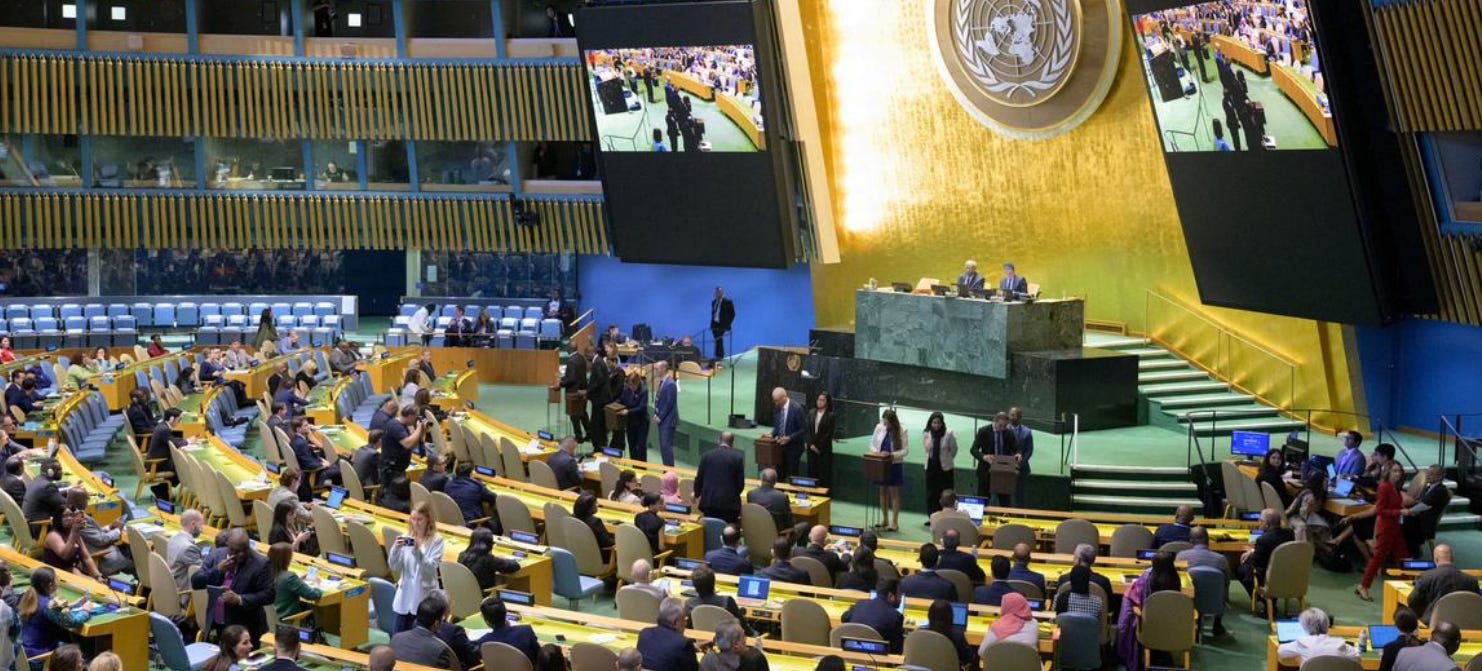
The Philippines loss of its United Nations Security Council seat bid has sparked speculation around the factors behind it and what it means for Manila’s wider global engagement1. In the weeks leading up to the vote, officials began privately signaling a close state of play despite Manila’s past efforts which had included President Ferdinand Marcos Jr. delivering a special address to the United Nations General Assembly in New York just a few months ago in March2. And while Kyrgyzstan’s bid had its own merits and the Philippines is not unfamiliar with the challenges of securing support for some past bold bids rooted in international law — including the 2016 arbitral tribunal ruling on the South China Sea marking its 10th anniversary this year — diplomats also noted the role of vote-winning strategies that played out across multiple ballots alongside the role of powers such as China, the United States and Russia in supporting the bids3.
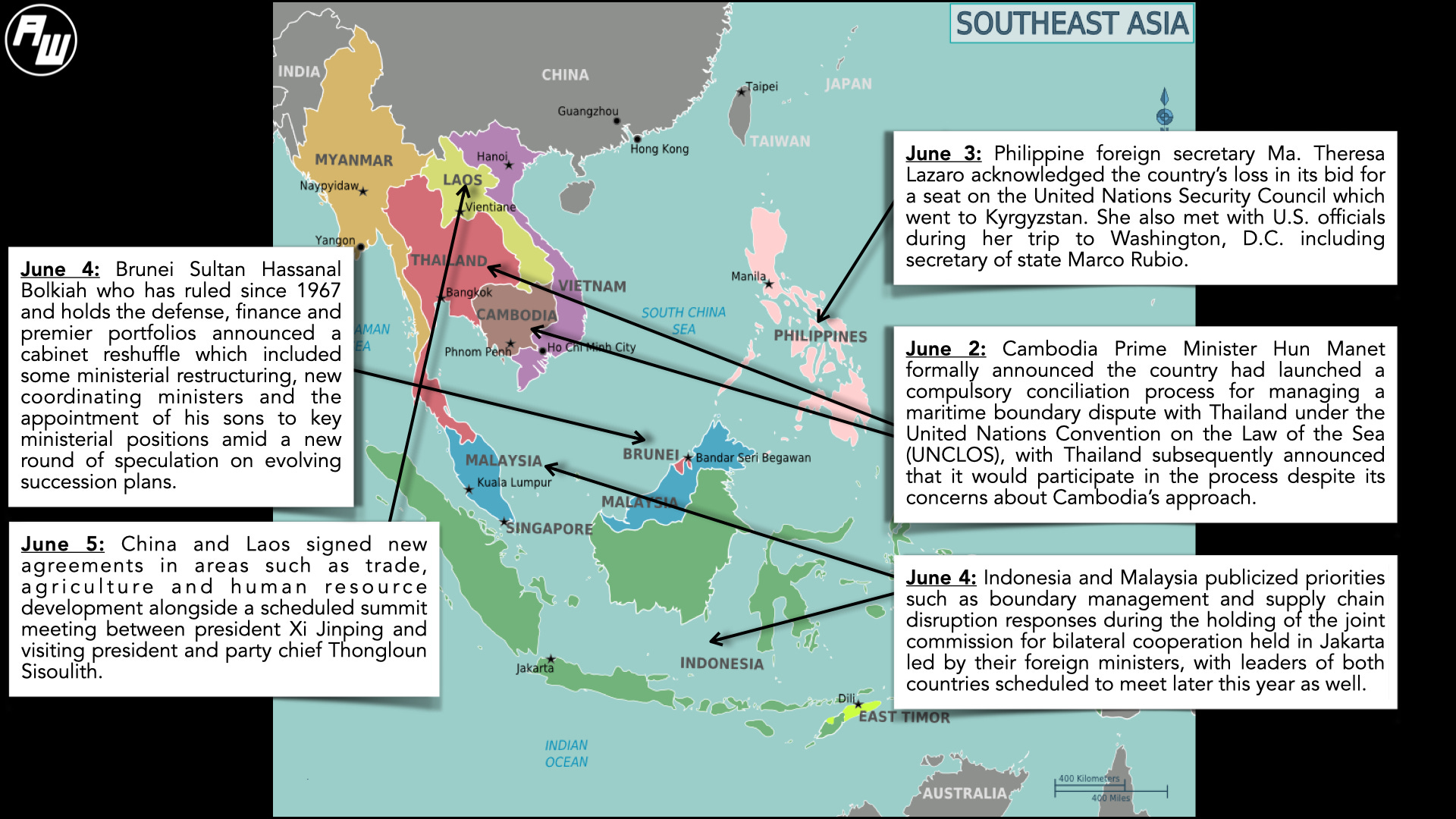
Select Key Recent Geopolitical and Geoeconomic Developments in Southeast Asia
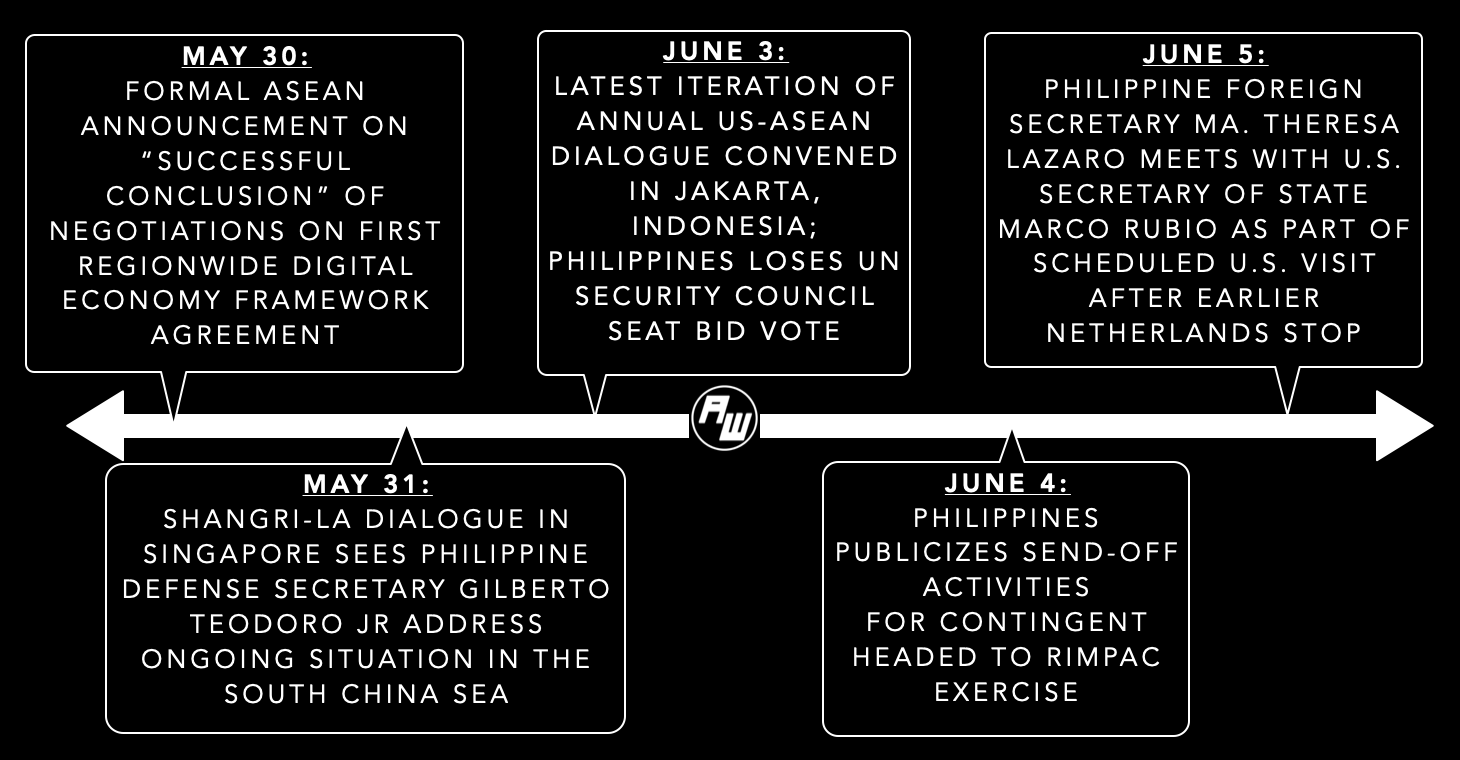
The bid loss also came amid other continued gains on this score over the past week for the Philippines as part of its wider foreign and security policy. This included the sending off of a Philippine Coast Guard vessel for its inaugural participation in the U.S.-led Rim of the Pacific (RIMPAC) exercise that Washington publicizes as the world’s premier maritime exercise — previously occurring at an observer level — and announced conclusion of negotiations on a delayed first-of-its-kind sectoral regionwide Digital Economy Framework Agreement (DEFA) under its ASEAN chairmanship year which officials say is set to be signed by leaders at the next round of summitry later this year4.
Why It Matters
The dynamics also spotlighted datapoints to watch with wider implications (see originally generated ASEAN Wonk table below on notable areas to monitor and additional specifics. Paying subscribers can read on for more on what to expect and future implications in the rest of the “Why It Matters” and “Where It’s Headed” sections, along with paid-only sections of the newsletter as usual).
Future Policy Datapoints to Watch, Alongside Major New Developments and Select Key Partners
