

Greetings to new readers and welcome all to the latest edition of the weekly ASEAN Wonk BulletBrief! If you haven’t already, you can upgrade to a paid subscription for $5 a month/$50 a year below to receive full posts by inserting your email address and then selecting an annual or monthly option. You can visit this page for more on pricing for institutions, groups as well as discounts. For current paid subscribers, please make sure you’re hitting the “view entire message” prompt if it comes up at the end of a post to see the full version.
For this iteration of ASEAN Wonk BulletBrief, we are looking at:
Assessing the geopolitical and geoeconomic significance of new expansion talk at a key trade agreement meeting;
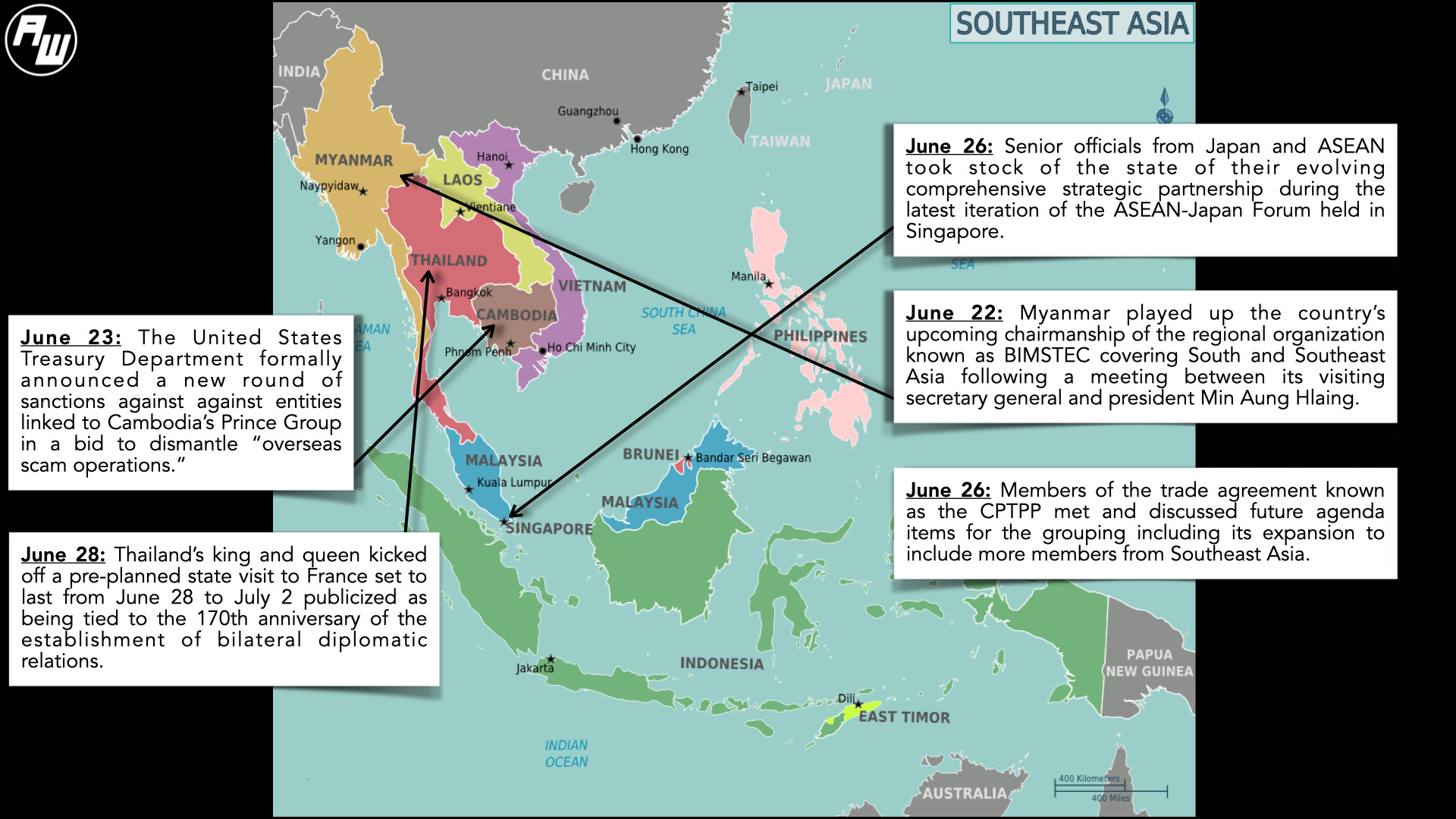
Mapping of regional developments, including strategic partnership review and coming chairmanship showcase;
Charting evolving geopolitical, geoeconomic and security trends such as semiconductor center launch; infrastructure competition and trade deal talk;
Tracking and analysis of industry developments and quantitative indicators including submarine contract hype; cyber alliance; currency pact & more;
And much more! ICYMI, check out our ASEAN Wonk review earlier this week of a new book on China’s rule-making in the global geoeconomic order.
This Week’s WonkCount: 2,157 words (~10 minutes)


Partnership Review; Chairmanship Showcase & More

Coercion Targeting; Expanding Diplomacy & Indian Ocean Stakes
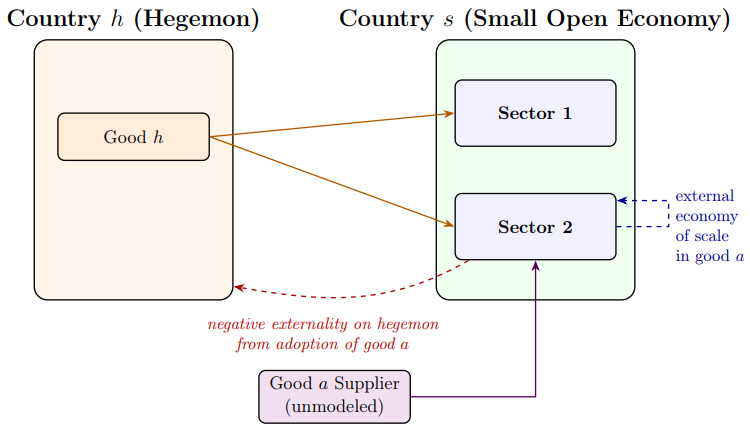
“The targeted entities include both foreign governments and foreign private firms,” notes a new working paper published by the National Bureau of Economic Research on the differential impacts of countries targeting government and foreign private firms for geoeconomic coercion (link).
Depiction of Hegemonic Geoeconomic Coercion Model
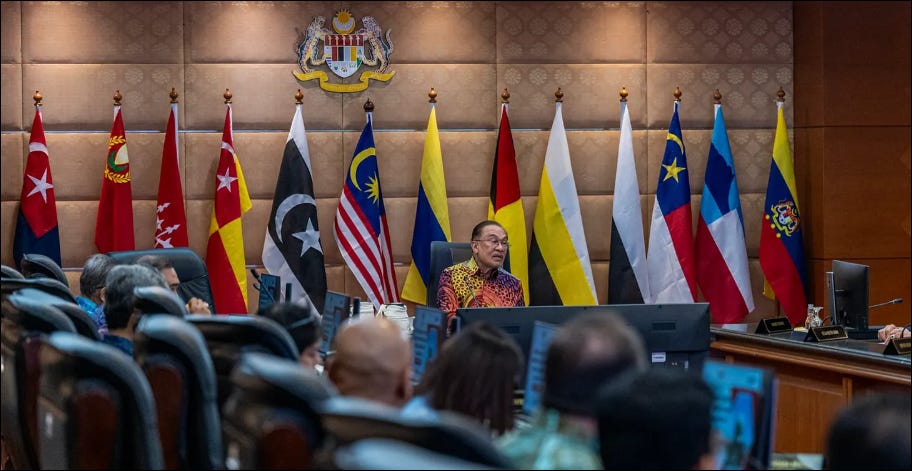
“Diversification…reflects an effort to widen Malaysia’s economic options,” according to a new analysis of Malaysia Prime Minister Anwar Ibrahim’s recent stops in Russia and Central Asia and the implications for the country’s economic diplomacy (link).
“The strategic significance of the Indian Ocean remains overlooked and under-conceptualized in national defense strategy,” argues a new commentary recently published by the Perth USAsia Center as part of a broader op-ed series on Australia’s stakes in the Indian Ocean within the wider Indo-Pacific (link).


New Geoeconomic Expansion Talk at 2026 CPTPP Trade Meet

What’s Behind It
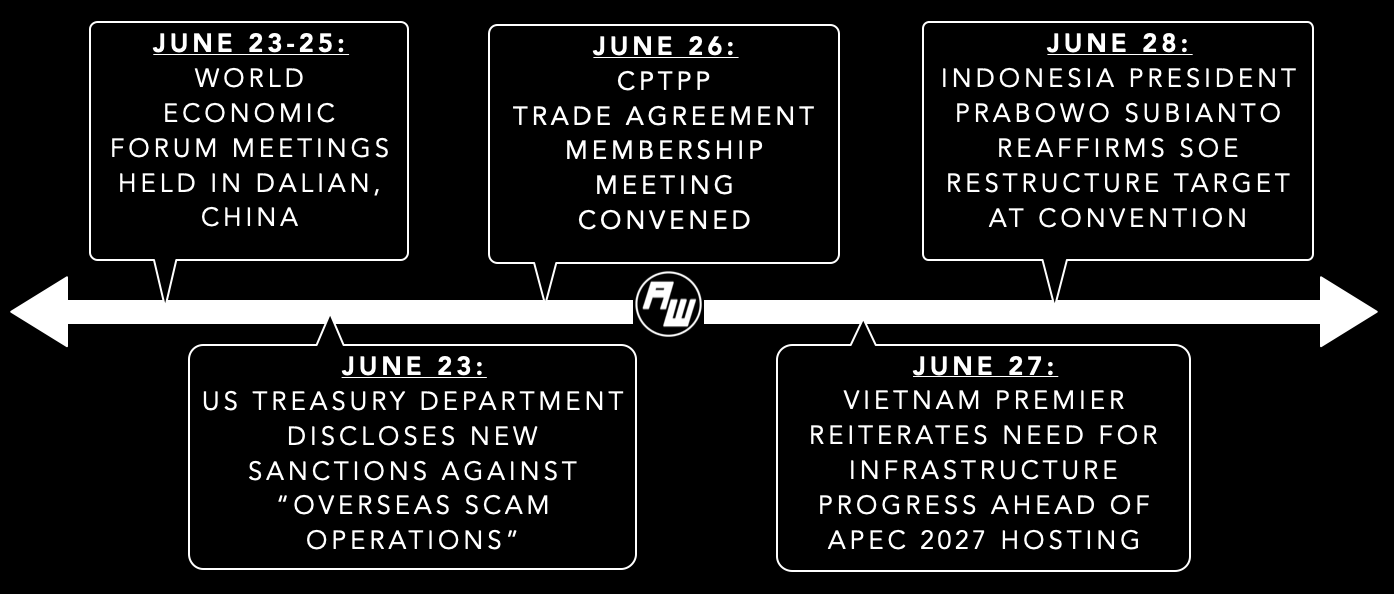
Geoeconomic expansion was among the agenda items in the spotlight during the recent meeting of members of the trade agreement known as the Comprehensive and Progressive Agreement for Trans-Pacific Partnership (CPTPP)1. The meeting took place alongside several other regional and global geoeconomic developments as the dust settled following the recent Russia-ASEAN summit held in Kazan2. Among them was the convening of the latest in the annual calendar of World Economic Forum meetings held in Dalian, China, featuring closely watched remarks by business leaders and officials including China’s premier Li Qiang3.
Select Key Recent Indo-Pacific and Global Geoeconomic Developments Amid New CPTPP Meet
The meeting saw officials take stock of global and Indo-Pacific stakes in key geoeconomic sectors. These included explicit recognition of Japan’s energy security initiatives in Southeast Asia following the Middle East conflict fallout over the past few months as well as the vulnerabilities of small-island developing countries in the Pacific Islands to significant global supply chain disruptions4. These stakes have also been at play in wider discussions among officials, including how best to reach and revise narrower, sector-specific understandings that can help to more flexibly account for new geoeconomic realities5.
Why It Matters
The dynamics also spotlighted datapoints to watch with wider implications (see originally generated ASEAN Wonk table below on notable areas to monitor and additional specifics. Paying subscribers can read on for more on what to expect and future implications in the rest of the “Why It Matters” and “Where It’s Headed” sections, along with paid-only sections of the newsletter as usual).
Future Policy Datapoints to Watch, Along With Select Major Priorities And Key Focus Areas
