

Greetings to new readers and welcome all to the latest edition of the weekly ASEAN Wonk BulletBrief! If you haven’t already, you can upgrade to a paid subscription for $5 a month/$50 a year below to receive full posts by inserting your email address and then selecting an annual or monthly option. You can visit this page for more on pricing for institutions, groups as well as discounts. For current paid subscribers, please make sure you’re hitting the “view entire message” prompt if it comes up at the end of a post to see the full version.
For this iteration of ASEAN Wonk BulletBrief, we are looking at:
Assessing the geopolitical and geoeconomic significance of a newly revealed billions support bid and its wider Indo-Pacific and global implications.
Mapping of regional developments, including new critical supplies pact talks and Europe summitry spotlight;
Charting evolving geopolitical, geoeconomic and security trends, such as new supply chain hub; flashpoint forecast futures; and mining crackdown;
Tracking and analysis of industry developments and quantitative indicators including a new regional trade agreement addition; quiet maritime transfer; major resource shortfall disclosure and more;
And much more! ICYMI, check out the latest episode of the ASEAN Wonk Podcast featuring a former White House senior official on forecasting US Asia strategy futures and wider Indo-Pacific implications;
This Week’s WonkCount: 2,237 words (~10 minutes)


New Critical Supplies Pact Talks; Europe Summitry Spotlight & More

Great Power Perceptions in Global Competition Dynamics; Evolving 2026 ASEAN Agenda & New Defense Strategy Assessment
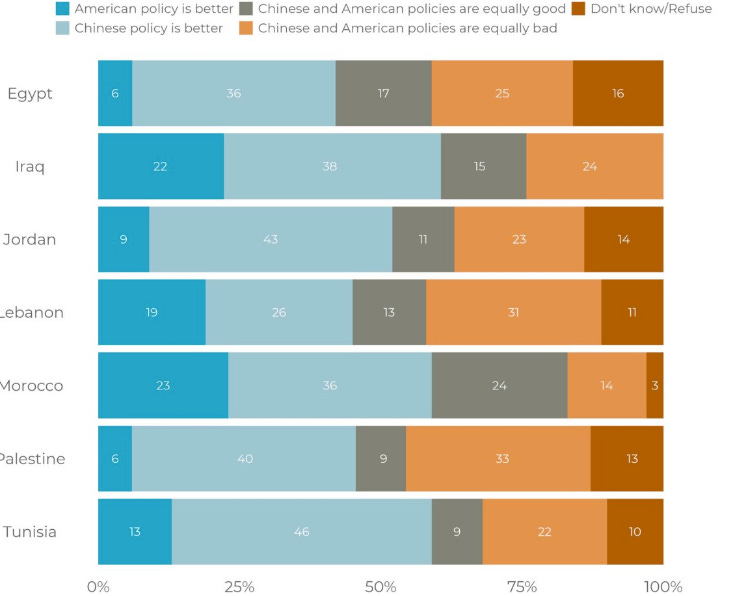
“China, Russia, and Iran are gaining ground in perceived legitimacy, though…publics are not uniformly supportive,” according to data released from Arab Barometer on regional public views of the United States and China amid global great power competition in select countries in the Arab world alongside recent developments such as the Gaza war and Iran conflict fallout (link).
US vs. China on Maintaining Regional Security (% Saying the Following Statements)
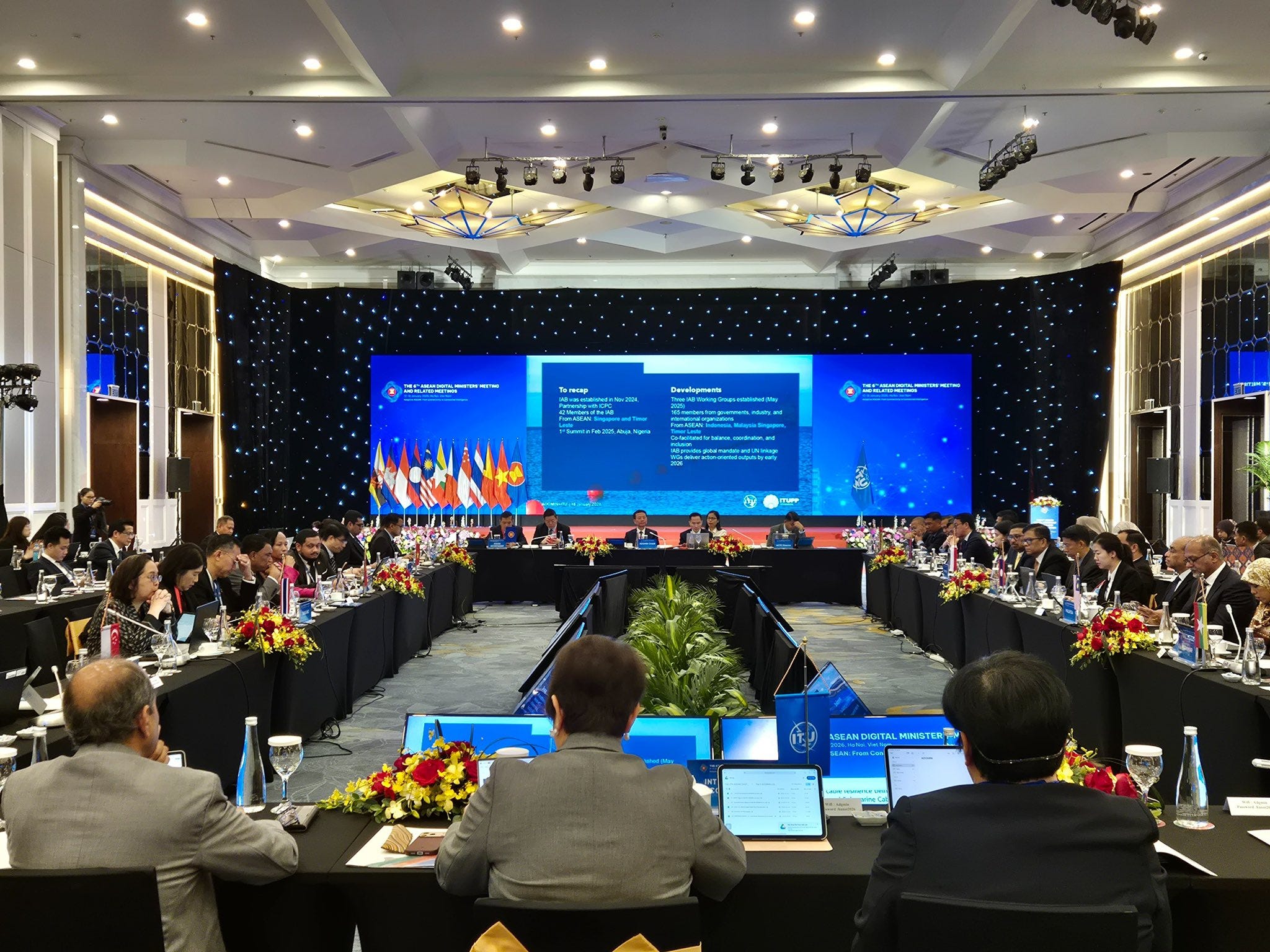
“Within ASEAN’s agenda for 2026 and beyond, food security should be elevated as a core focus,” argues a new commentary published by the S. Rajaratnam School of International Studies in Singapore. The piece argues that greater attention should be placed on the human concerns of vulnerable groups, including bridging knowledge and skill gaps in digital technologies (link).
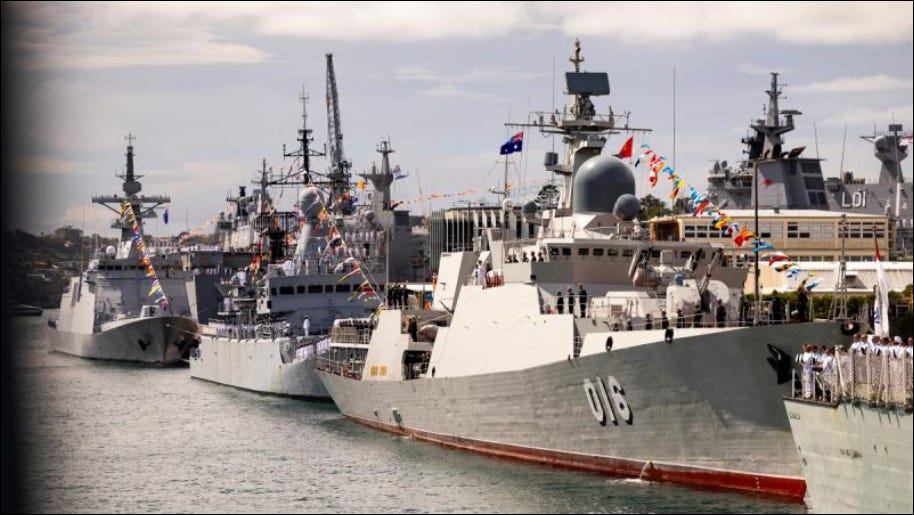
“The defense strategy and investment program released this week is the largest step Australia has taken to confront the 21st-century strategic realities in a world of disorder and conflict,” according to a new article published over at The Sydney Morning Herald on Australia’s newly released defense strategy. The article suggests areas where key questions remain unanswered, including on the U.S.-Australia alliance, drone technology and the involvement of non-government stakeholders in conflict preparedness (link).

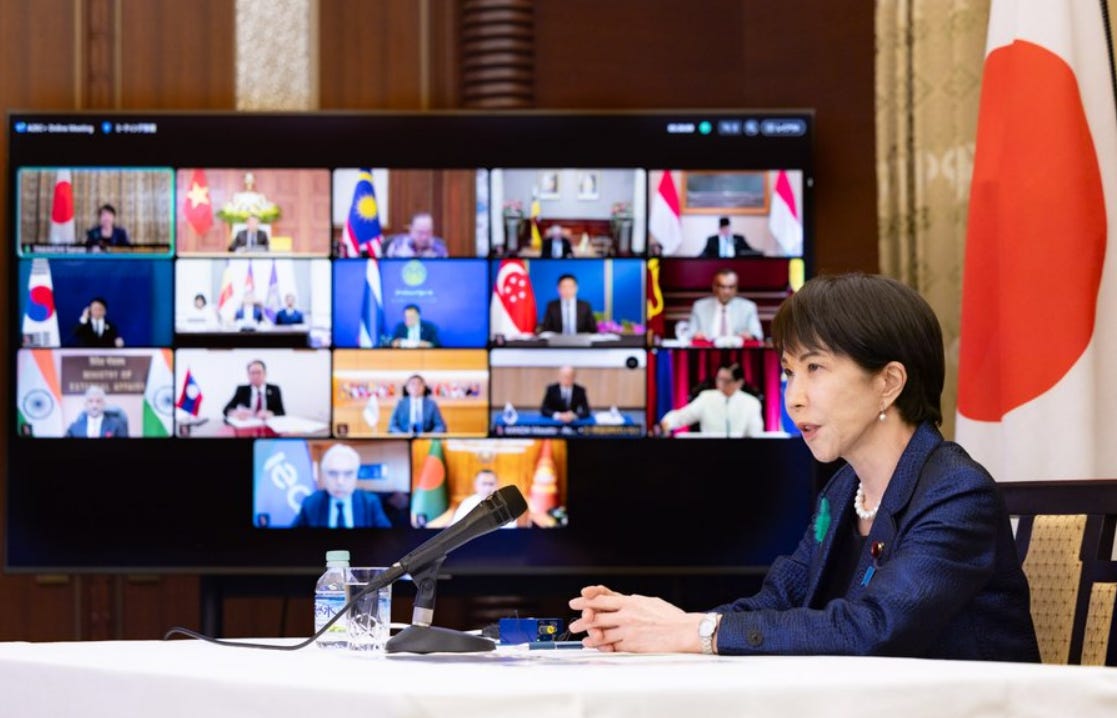
Japan Reveals New Southeast Asia Billions AZEC Bid Support
What’s Behind It
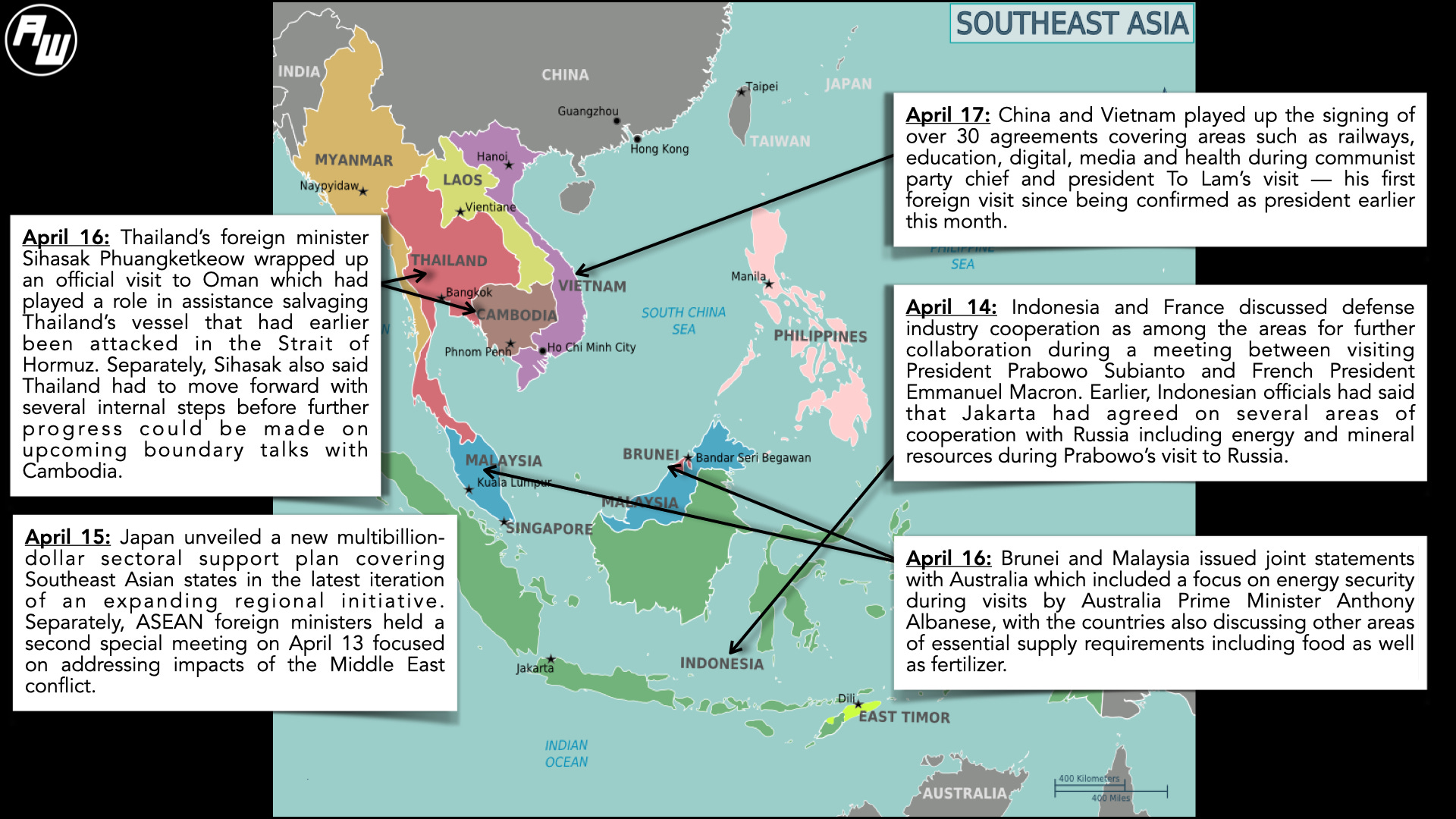
Japan unveiled a new multibillion-dollar sectoral support plan covering Southeast Asian states in the latest iteration of an expanding regional initiative1. The meeting occurred amid several other initiatives at play by key powers, including new sectoral pacts highlighted in Australia Prime Minister Anthony Albanese’s Southeast Asia tour and Russia’s continued rhetorical pledges when receiving regional leaders, with the latest being Indonesia President Prabowo Subianto this past week2. The calibration between addressing severe domestic challenges while also building out wider regional engagement has been a recurrent theme, and even Prime Minister Sanae Takaichi had to clarify that assistance would not have “any adverse effect” on domestic needs3.
Select Key Recent and Relevant Regional Geopolitical and Geoeconomic Developments
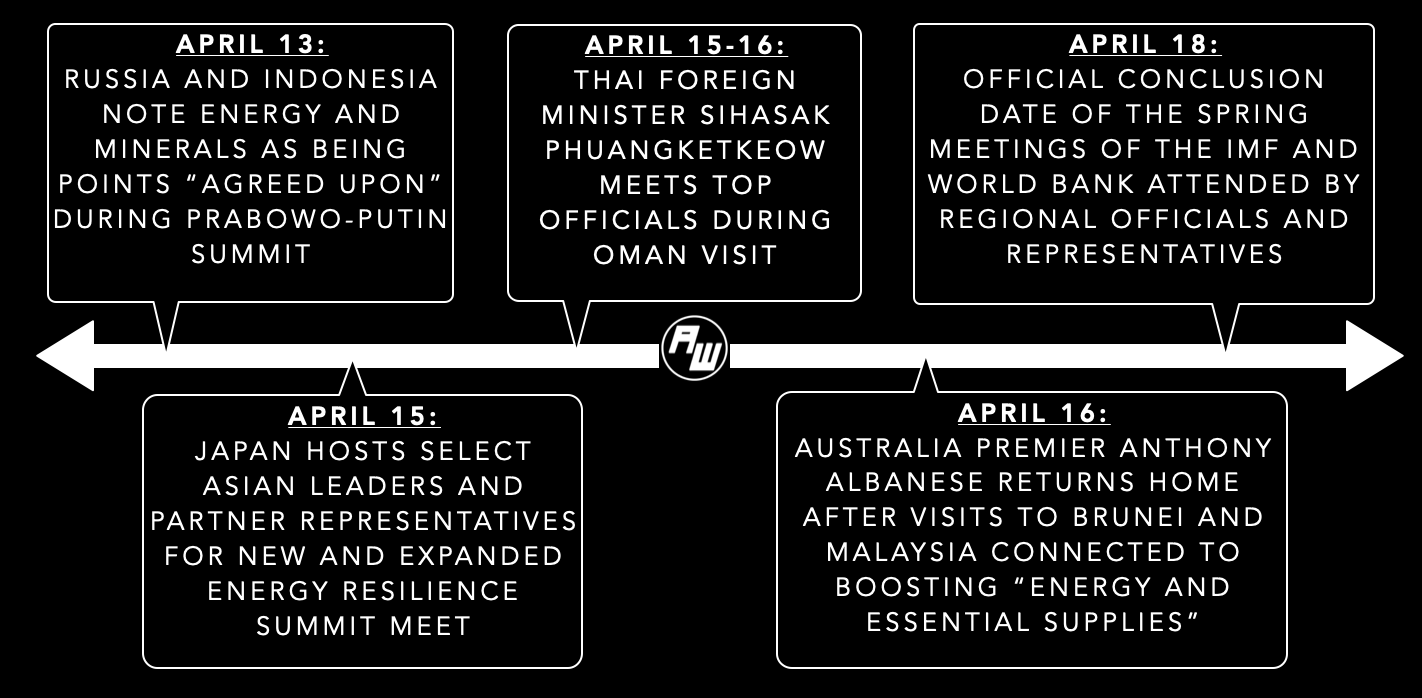
The initiative also shed light on the wider evolving geoeconomic and geopolitical context and its effects on how powers are engaging. While powers like Japan have continued to be active conveners in 2026 both on their own as well as with partners in this realm, there is also a recognition even in some internal assessments that others including China are gaining significant regional ground4. That said, officials also note that these more high-profile comparisons also belie quieter, first-of-its-kind sectoral advances in other domains, including the addition of new defense positions in regional diplomatic posts5. Meanwhile, in a more global context, wider geoeconomic uncertainties were also a recurrent theme among senior officials who attended this past week’s iteration of the spring meetings by the International Monetary Fund and the World Bank ahead of an annual meet set to be convened in Thailand later this year6.
Why It Matters
The dynamics also spotlighted datapoints to watch with wider implications (see originally generated ASEAN Wonk table below on notable areas to monitor and additional specifics. Paying subscribers can read on for more on what to expect and future implications in the rest of the “Why It Matters” and “Where It’s Headed” sections, along with paid-only sections of the newsletter as usual).
Major Policy Actions to Watch, Alongside Priority Pillars and Select Key Cooperation Areas
