

Greetings to new readers and welcome all to the latest edition of the weekly ASEAN Wonk BulletBrief! If you haven’t already, you can upgrade to a paid subscription for $5 a month/$50 a year below to receive full posts by inserting your email address and then selecting an annual or monthly option. You can visit this page for more on pricing for institutions, groups as well as discounts. For current paid subscribers, please make sure you’re hitting the “view entire message” prompt if it comes up at the end of a post to see the full version.
For this iteration of ASEAN Wonk BulletBrief, we are looking at:
Assessing the geopolitical and geoeconomic significance of looming global headwinds after a new regional ministerial meeting;
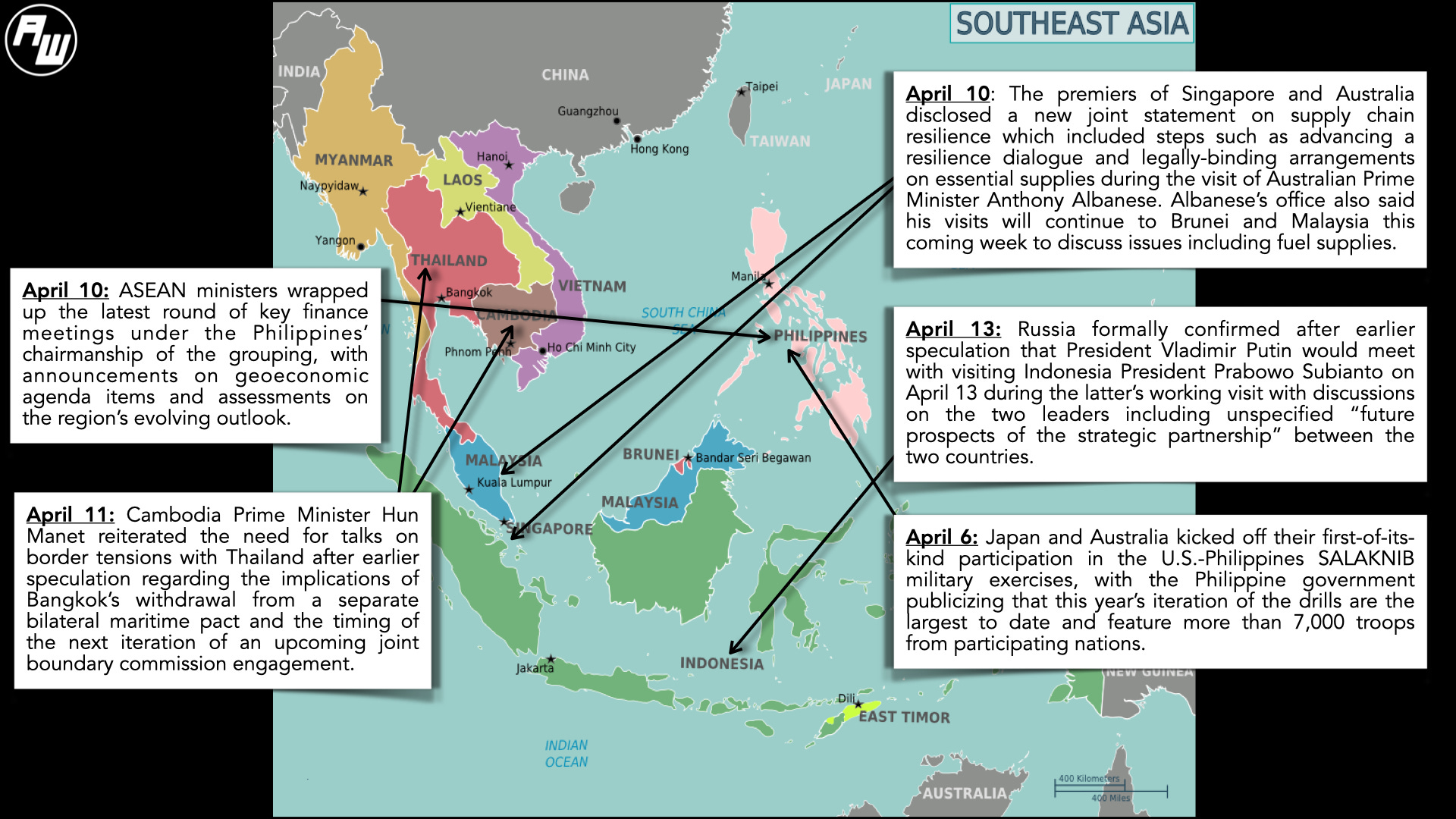
Mapping of regional developments, such as Kremlin partnership chatter and supply chain resilience boost;
Charting evolving geopolitical, geoeconomic and security trends including critical minerals alternative talk; biggest China launch and maritime boost;
Tracking and analysis of industry developments and quantitative indicators such as high-speed rail first; rare earth futures; twin new pacts and more;
And much more! ICYMI, check out our ASEAN Wonk review of a new book earlier in the week by a former official on a new strategy against geoeconomic weaponization and implications for the Indo-Pacific region.
This Week’s WonkCount: 2,316 words (~10 minutes)


Supply Chain Resilience Boost; Kremlin Partnership Chatter & More

US-China Southeast Asia Survey Headline; Hemispheric Dynamics & Coming Trade Review
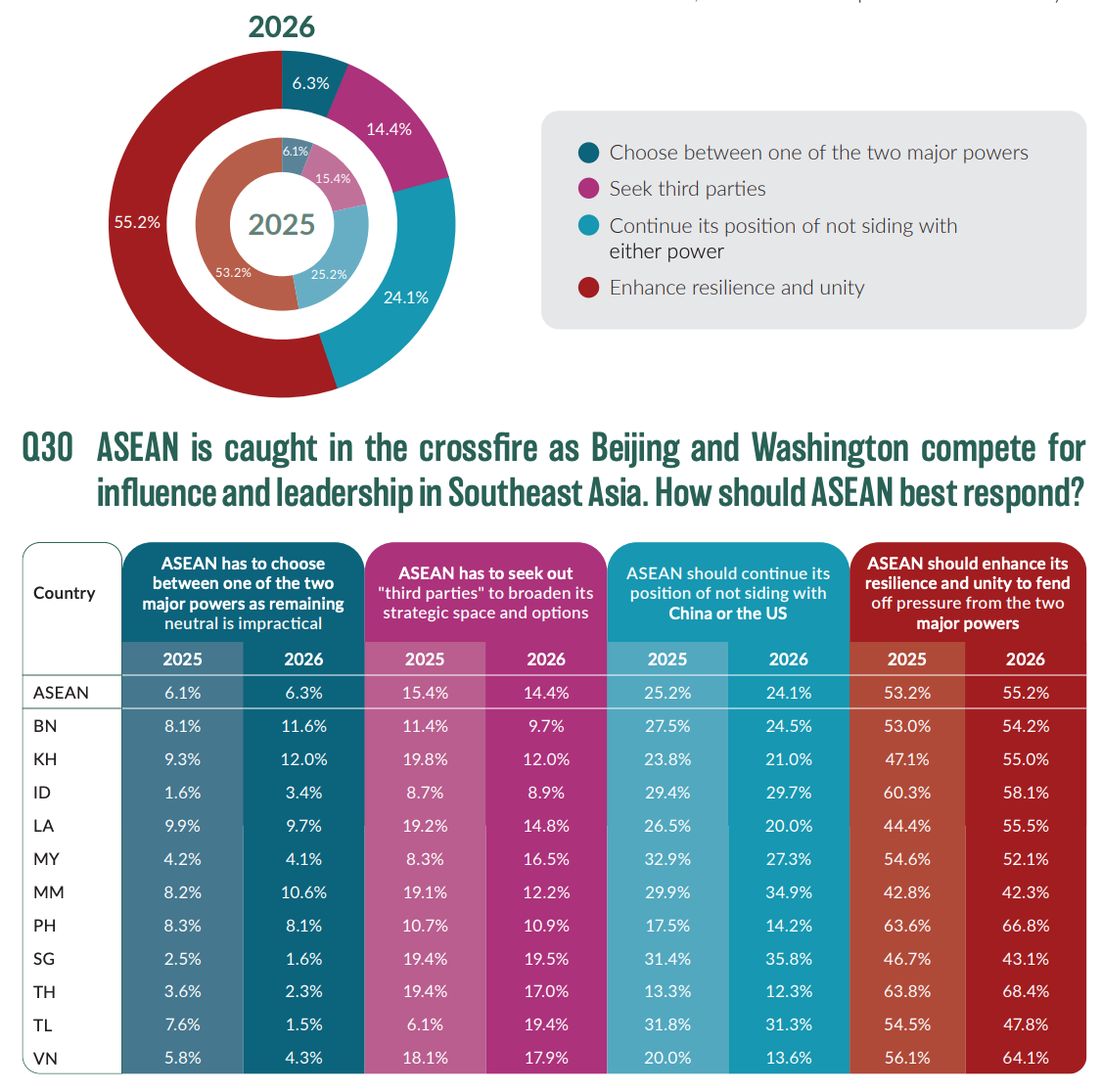
“Reversing last year’s trend, a slim majority of ASEAN respondents selected China (52.0%) over the US (48%) if the region were forced to align itself with one of the two strategic rivals,” according to a new iteration of an annual Southeast Asia survey report published by the ISEAS-Yusof Ishak Institute. Among other report toplines, global scam operations and the South China Sea are also identified as being among the biggest regional geopolitical concerns (link).
Graphic Depicting Shifting Southeast Asia Perceptions With Respect to China and the United States
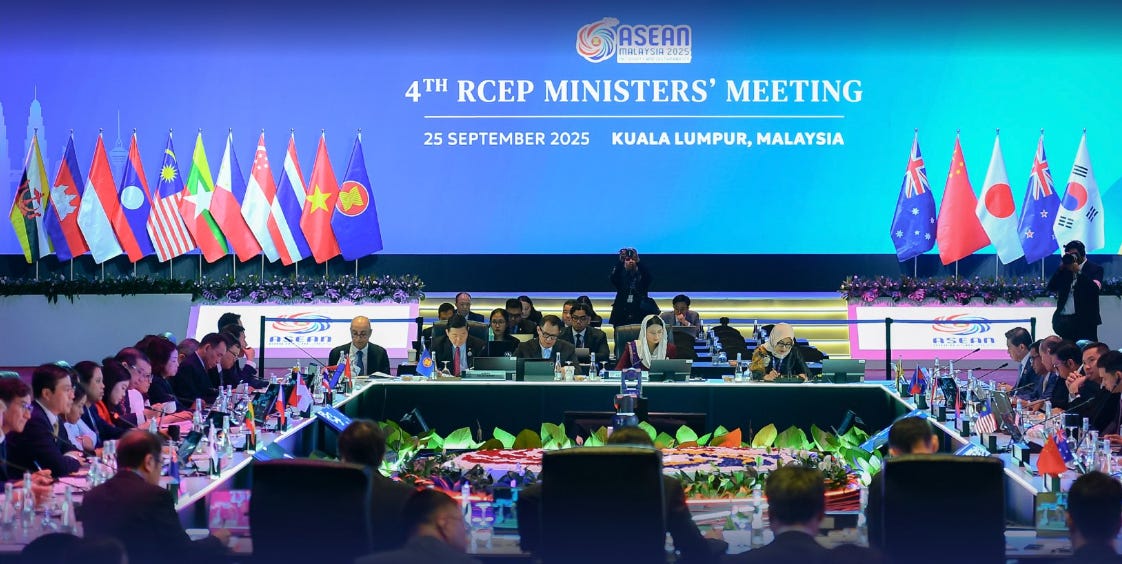
“The…general review must be treated as a high-stakes strategic opportunity,” argues a new brief released by CSIS Indonesia on the review of the Regional Comprehensive Economic Partnership (RCEP) trade agreement. The brief suggests provisions that should be considered as part of the process, including those covering supply chain resilience and the digital and green economy (link).
“China’s AI influence on the global stage has only grown, aided by increasingly capable models, dramatically cheaper end-user pricing, and leverage of the global open-source developer community,” according to a new commentary published over at The Cipher Brief on China-U.S. competition in the artificial intelligence domain. The piece suggests “rethinking the parameters” of competition is critical to shifting dynamics in this space (link).


Global Headwinds Loom After New 2026 ASEAN Ministerial Meet
What’s Behind It
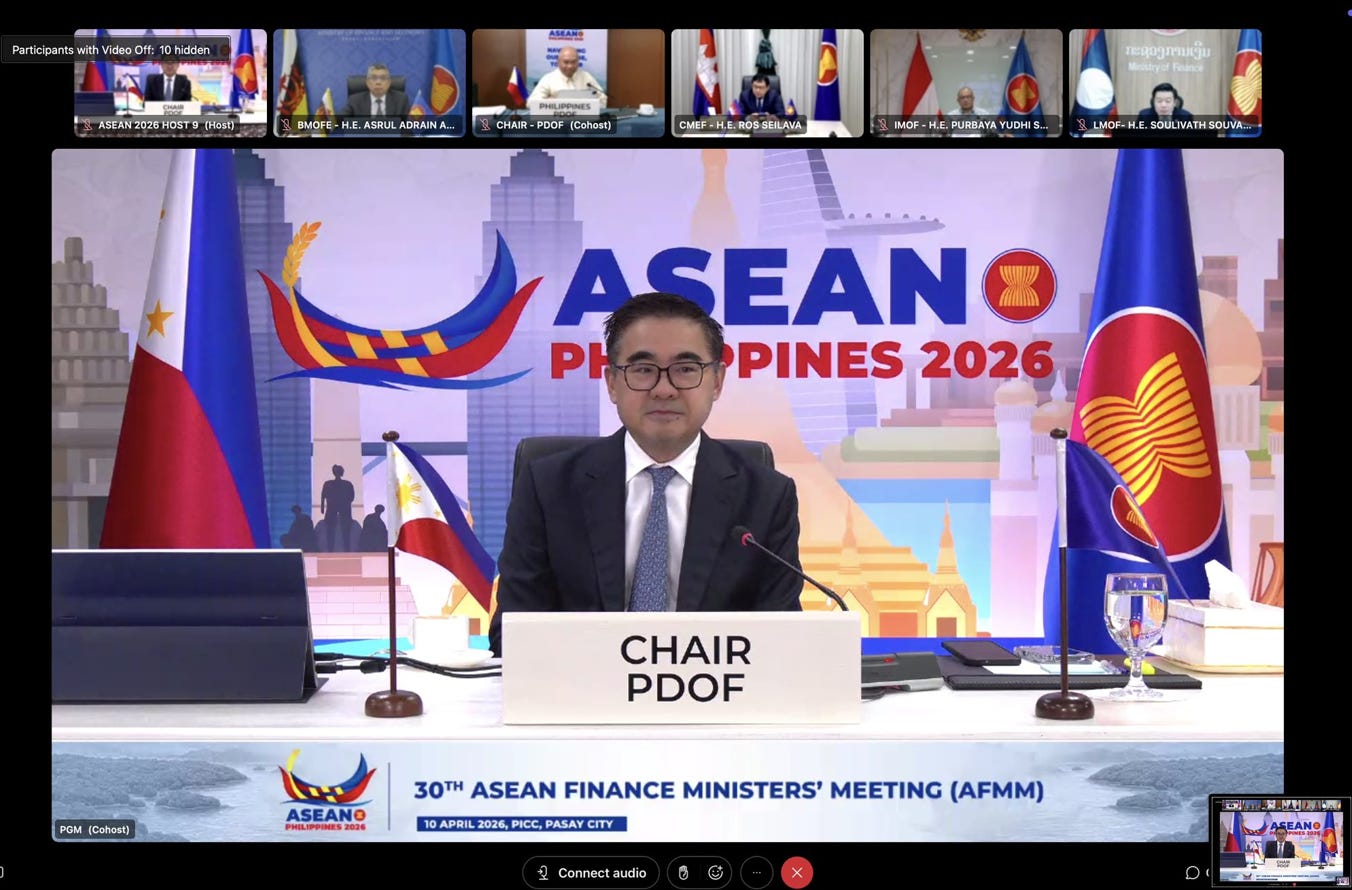
The future outlook on looming global headwinds was front and center in the latest round of key regional ministerial meetings. The engagements took place amid a series of flashpoint-related developments. Dozens of countries — including a majority from Southeast Asia —issued a new call spotlighting the serious issue of peacekeeper security after several deaths in the Middle East, while China and Russia earlier vetoed a United Nations resolution on the Strait of Hormuz with U.S.-Iran conflict futures still playing out1. And though a senior official candidly told top policymakers and experts to prepare for some near-term “pain” in global geoeconomic outlooks, ASEAN’s growth story was cited as an example of rare optimism in terms of longer-term foundations to build on2.
Select Key Recent Geopolitical and Geoeconomic Developments Amid Recent ASEAN Regional Meets
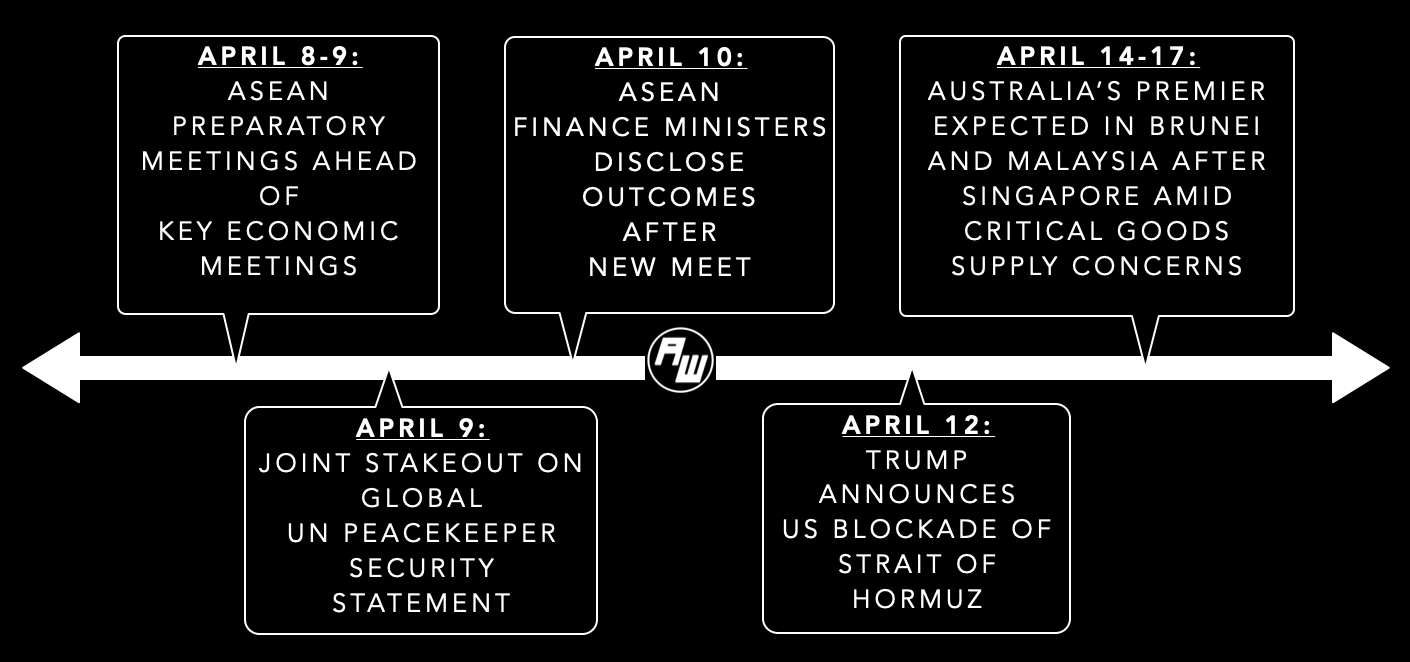
The wider geopolitical and geoeconomic dynamics have also dominated major power engagements. Among key powers, Australia Prime Minister Anthony Albanese’s engagements in maritime Southeast Asia have been carefully watched given the conversations around supply chain resilience, as evidenced by new inroads announced such as a previously mulled legally binding protocol on economic resilience as Middle East conflict fallout continues3. On the flip side, regional leaders and senior officials headed to the capitals of major powers this week including China, Russia and the United States have had to weigh in on how their activities are addressing immediate geopolitical and geoeconomic impacts, including Indonesia President Prabowo Subianto with Russia unsurprisingly playing up energy and other diplomatic gains ahead of the voyage4.
Why It Matters
The dynamics also spotlighted datapoints to watch with wider implications (see originally generated ASEAN Wonk table below on notable areas to monitor and additional specifics. Paying subscribers can read on for more on what to expect and future implications in the rest of the “Why It Matters” and “Where It’s Headed” sections, along with paid-only sections of the newsletter as usual).
Key Policy Datapoints to Watch, Alongside Major Pillars and Select Focus Areas
