

A new book co-authored by a former senior official articulates a new strategy for countries to counter growing geoeconomic weaponization, with implications for regions including the Indo-Pacific.
WonkCount: 1,568 words (~7 minutes)

Review: Will China Weaponization Fuel More Asia Resistance?

Context
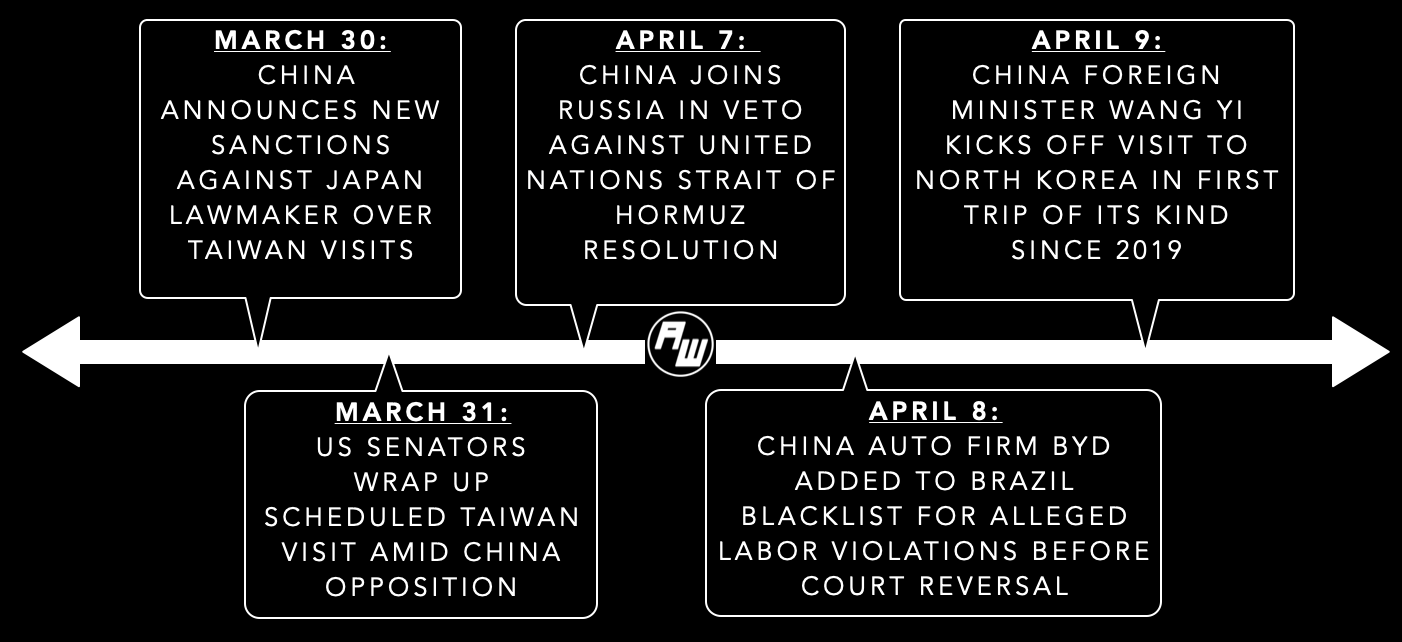
“China will take any additional punitive measure if deemed necessary in the future,” China’s foreign ministry spokesperson noted last week following Beijing’s announcement of new sanctions against a Japanese lawmaker over visits to Taiwan1. The development was just the latest datapoint in evolving responses to the growing use of geoeconomic weaponization in the Indo-Pacific region including by China and the United States as two leading powers in the international system to varying degrees, with cases in point within the past year alone including expanded rare earth export controls and adjusted trade tariffs2.
Select Key Recent China-Related Geopolitical and Geoeconomic Developments
A new book China’s Weaponization of Trade co-authored by former official Victor Cha charts out a new approach for managing geoeconomic weaponization in the Indo-Pacific and beyond3. In doing so, the book, co-authored with think tankers Ellen Kim and Andy Lim, adds to a series of new works by practitioners on evolving geoeconomic dynamics, including ones we have reviewed here on ASEAN Wonk such as How to Win a Trade War by Chad Bown and Soumaya Keynes4. China’s Weaponization of Trade argues that measures adopted by governments to date — be it sectoral groups like Pax Silica or newly-inked critical minerals deals — are too “piecemeal and defensive” to meaningfully address this challenge5. The book lays out a new approach by leveraging first-of-its-kind data across hundreds of cases of economic coercion impacting dozens of governments, companies and individuals, along with granular analysis on country-specific geoeconomic vulnerabilities including for China itself6. “[T]he means of countering trade weaponization thus far concocted by governments is deficient…new strategies are needed,” the book argues before detailing what these strategies could look like7.
Analysis
The book also highlights key datapoints to watch on potential futures (see originally-generated ASEAN Wonk table below for a summary of important contours. Paying subscribers can also read the rest of the “Analysis” section and “Implications” section looking at how these dynamics play out in the future).
Key Datapoints to Watch, Alongside Major Domains and Select Policy Focus Areas
