

A forthcoming book co-authored by a former chief economist and an ex-policy advisor articulates critical strategies for countries to navigate coming geoeconomic futures, with implications for regions including the Indo-Pacific.
WonkCount: 1,427 words (~6 minutes)

Review: How to Win a Trade War and Indo-Pacific Stakes

Context
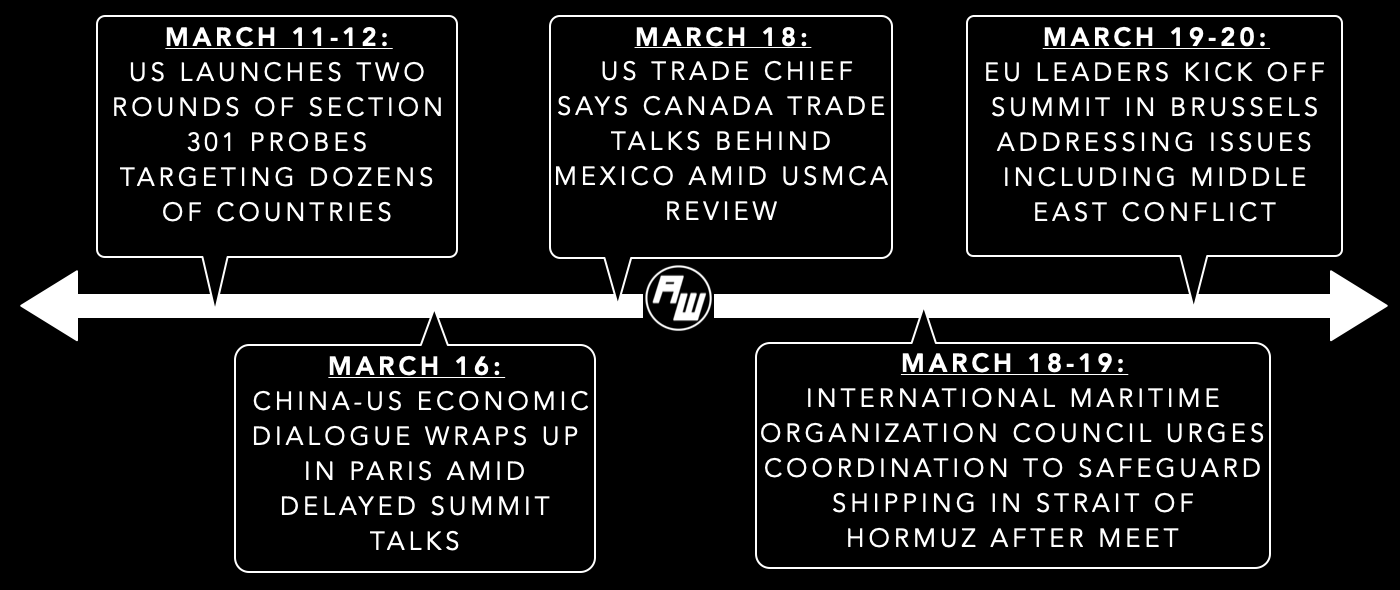
“The ministry…has provided the Office of the U.S. Trade Representative (USTR) with this information and will be engaging the USTR to seek further clarification on the trade data,” Singapore’s trade ministry disclosed in a blunt media statement contradicting U.S. statistics as Washington opened new Section 301 investigations targeting dozens of countries this past week1. The response was one datapoint in the spectrum of evolving regional approaches in navigating a more contested and shock-prone geoeconomic environment, with the continuing fallout from Middle East conflict being just the latest case in point.
Select Key Recent Regional and Global Geopolitical and Geoeconomic Datapoints
A forthcoming book How to Win a Trade War co-authored by former chief economist Chad Bown and ex-policy advisor Soumaya Keynes articulates critical strategies for countries to navigate coming geoeconomic futures2. In doing so, it adds to a series of books on evolving geoeconomic dynamics, including ones we have reviewed here on ASEAN Wonk such as Chokepoints by Edward Fishman3. How to Win a Trade War distills advice on how to manage geoeconomic competition based on the authors’ experience and conversations with over a hundred top officials and executives. “In order to wage war, you need to know the battlefield,” the book notes before going on to articulate future scenarios and potential approaches4.
Analysis
The book also highlights key datapoints to watch on potential futures (see originally-generated ASEAN Wonk table below for a summary of important contours. Paying subscribers can also read the rest of the “Analysis” section and “Implications” section looking at how these dynamics play out in the future).
Future Geoeconomic Scenarios, Major Outlook Features and Potential Policy Datapoints
