

Greetings to new readers and welcome all to the latest edition of the weekly ASEAN Wonk BulletBrief! If you haven’t already, you can upgrade to a paid subscription for $5 a month/$50 a year below to receive full posts by inserting your email address and then selecting an annual or monthly option. You can visit this page for more on pricing for institutions, groups as well as discounts. For current paid subscribers, please make sure you’re hitting the “view entire message” prompt if it comes up at the end of a post to see the full version.
For this iteration of ASEAN Wonk BulletBrief, we are looking at:
Assessing the geopolitical and geoeconomic significance of Southeast Asia and Indo-Pacific datapoints at recent Munich Security Conference discussions;
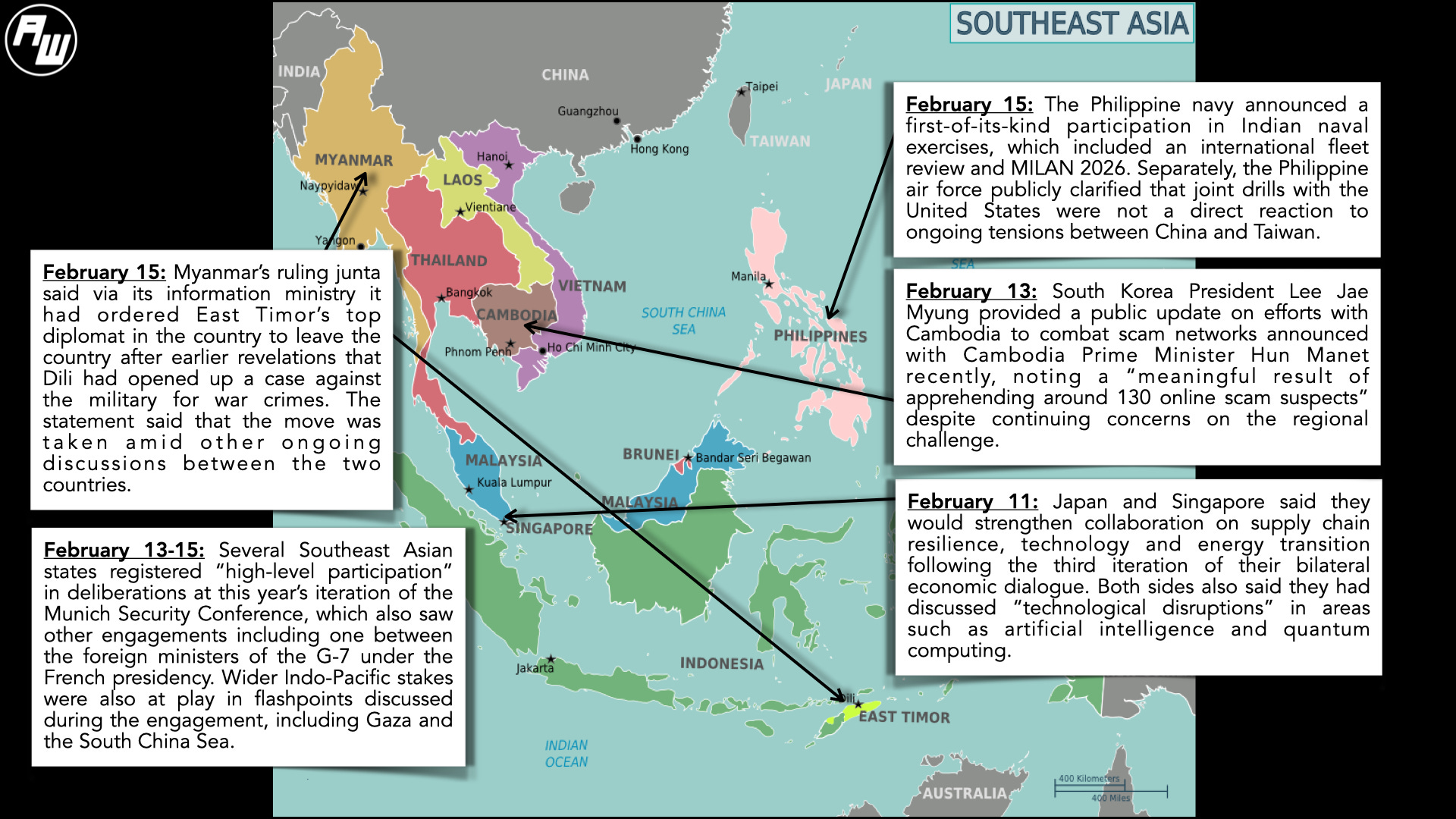
Mapping of regional developments, including first maritime exercise launch and diplomatic expulsion talk;
Charting evolving geopolitical, geoeconomic and security trends such as new scam law claims; quiet defense transfer; and future hub working group;
Tracking and analysis of industry developments and quantitative indicators including coming telecommunications rollout; shifting artificial intelligence adoption realities; sectoral regime revamp chatter and more;
And much more!
This Week’s WonkCount: 2,316 words (~10 minutes)


First Maritime Exercise Launch; Diplomatic Expulsion Talk & More

Geoeconomic Confrontation Fears; Scam Center Money Trail & Pledged Investment Realities
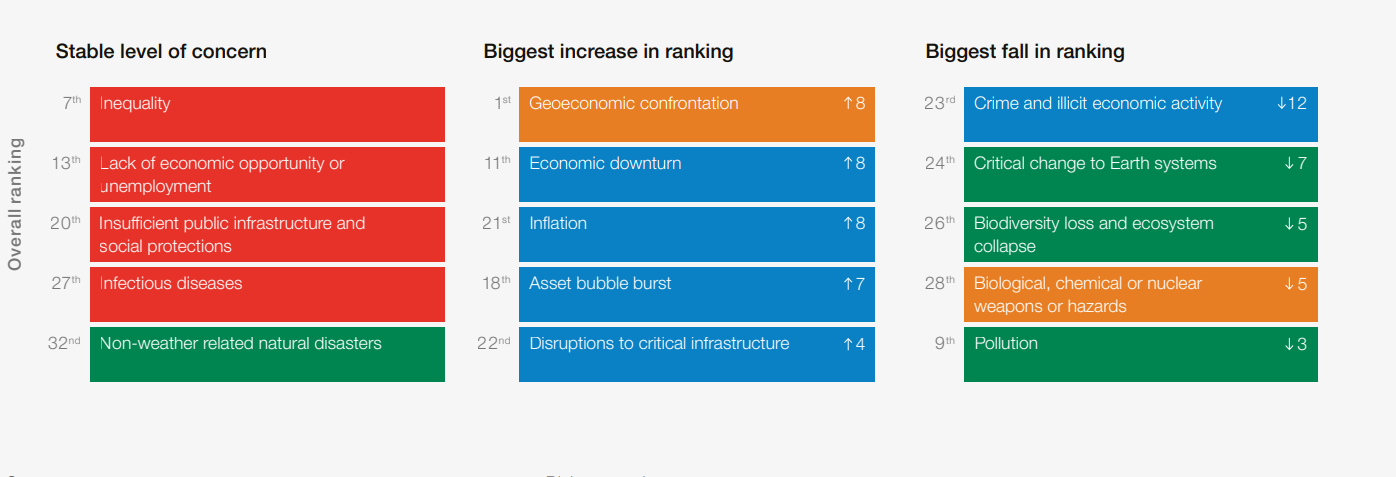
“Geoeconomic confrontation has emerged as the most severe risk over the next two years while economic risks have experienced the sharpest rises among all risk categories,” according to the latest iteration of a global risks perception survey covering over 1,300 leaders and experts across academia, business government, international organizations and civil society published by the World Economic Forum. All told, around 50 percent of those surveyed anticipate turbulent or stormy outlooks ahead over the next two years, growing to 57 percent over the next ten years (link).
Graphic Depicting Change in Short-Term Global Risks Perception: This Year vs. Last Year
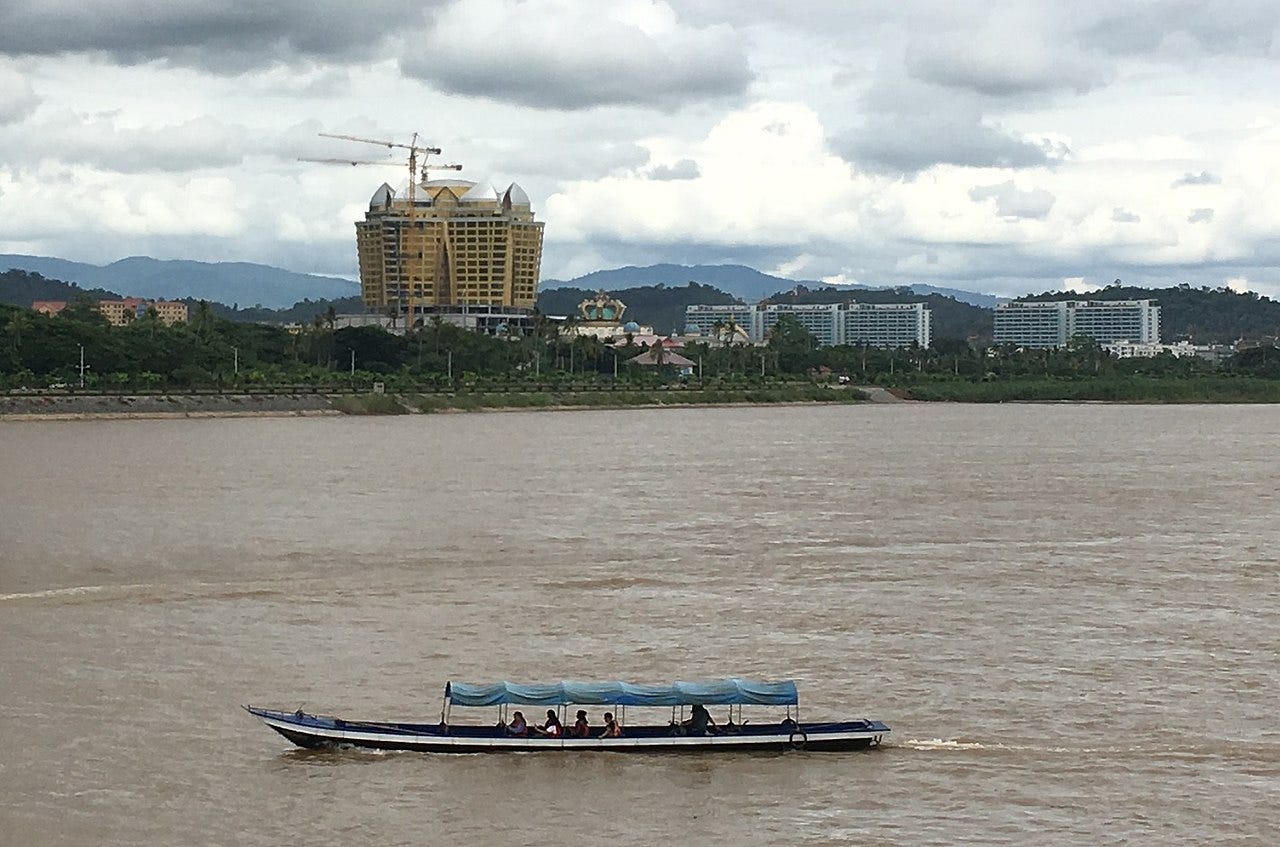
“[A]s long as local and international law enforcement agencies don’t seriously try to follow the money, little headway is likely to be made,” according to an assessment of ongoing efforts to combat scam centers in Southeast Asia published by The Irrawaddy including evolving cross-border dynamics between Myanmar and Thailand (link).
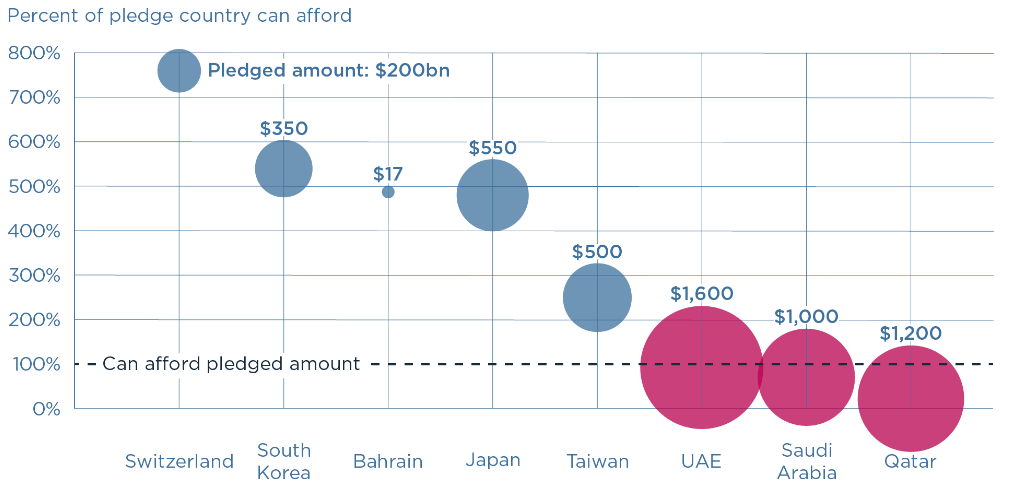
“But many of the announced commitments…appear ambitious, and some strain credibility,” according to an assessment of recent investment pledges by U.S. allies and partners by the Peterson Institute for International Economics. The assessment notes that while pledge amounts may be “perhaps achievable” for some Indo-Pacific countries like Japan with flow reallocations and asset redeployments, other Middle Eastern countries like the Qatar and the United Arab Emirates may find this more challenging without more drastic funding steps (link).
Country Investment Pledges And Designated “Ability to Pay” by Pledge Size and Financing Measures

Munich Security Conference 2026 Reveals Coming ASEAN Plans

What’s Behind It
Southeast Asia’s links to evolving global and Indo-Pacific trends were at play during the convening of the most recent iteration of the Munich Security Conference this past week. Ahead of the conference kickoff, a preview of the proceedings directly referenced Southeast Asia as an example of a region where engagements were intensifying with “alternative partnerships” beyond China and the United States as an example of wider global trends at play1. During the proceedings, regional stakes were also at play in areas of contestation beyond responses to remarks delivered by Secretary of State Marco Rubio, be it contestation over the nature of Indonesia’s contribution to peacekeeping efforts in Gaza or coalitions in the Western Pacific focused around the “first island chain” with relevance for flashpoints like the South China Sea2.
Select Key Recent Regional Geopolitical Developments Amid 2026 Munich Security Conference
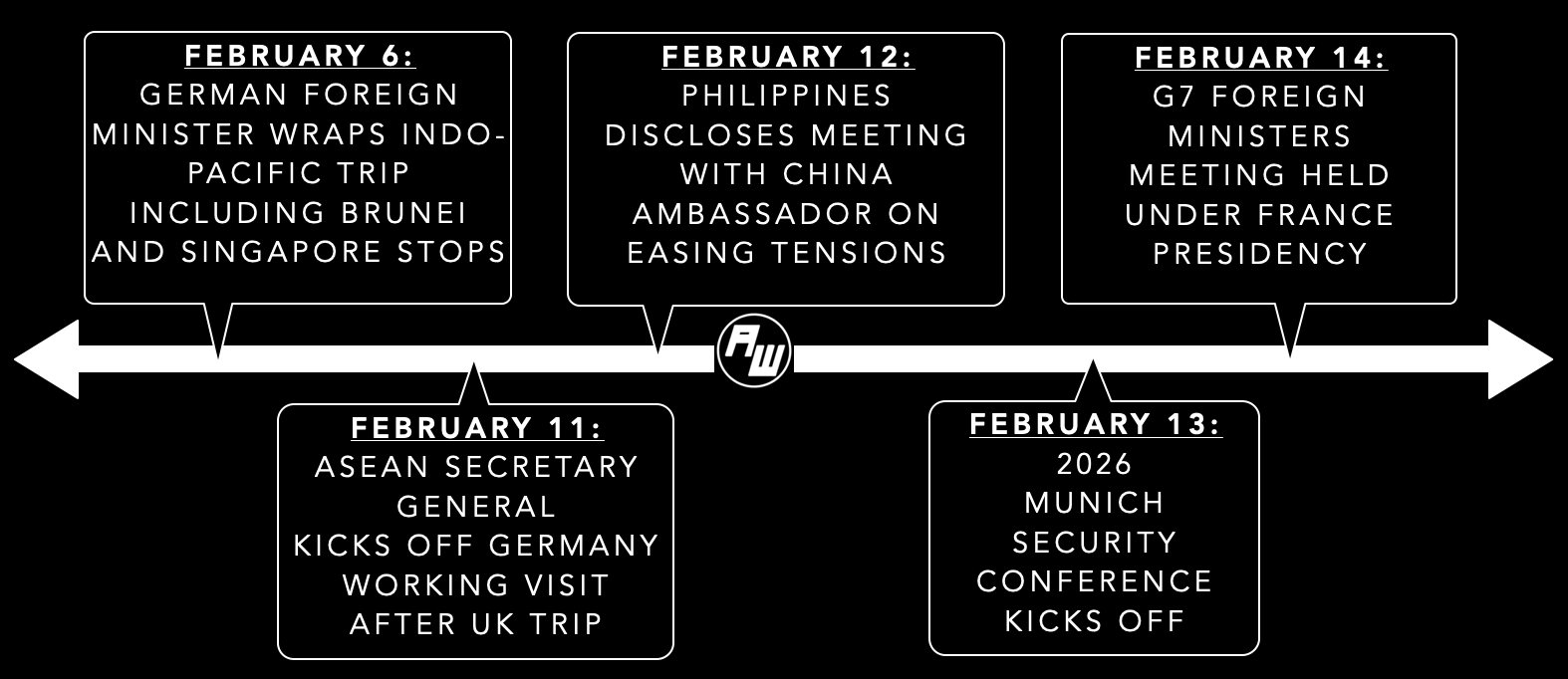
The engagements highlighted ongoing initiatives at play by Southeast Asia and the Indo-Pacific states. The ASEAN Secretary General warned against efforts to “contribute to this volatile and violent world today” by signing on to initiatives to “abandon” the current order, offsetting the more sobering message from German Chancellor Friedrich Merz that the order “no longer exists” just weeks after his foreign minister had made Southeast Asia stops as part of an Indo-Pacific trip3. At a more granular level, there were also some key agreements concluded by individual Southeast Asian states in attendance on the sidelines of the engagement, with officials noting intensifying scrutiny on country composition of “high-level representation” not unlike what was seen at Davos earlier this year4.
Why It Matters
The dynamics also spotlighted datapoints to watch with wider regional and global implications (see originally generated ASEAN Wonk table below on notable areas to monitor and additional specifics. Paying subscribers can read on for more on what to expect and future implications in the rest of the “Why It Matters” and “Where It’s Headed” sections, along with paid-only sections of the newsletter as usual).
New Policy Datapoints to Watch, Along with Major Countries and Priority Cooperation Areas
