

A new book analyzes futures of world’s supercontinent and likely shape of evolving major power competition in a second Eurasian century.
WonkCount: 1,547 words (~6 minutes)

Review: Where Next in Second Eurasian Century Forecasting?
Context
“Friends, it is time for companies and countries to take their signs down,” Canada Prime Minister Mark Carney noted in a headline-grabbing speech at the World Economic Forum in Davos earlier this week, equating honest acknowledgment of “rupture” in the rules-based international order with the removal of a “Workers of the World Unite” sign performatively hung daily from a window of a greengrocer described by then Czech dissident Vaclav Havel in 1978 as encapsulating “living within a lie”1. Carney’s speech — which included references to Canada’s activism such as free trade pacts with ASEAN countries — were just the latest contribution to the ongoing conversation on how to rethink conceptualizations of the current and future world order, some of which have been heard in Southeast Asia and across other Indo-Pacific capitals as well as we have been noting on ASEAN Wonk.
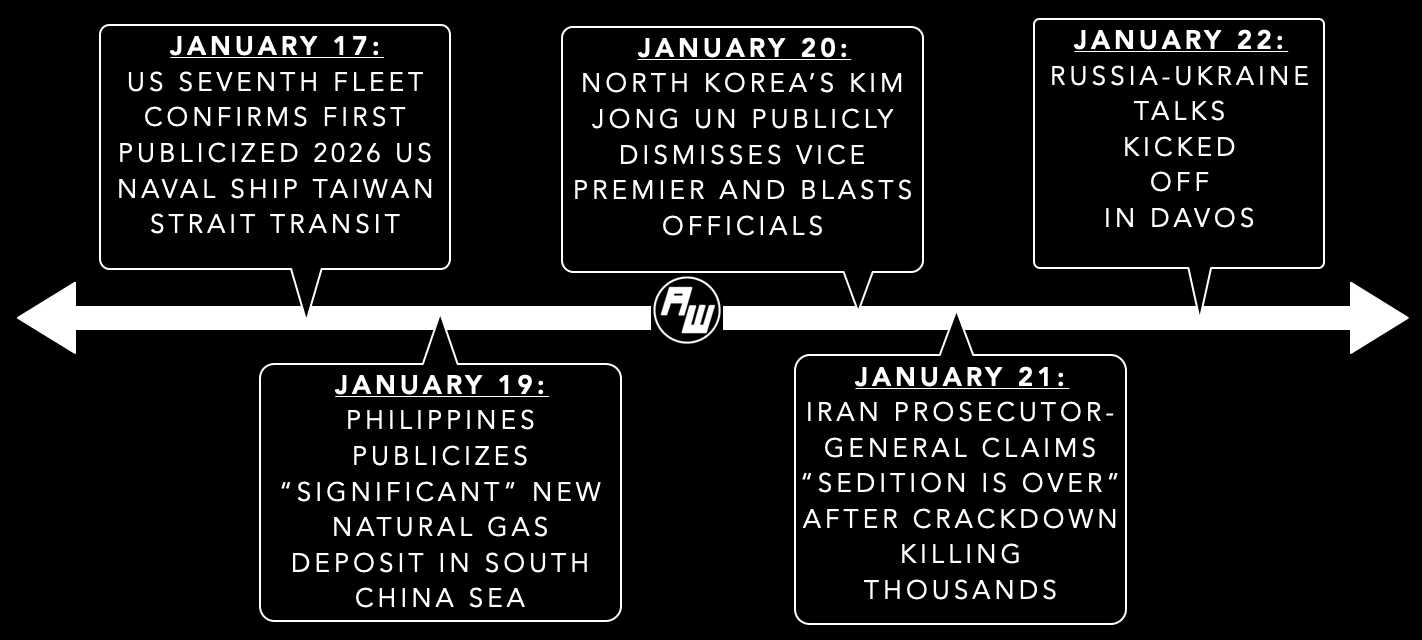
Select Key Recent Global Flashpoint Datapoints
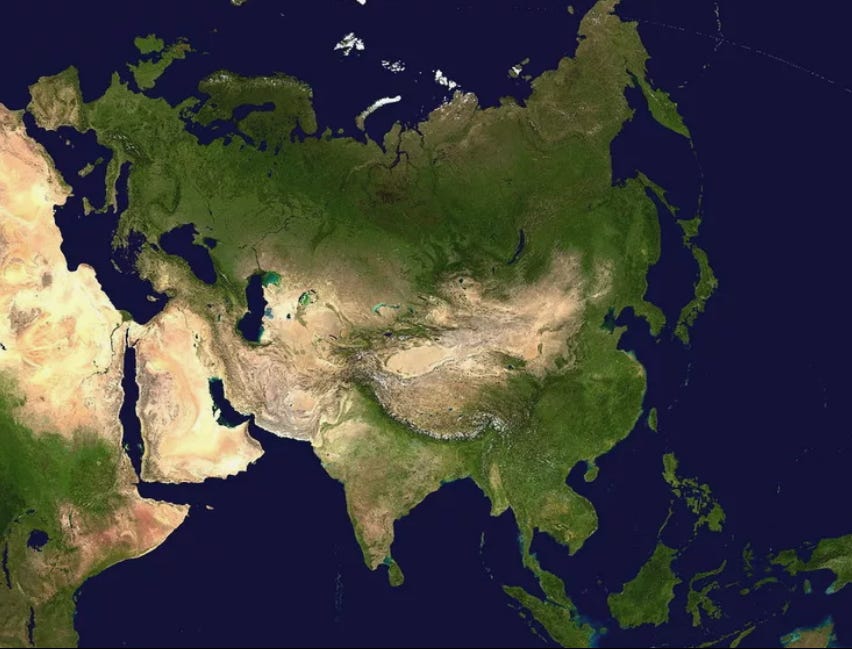
A new book The Eurasian Century by scholar Hal Brands contributes to the ongoing conversation on the evolving global order by analyzing the futures of world’s supercontinent and likely shape of major power competition in a second Eurasian Century2. In doing so, it adds to book-length works in the past decade that have framed global futures around the world’s supercontinent, with other examples including ex-Portuguese diplomat Bruno Macaes’s The Dawn of Eurasia and former French defense ministry analyst Nadege Rolland’s China’s Eurasian Century3. While Brands acknowledges the term “Eurasia” has yet to gain traction even in major Indo-Pacific capitals and there have been much more declarations of an “Asian Century” than a “Eurasian Century,” it nonetheless has value in describing the connectivity between Europe and Asia dating back to renowned British geographer and thinker Halford Mackinder, with its boundaries touching all of the world’s greatest oceans; housing around 70 percent of the world’s population; and possessing more than one-third of the Earth’s land4. “The arc of this century, like the arc of the last one, will be determined by the outcome of Eurasian rivalry,” the book notes before going on to define the potential futures in the coming decades of a Second Eurasian Century5.
Analysis
The book also highlights key datapoints to watch on potential futures (see two originally-generated ASEAN Wonk tables below for a summary of important contours. Paying subscribers can also read the rest of the “Analysis” section and “Implications” section looking at how these dynamics play out in the future).
Future Datapoints to Watch, Alongside Major Policy Pathways and Key Strategic Pillars
