

Note to Readers, Listeners and Watchers: ASEAN Wonk will be taking our usual annual break, and we will return with our first post for 2026 starting January 4. Happy holidays!
Greetings to new readers and welcome all to the latest edition of the weekly ASEAN Wonk BulletBrief! If you haven’t already, you can upgrade to a paid subscription for $5 a month/$50 a year below to receive full posts by inserting your email address and then selecting an annual or monthly option. You can visit this page for more on pricing for institutions, groups as well as discounts. For current paid subscribers, please make sure you’re hitting the “view entire message” prompt if it comes up at the end of a post to see the full version.
For this iteration of ASEAN Wonk BulletBrief, we are looking at:
Assessing the geopolitical and geoeconomic significance of outcomes from a global anti-scam partnership conference including international implications;
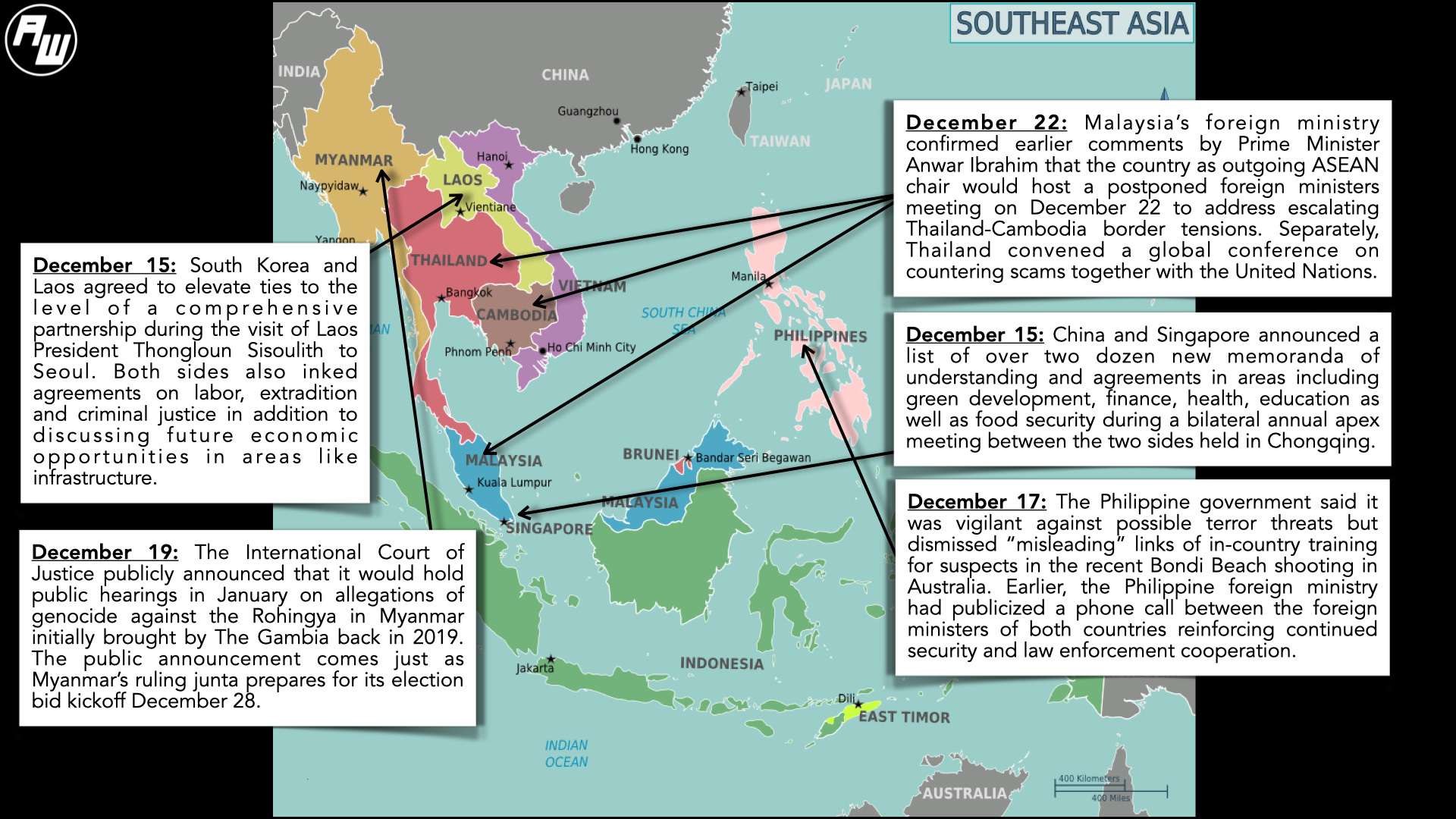
Mapping of regional developments, including terror links denial and emergency regional meeting;
Charting evolving geopolitical, geoeconomic and security trends such as new Kremlin geoeconomic boast; quiet military assistance boost and sectoral partnership launch;
Tracking and analysis of industry developments and quantitative indicators including major 2026 digital platform warning; big new strategic infrastructure approvals; cross-border payment partnership and more;
And much more! ICYMI, check out the 2026 iteration of our annual ASEAN Wonk Futurepoints Forecast on geopolitical and geoeconomic trends to watch over the course of the next year which we published earlier this week.
This Week’s WonkCount: 2,358 words (~10 minutes)


Terror Links Denial; Emergency Regional Meeting & More

Multi-Speed World Futures; China’s Sectoral Regional Influence & Managing Scam Risks
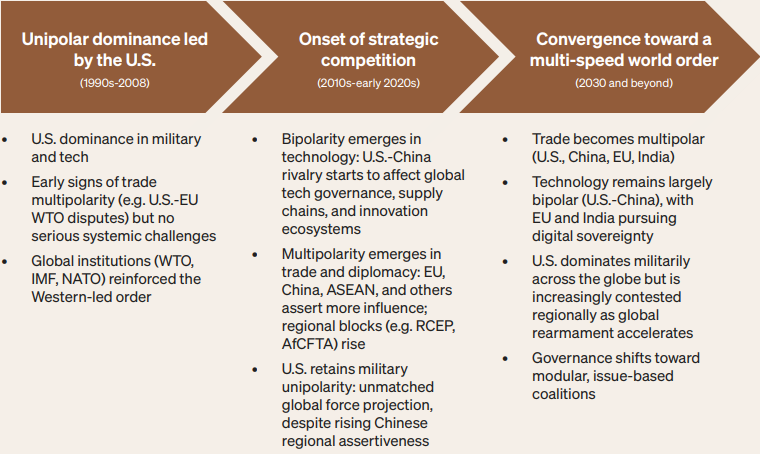
“India, Gulf states, and nations across Southeast Asia, Africa, and Latin America are leveraging modular coalitions and selective alignment to shape outcomes in trade, energy, and technology…yet their flexibility is constrained,” notes a new report published on global order following the meeting of the JPMorganChase International Council. The report argues that the international system is becoming more “multi-speed,” with areas like trade, technology, security and energy policy moving on different clocks and demanding agility from governments, businesses and investors alike (link to pdf).
Graphical Timeline from Unipolarity to Multipolarity
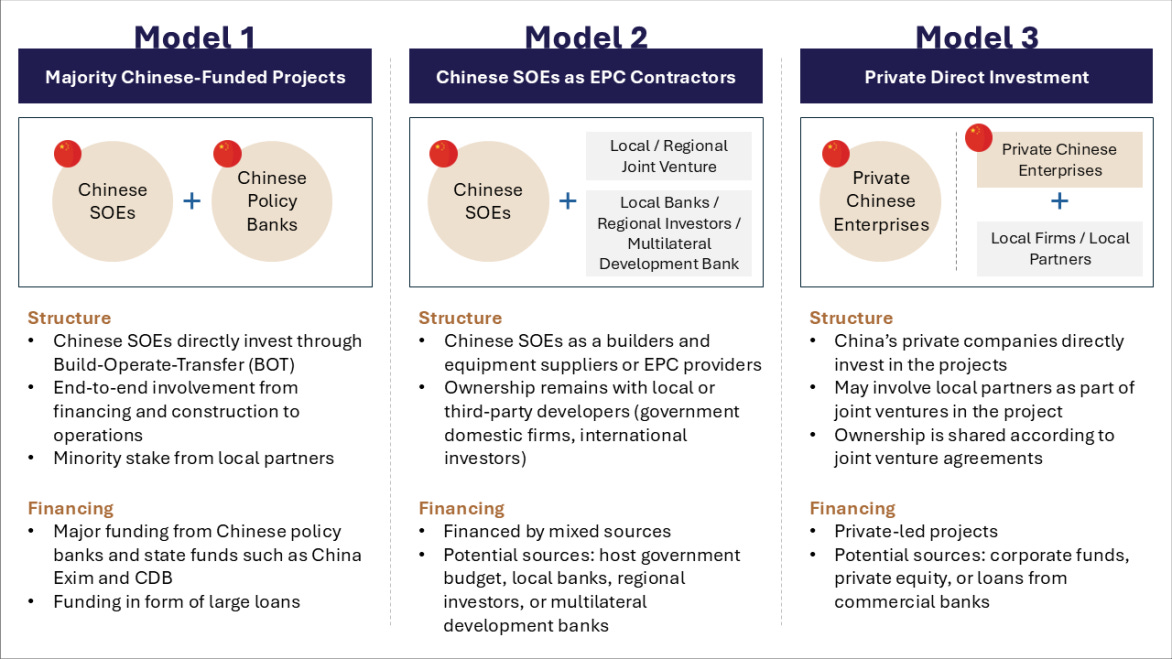
“China’s participation offers Southeast Asian countries a comprehensive package of support…however, heavy reliance on China poses dependency risks,” concludes a report on Beijing’s involvement in Southeast Asia’s energy sector published by the Southeast Asia Public Policy Institute. The report includes models of Chinese investment from case studies in several Southeast Asian countries and proposed recommendations for policymakers in areas like energy sovereignty, finance, partnerships, governance as well as local capacity (link).
Images Showcasing Models in Select China Projects
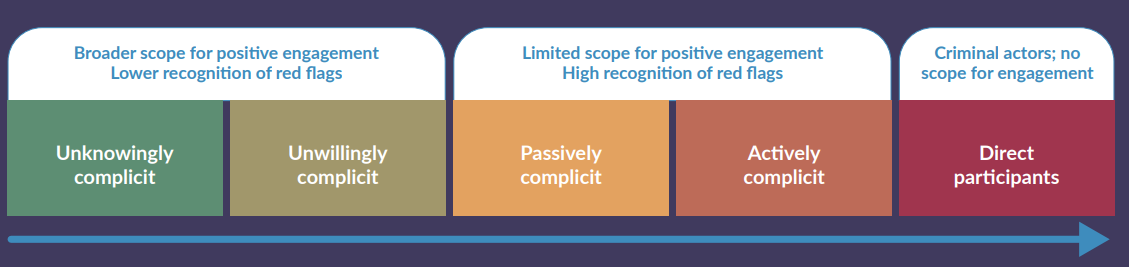
“There appears to be a spectrum of complicity in private sector companies,” according to a newly-released report by The Global Initiative Against Transnational Organized Crime. The report argues that this so-called “spectrum” ranges from those aware and actively driving and profiting from cyber scam operations to those that are unaware of how their activities may be benefiting these criminal operations (link).
Graphic Illustrating “Spectrum of Complicity” for Entities and Scam Compounds

What’s Next After Global Anti-Scam Conference in Thailand?
What’s Behind It
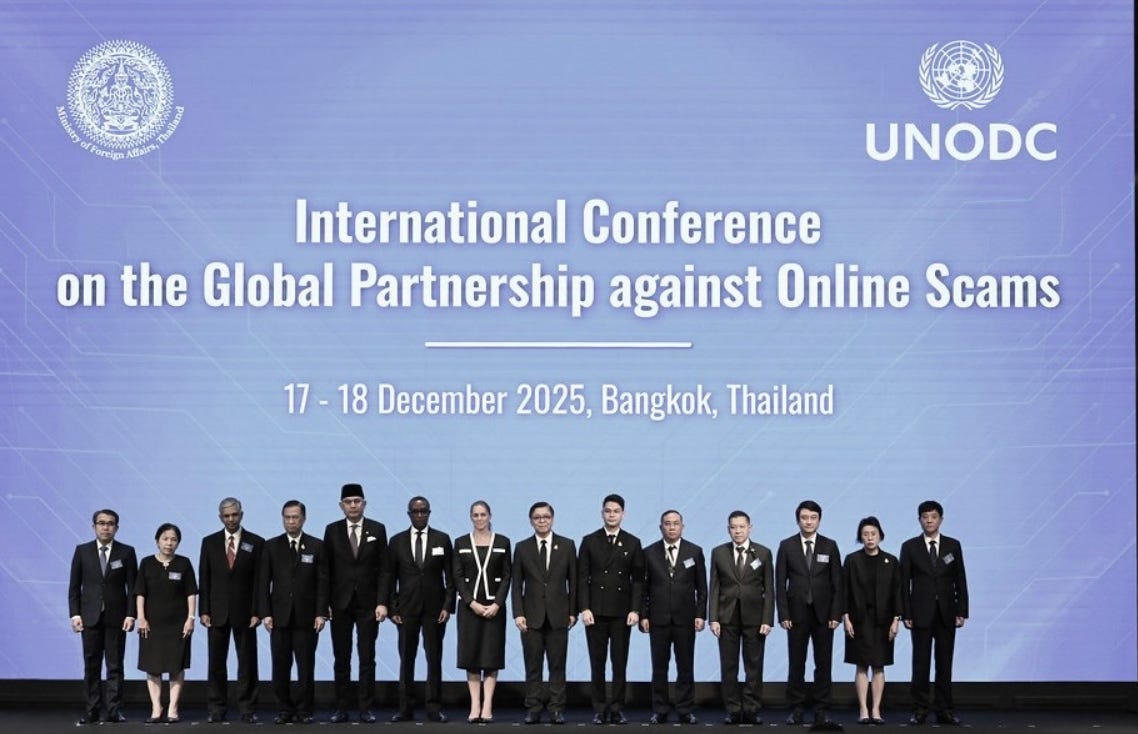
The United Nations and Thailand convened a international conference on the global partnership against scam networks1. The engagement to address the scams challenge — which has touched over a third of the world’s nations and resulted in over a trillion dollars in losses by one count — occurred amid a challenging regional environment at the end of 20252. A postponed special ASEAN foreign ministers’ meeting is testament to what one official described as “growing pains” in even convening regional consultations to discuss Thailand-Cambodia border tensions, beyond the focus on statements by key powers including China and the United States3. And as we pointed out in our newly-released ASEAN Wonk FuturePoints forecast for 2026, this comes amid a series of domestic political transitions in much of mainland Southeast Asia which includes the first phase of attempted elections by the ruling military junta in Myanmar as well as polls for Thailand set for early February.
Select Key Recent Developments Amid International Anti-Online Scam Conference
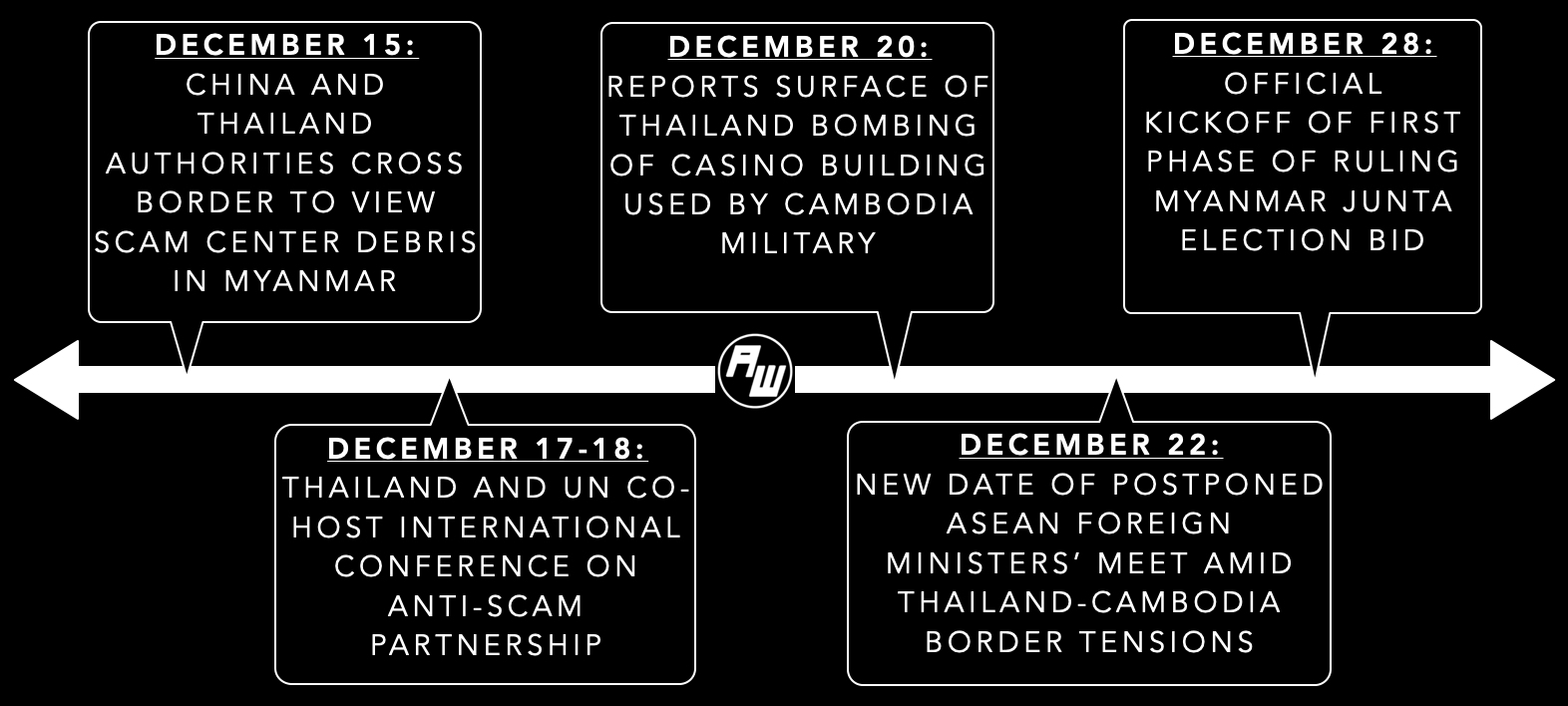
The engagement highlighted efforts to make inroads on the issue despite vexing challenges. One official familiar with the conference dynamics noted that complicating factors such as the ”fusion” of the Cambodia-Thailand border tensions and scam networks made the atmospherics for cooperation more complex, as illustrated by the absence of a Cambodian representative that did not go unnoticed by the participants. Nonetheless, officials also pointed out to quieter steps that have been taken in this respect apart from contestation on previously publicized developments such as Vietnam’s convening of a signing ceremony for a new global cybercrime convention earlier this year4. This includes joint repatriation efforts continuing into this past week that by one count have already risen to include over 10,000 individuals from over 40 nations5.
Why It Matters
The dynamics also spotlighted datapoints to watch with wider implications (see originally generated ASEAN Wonk table below on notable areas to monitor and additional specifics. Paying subscribers can read on for more on what to expect and future implications in the rest of the “Why It Matters” and “Where It’s Headed” sections, along with paid-only sections of the newsletter as usual).
New Commitment Areas to Watch, Alongside Major Policy Priorities and Key Pillars
