

Greetings to new readers and welcome all to the latest edition of the weekly ASEAN Wonk BulletBrief! If you haven’t already, you can upgrade to a paid subscription for $5 a month/$50 a year below to receive full posts by inserting your email address and then selecting an annual or monthly option. You can visit this page for more on pricing for institutions, groups as well as discounts. For current paid subscribers, please make sure you’re hitting the “view entire message” prompt if it comes up at the end of a post to see the full version.
For this iteration of ASEAN Wonk BulletBrief, we are looking at:
Assessing the geopolitical and geoeconomic significance of China’s new high-level 2026 Southeast Asia tour and Beijing’s shifting regional influence;
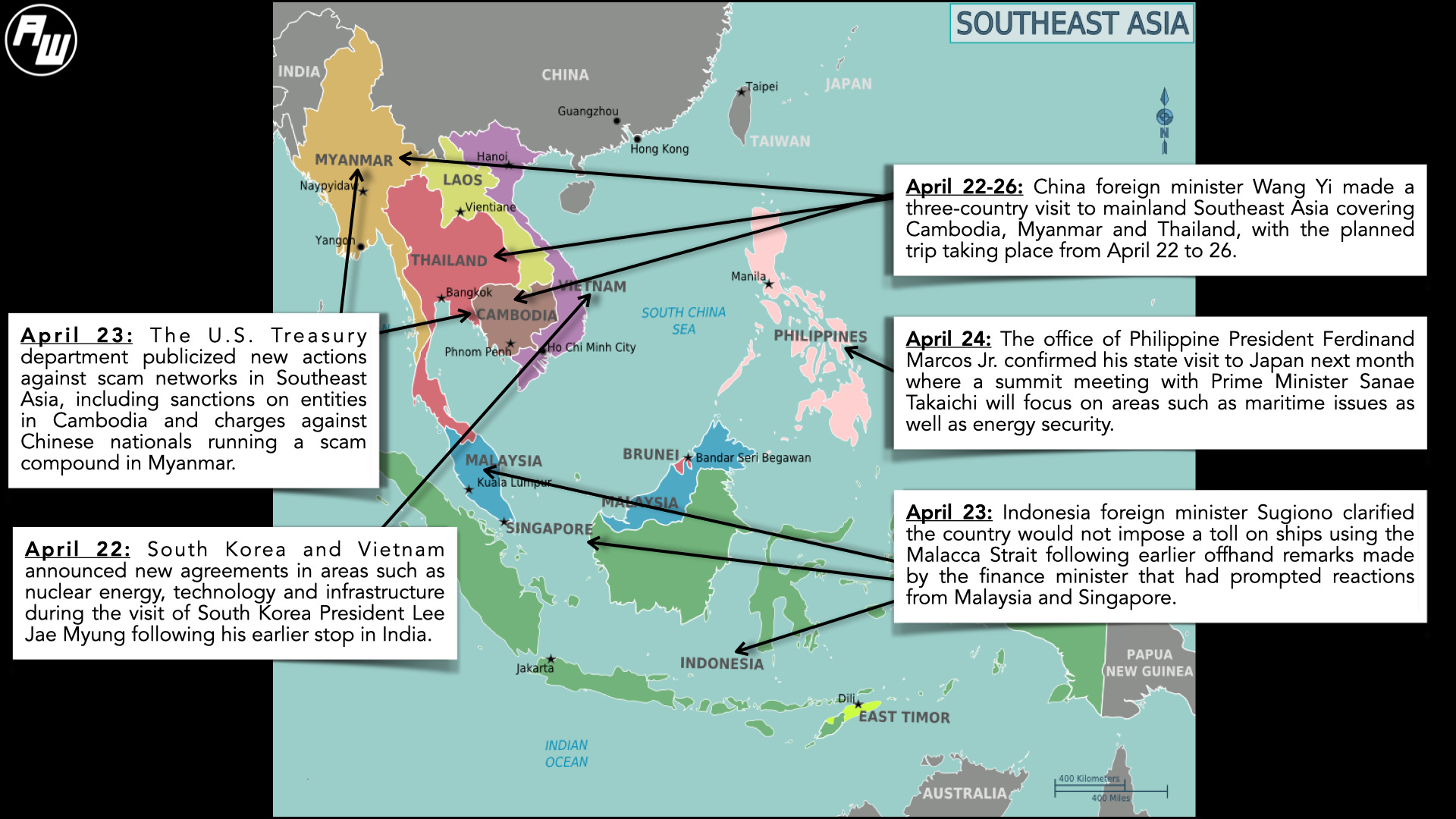
Mapping of regional developments, including coming Indo-Pacific summitry watch and Malacca Strait maritime clarification;
Charting evolving geopolitical, geoeconomic and security trends such as emergency transfers; hidden 2027 APEC race and membership checkpoint;
Tracking and analysis of industry developments and quantitative indicators including maritime threat; green pact chatter; investment deep dive and more;
And much more! ICYMI, check out our ASEAN Wonk review of a new book which puts a rare spotlight on Asia’s aging security dilemma timebomb.
This Week’s WonkCount: 2,427 words (~11 minutes)


Coming Indo-Pacific Summitry Watch; Malacca Strait Clarification & More

Supply Chain Resilience; Grid Building & Aid Futures
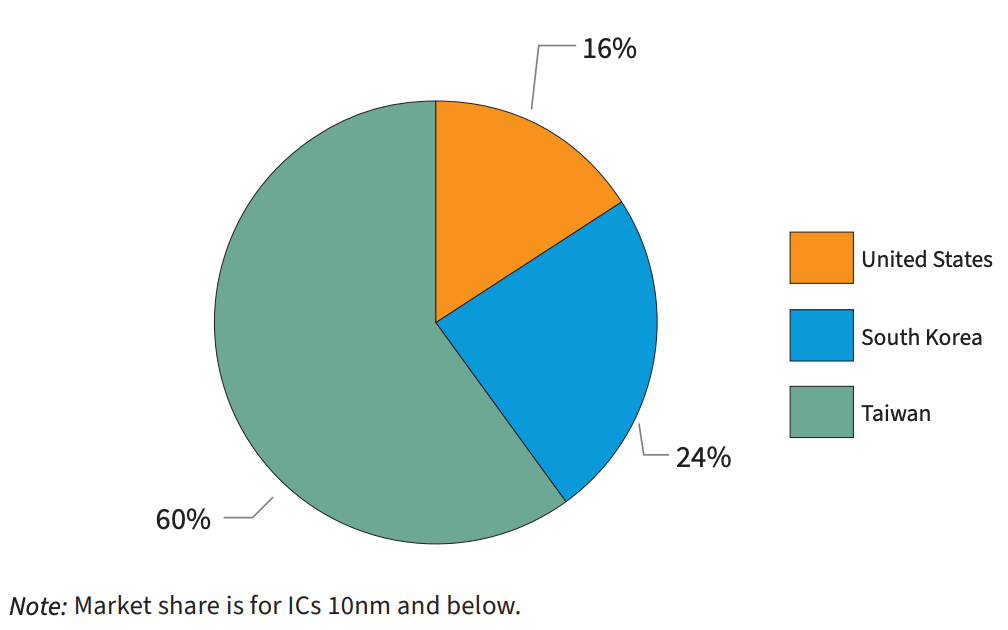
“[S]upply chain resilience should be paramount,” notes a new paper assessing the Japan’s efforts in the semiconductor industry and the pursuit of economic security within the country’s wider policy landscape (link).
Graphic Depicting Market Shares of Advanced Logic IC Manufacturing Countries, 2023
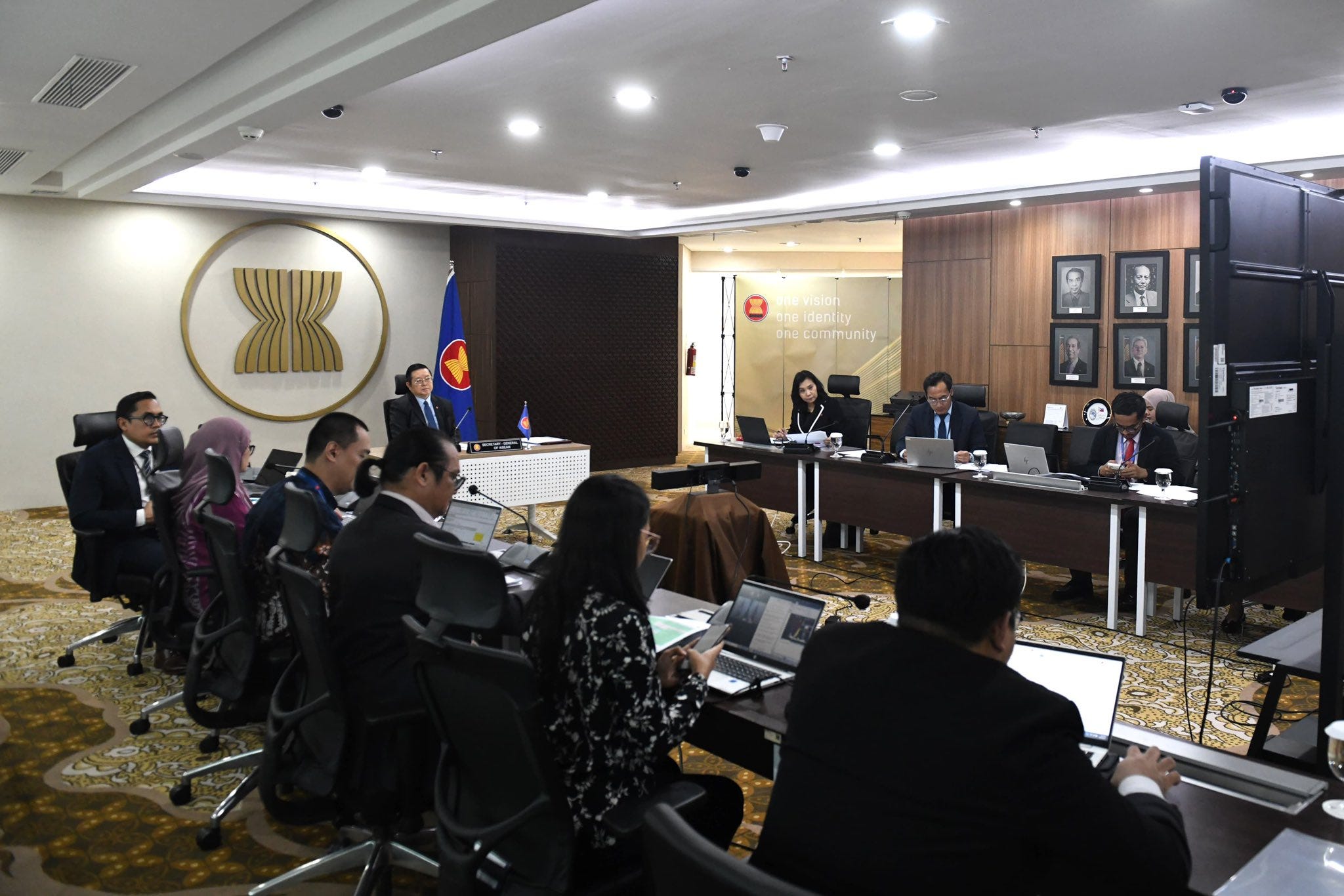
“[W]hat it lacks is the governance architecture to fully unlock it,” argues a new commentary published over at East Asia Forum on overcoming challenges in building the ASEAN Power Grid in Southeast Asia (link).
“Within the broader financing landscape, ODA should remain focused on core development investment, consistent with its defining purpose,” according to a new brief published by the Center for Global Development (link).

What Did China Really Gain in New 2026 Southeast Asia Tour?
What’s Behind It
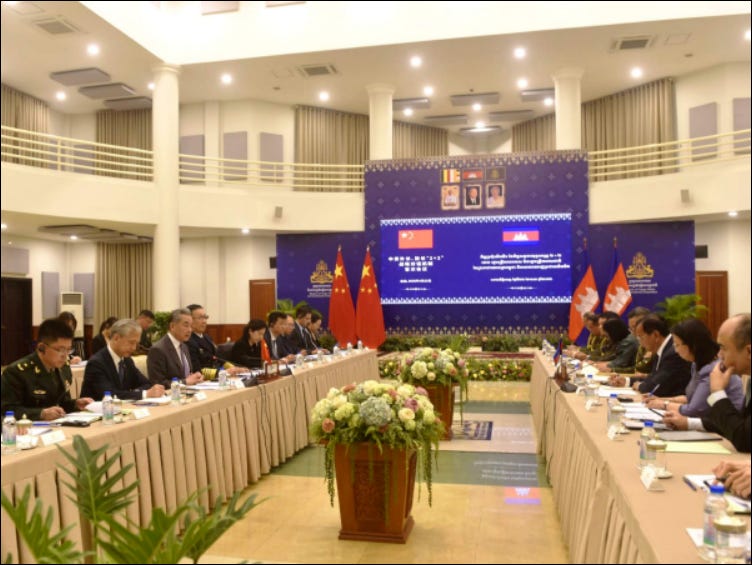
China announced new inroads with Southeast Asian states following foreign minister Wang Yi’s three-country regional tour1. The inroads occurred alongside regional engagements by other key powers. While the focus this past week was on the publicizing of new U.S. steps against giant scam networks including those targeting Chinese nationals, other powers including the European Union were also taking steps of their own on a global challenge2. The outcomes following South Korea President Lee Jae Myung’s Vietnam visit also highlighted Seoul’s role in a wider mix of powers engaging in geoeconomic areas such as nuclear power plants amid the long list of agreements touted by both sides3.
Select Key Recent and Related Developments Amid Latest China Southeast Asia Tour
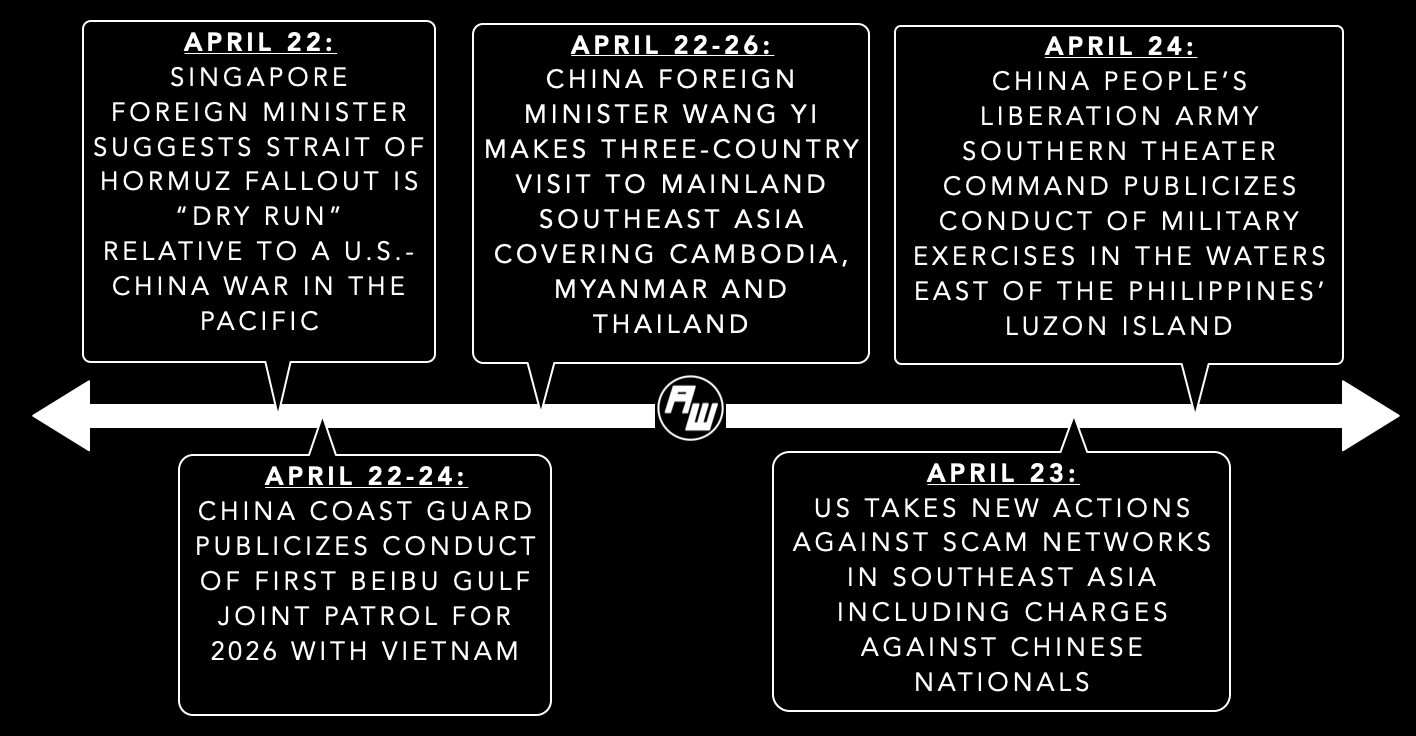
The tour occurred amid scrutiny on the regional flashpoint landscape. Ahead of U.S. President Donald Trump’s trip to China, a senior official suggested that Washington had “more of an advantage” over Beijing in terms of economic vulnerability despite suggestions of mutual economic destruction4. Beyond the focus on China’s reactions to increasingly multinationalized U.S.-Philippines Balikatan exercises and implications for the South China Sea, the delayed issuance of an ASEAN chair statement on Myanmar also reinforced differences within the evolving intraregional conversation that some officials privately say has also been visible in the handling of Middle East conflict fallout thus far5.
Why It Matters
The dynamics also spotlighted datapoints to watch with wider implications (see originally generated ASEAN Wonk table below on notable areas to monitor and additional specifics. Paying subscribers can read on for more on what to expect and future implications in the rest of the “Why It Matters” and “Where It’s Headed” sections, along with paid-only sections of the newsletter as usual).
Future Policy Datapoints to Watch, Alongside New Major Developments and Key Partners
