

A new book Asia’s Aging Security by scholar Andrew Oros book puts rare spotlight on a critical underexamined security challenge in the Indo-Pacific with implications for subregions such as Southeast Asia.
WonkCount: 1,347 words (~6 minutes)

Review: Will Asia’s Aging Security Dilemma Timebomb Explode?

Context
“[L]ike many advanced economies, our population is rapidly aging,” Singapore Prime Minister Lawrence Wong cautioned in a recent address to the nation on longer-term challenges to manage beyond the immediate focus on what he termed “the end of the global order that we had long operated in.”1 The comment was just the latest among many that capture the complex challenges individual Indo-Pacific countries face beyond the aggregate reality of the region’s growing geoeconomic heft, with implications for everything from defense spending to economic planning.
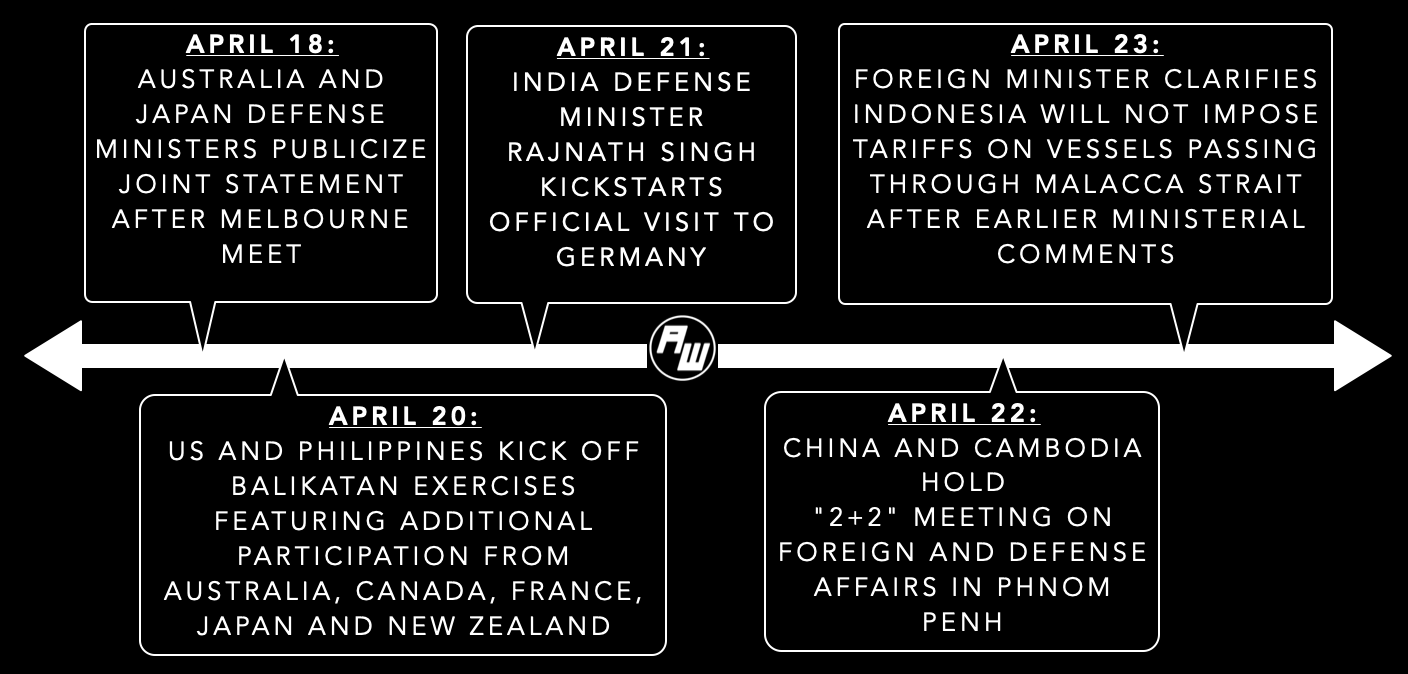
Select Key Recent Security-Related Developments in the Indo-Pacific Region
A new book Asia’s Aging Security by scholar Andrew Oros book puts rare spotlight on a critical underexamined security challenge in the Indo-Pacific with implications for subregions such as Southeast Asia2. In doing so, it adds a regional perspective to a series of country-focused book-length works on the subject amid a period of intensified geoeconomic change and engagement3. Asia’s Aging Security forecasts possible futures in what is termed an “aging security dilemma” in Asia — with longstanding conflict flashpoints continuing and aging states deploying new technologies and weapons to maximize security4. “Asia’s aging security…should be brought to the forefront when designing new security architecture and strategies for regional and global peace in the coming decades,” the book argues as it specifies pathways for doing so out to 2050 and beyond5.
Analysis
The book also highlights key datapoints to watch on potential futures (see originally-generated ASEAN Wonk table below for a summary of important contours. Paying subscribers can also read the rest of the “Analysis” section and “Implications” section looking at how these dynamics play out in the future).
Major Future Datapoints to Watch, Alongside Priority Variables and Key Strategic Components
