

Greetings to new readers and welcome all to the latest edition of the weekly ASEAN Wonk BulletBrief! If you haven’t already, you can upgrade to a paid subscription for $5 a month/$50 a year below to receive full posts by inserting your email address and then selecting an annual or monthly option. You can visit this page for more on pricing for institutions, groups as well as discounts. For current paid subscribers, please make sure you’re hitting the “view entire message” prompt if it comes up at the end of a post to see the full version.
For this iteration of ASEAN Wonk BulletBrief, we are looking at:
Assessing the geopolitical and geoeconomic significance of engagements at Beijing Xiangshan Forum 2026 and regional and global implications;
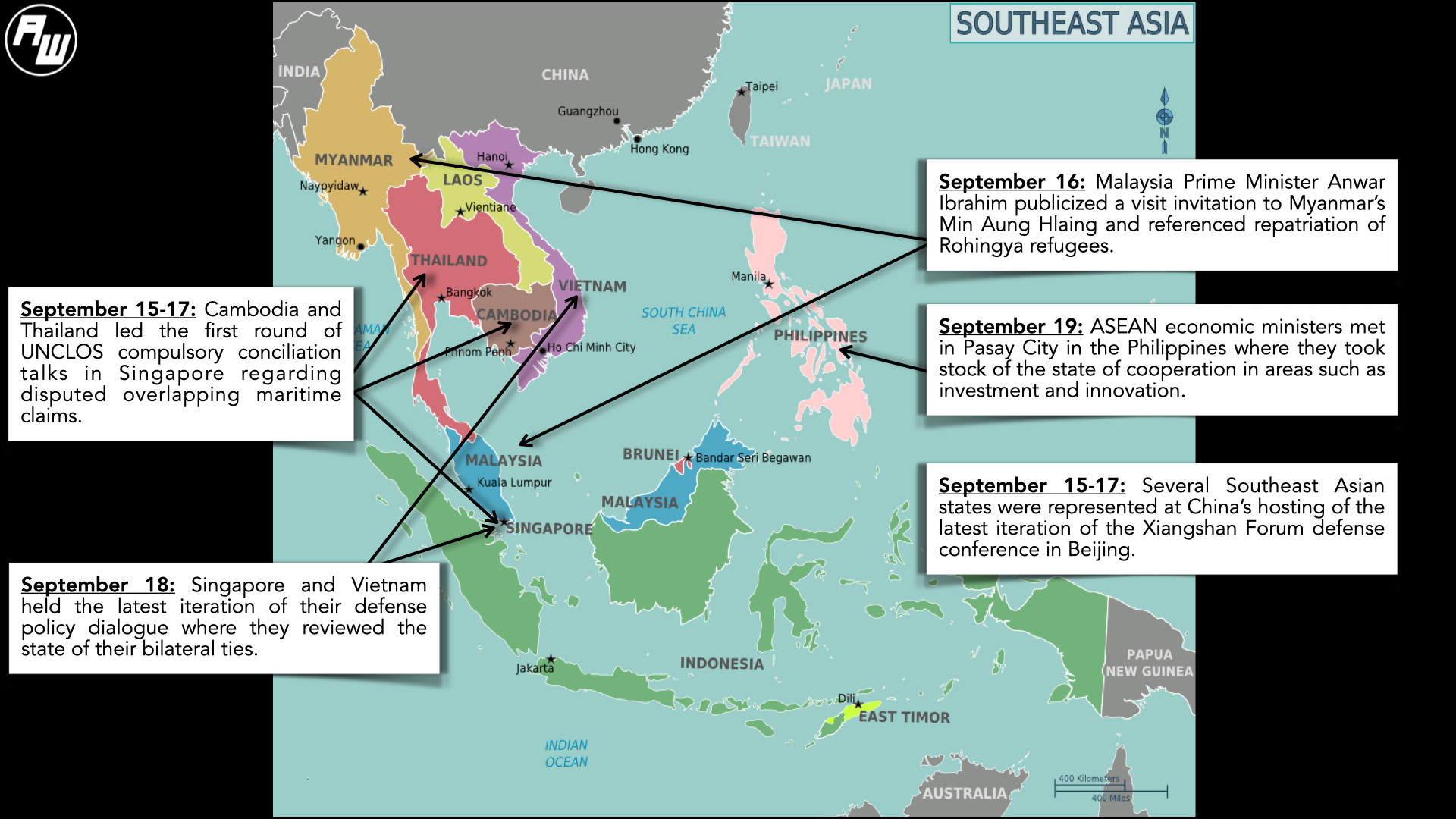
Mapping of regional developments, such as new regional ministerial meeting and bilateral defense policy dialogue convening;
Charting evolving geopolitical, geoeconomic and security trends including sanctions breach alert; coast guard vessel transfer; and telecom shutdown;
Tracking and analysis of industry developments and quantitative indicators such as market entry first; rail link doubt; coming aviation order; and more;
And much more! ICYMI, check out the ASEAN Wonk review this past week of a new book on averting global conflict beyond doomsday scenarios.
This Week’s WonkCount: 2,102 words (~10 minutes)


New Ministerial Meeting; Defense Policy Dialogue & More

US-China Pre-Summit Cyber Update; Just Transition Focus & Dueling Meeting Statements
“China has built a sophisticated hacking apparatus to gain leverage in peacetime and wreak havoc during conflict…currently, the United States lacks the defenses or the credible deterrent,” according to an assessment of China’s threat to U.S. critical cyber networks released by the Council on Foreign Relations alongside speculation on the next round of U.S.-China summitry (link).

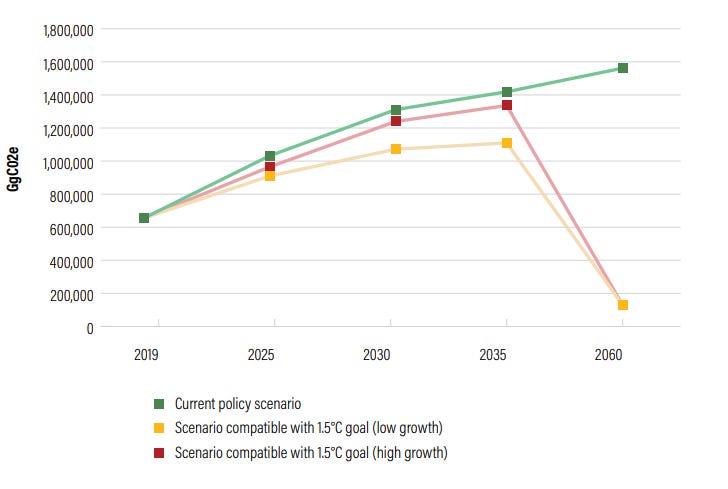
“Key findings reveal that Indonesia has strong explicit energy transition roadmaps, but gaps exist in implicit just transition issues,” argues a new report released by World Resources Institute Indonesia on the prospects for a fair and equitable energy transition in the country (link).
Graphic Illustrating Indonesia Estimated Energy Sector Emissions By Scenario
“Before long after these proceedings conclude, Thailand and Cambodia will remain neighbors…our task is to ensure that the legacy we leave behind will allow future generations to enjoy the dividends of peace and prosperity,” according to the opening statement delivered by Thai foreign minister Sihasak Phuangketkeow at the first meeting of the Cambodia-Thailand UNCLOS conciliation commission held in Singapore alongside the statement delivered by his Cambodian counterpart Prak Sokhonn (link; link).


Xiangshan Forum 2026 Spotlights Shifting Security Dynamics
What’s Behind It
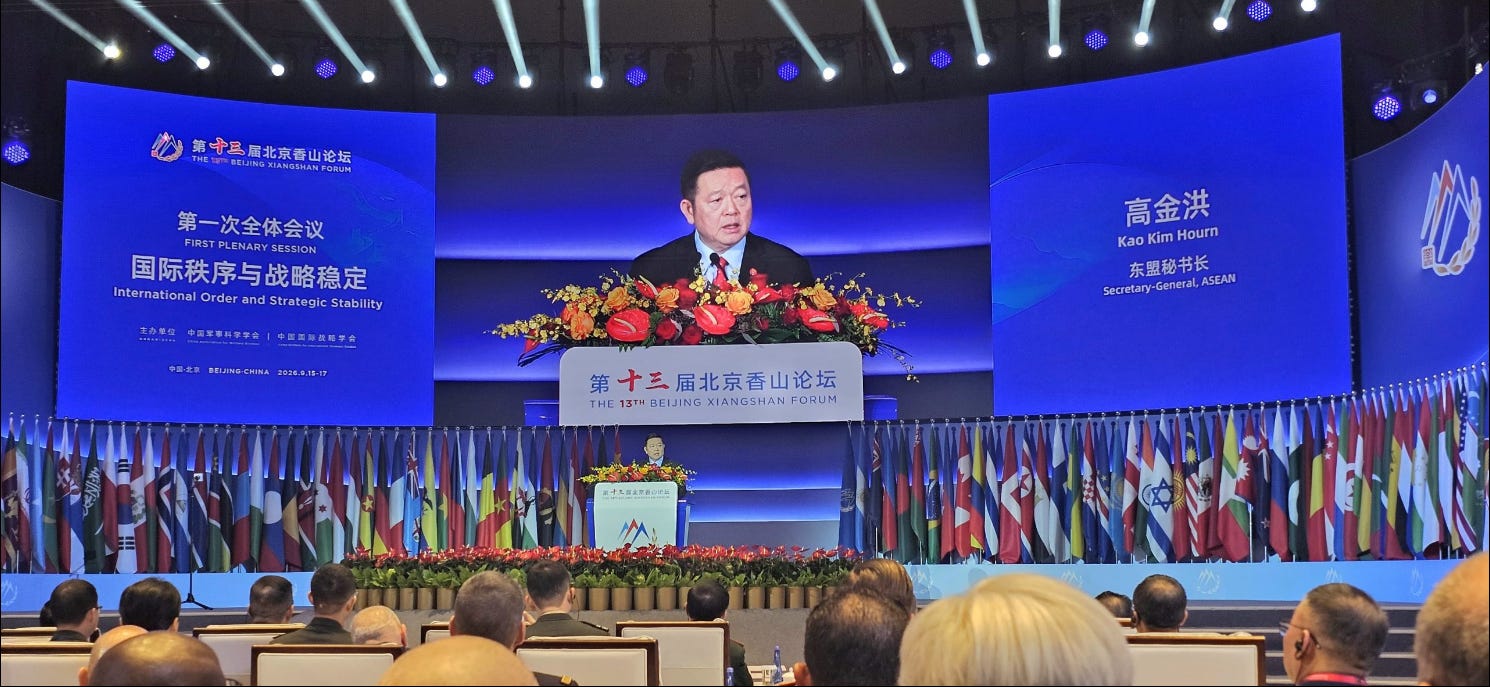
China’s hosted the latest iteration of the Xiangshan Forum defense conference in Beijing which featured several Southeast Asian states as participants1. The forum was held in Beijing amid other ongoing China-Southeast Asia-related developments held in other parts of China that highlighted evolving datapoints in regional dynamics. One notable case in point was the holding of the China-ASEAN Expo (CAEXPO) in Nanning, with China playing up the first participation of East Timor as a co-organizer bringing together all 11 ASEAN member states after its earlier admission as a full member of the grouping2.
Select Key Recent China-Southeast Asia Datapoints
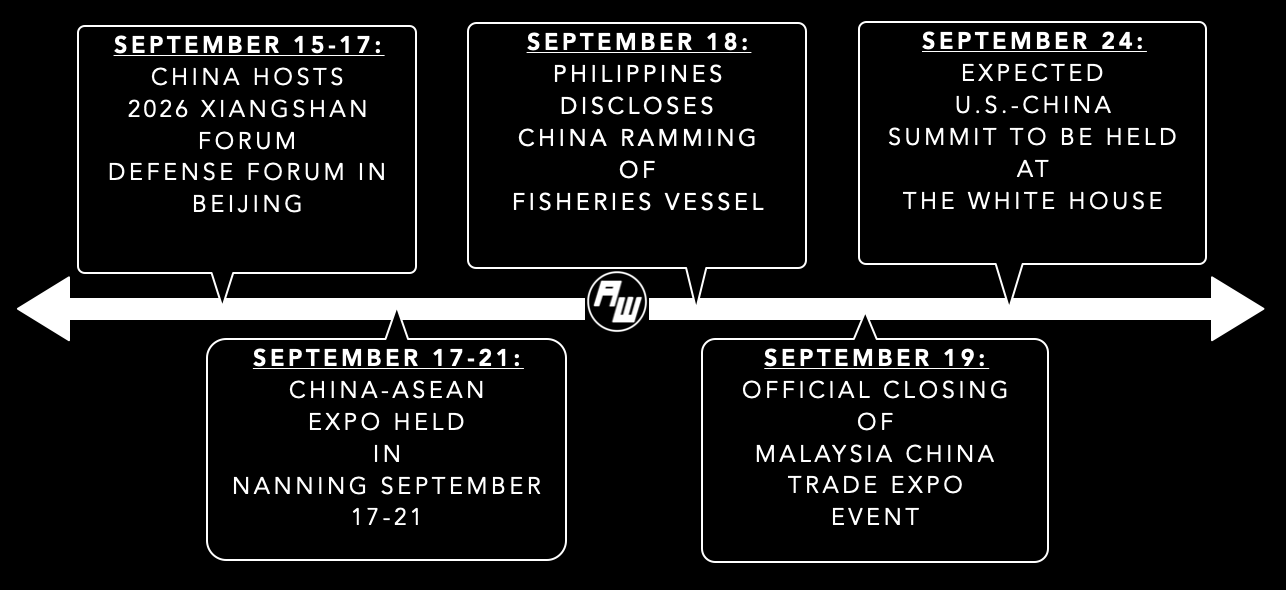
The engagement was held alongside other notable regional defense-related developments. The Philippine government publicized a deliberate ramming of a fisheries vessel by China in another concerning maritime datapoint days before the expected summit meeting between U.S. President Donald Trump and Chinese President Xi Jinping3. Separately, in a significant development that received fewer headlines, Laos hosted a review conference on the convention on cluster munitions which produced new outcome documents, with the government reinforcing the legacy of unexploded ordinance (UXO) and the country’s record as being the most heavily bombed country per capita in history4.
Why It Matters
The dynamics also spotlighted datapoints to watch with wider implications (see originally generated ASEAN Wonk table below on notable areas to monitor and additional specifics. Paying subscribers can read on for more on what to expect and future implications in the rest of the “Why It Matters” and “Where It’s Headed” sections, along with paid-only sections of the newsletter as usual).
Notable Policy Datapoints, Along With Participation Details And Select Key Actors
