

A new book by an ex-military chief details an updated defense concept to safeguard Taiwan against China alongside future implications for the Indo-Pacific and the wider world.
WonkCount: 1,668 words (~7 minutes)

Review: Will New Military Strategy Defend Taiwan from China?
Context
“After the recent US escalation of arms sales to Taiwan, some ASEAN members have expressed support for China,” the acting head of China’s mission to ASEAN noted recently in a publication that did not elaborate on the specific “members” in question1. The statement was part of a wider and ongoing strategic communications effort to more directly and publicly articulate the extent of support Beijing has on the Taiwan question in regions like Southeast Asia, including by linking the issue to other 2026 geopolitical touchpoints such as the humanitarian crisis in Gaza and recent U.S. military intervention into Venezuela2.
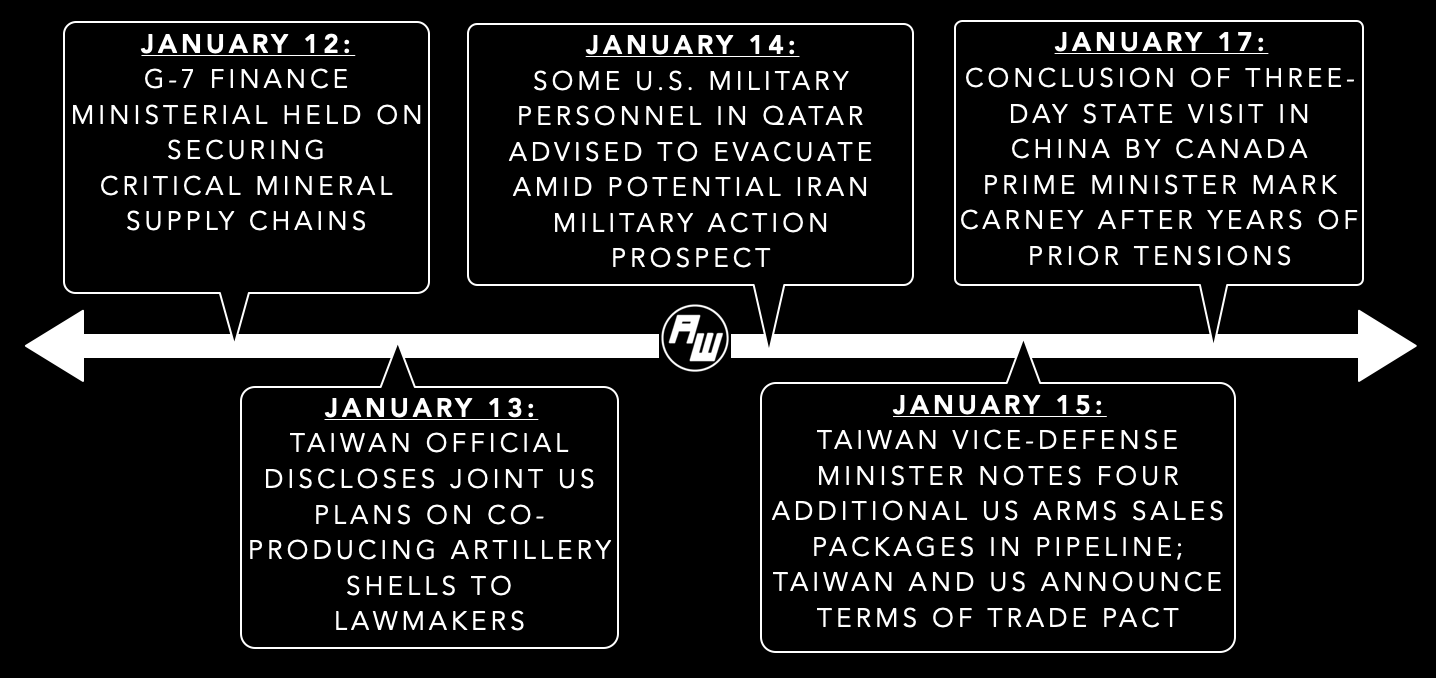
Select Key Recent Indo-Pacific Geopolitical and Geoeconomic Developments
A new book Defending Our Island Home by Taiwan’s former chief of general staff Admiral Lee Hsi-min details an updated defense concept to safeguard Taiwan against China alongside future implications for Southeast Asia, the Indo-Pacific and the wider world3. In doing so, it adds to the list of recent books by ex-officials on defense dynamics underlying a future Taiwan scenario, including ones we have reviewed on ASEAN Wonk such as The Boiling Moat and The Taiwan Tinderbox. Defending Our Island Home lays out a strategy to leverage Taiwan’s limited resources to defend itself against the world’s second most powerful military, moving beyond long-held tendencies including stretching the definition of “asymmetric capabilities” to cover certain conventional systems and overemphasizing what is characterized as an overly arms sales-centric “patron-client relationship.”4 “What Taiwan’s national defense requires is a paradigm shift, not marginal or piecemeal adjustments,” the book notes before setting out the parameters of this paradigm shift and challenges and opportunities therein5.
Analysis
The book also highlights key datapoints to watch with respect to strategic pillars and principles that would govern potential regional futures (see two originally-generated ASEAN Wonk tables below for a summary of important contours. Paying subscribers can also read the rest of the “Analysis” section and “Implications” section looking at how these dynamics play out in the future).
Notable Future Datapoints and Focus Areas to Watch, Alongside Key Strategic Pillars and Defense Principles
