

Greetings to new readers and welcome all to the latest edition of the weekly ASEAN Wonk BulletBrief! If you haven’t already, you can upgrade to a paid subscription for $5 a month/$50 a year below to receive full posts by inserting your email address and then selecting an annual or monthly option. You can visit this page for more on pricing for institutions, groups as well as discounts. For current paid subscribers, please make sure you’re hitting the “view entire message” prompt if it comes up at the end of a post to see the full version.
For this iteration of ASEAN Wonk BulletBrief, we are looking at:
Assessing the geopolitical and geoeconomic significance of a recently concluded summit meeting Russia hosted with Southeast Asian states;
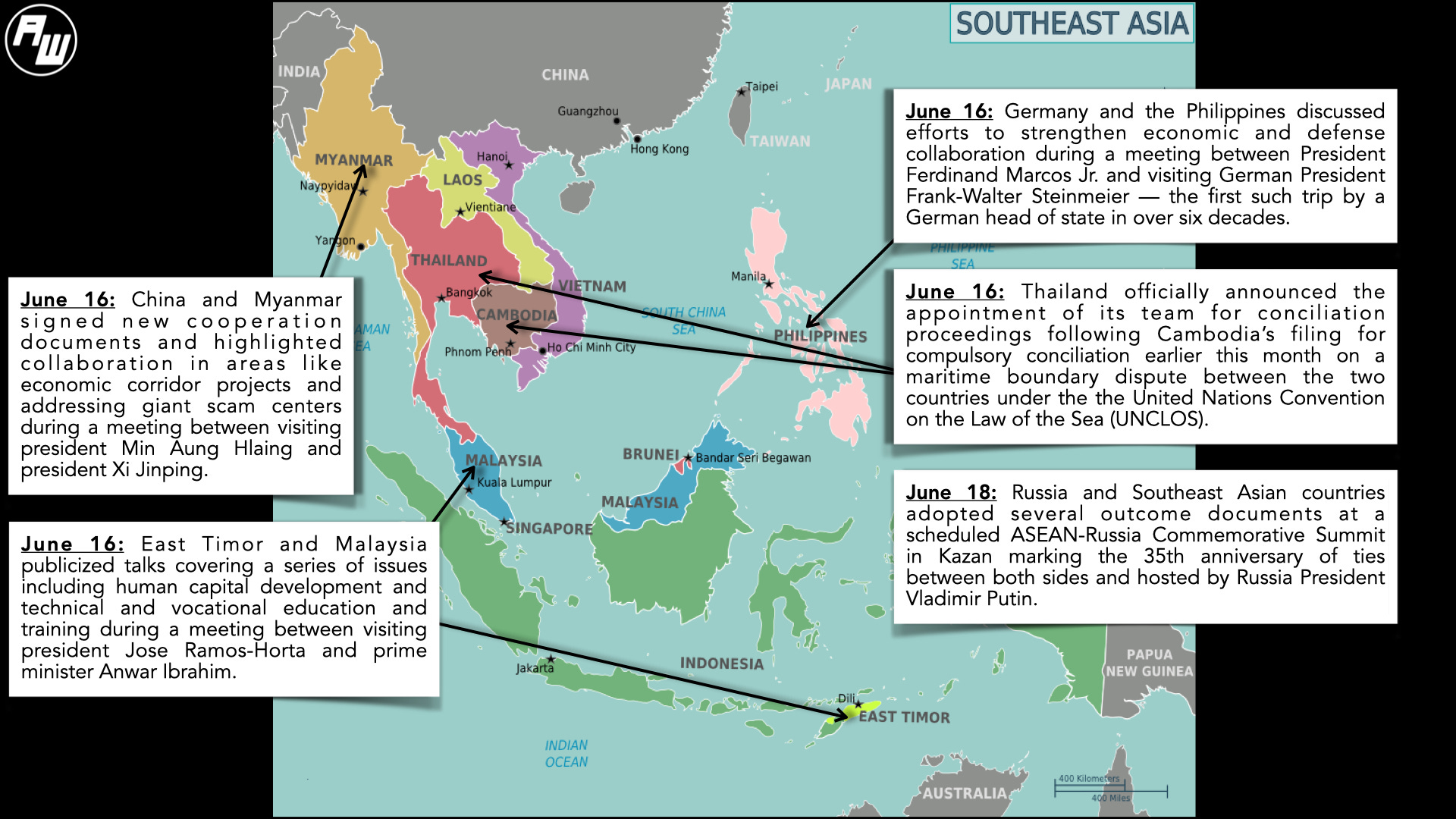
Mapping of regional developments, including a newly announced diplomatic first and a dispute team unveiling;
Charting evolving geopolitical, geoeconomic and security trends such as rising cyber attacks; shifting competitiveness and new AI cooperation;
Tracking and analysis of industry developments and quantitative indicators including base upgrade talk; gas find hype; trade pact checkpoint and more;
And much more! ICYMI, check out our new ASEAN Wonk review of a book which includes exclusive interviews with Indonesian leaders on the management of geopolitical and geoeconomic competition.
This Week’s WonkCount: 2,438 words (~11 minutes)


New Diplomatic First; Dispute Team Unveiling & More

Export Control Regimes; New Defense White Paper & Education Futures
“The increasing use of export controls as ‘offensive economic tools’ risks diverting resources and political attention from non-proliferation and international security objectives,” cautions a new commentary published by the Stockholm International Peace Research Institute published alongside the recent holding of Group of Seven (G7) engagements in France (link).

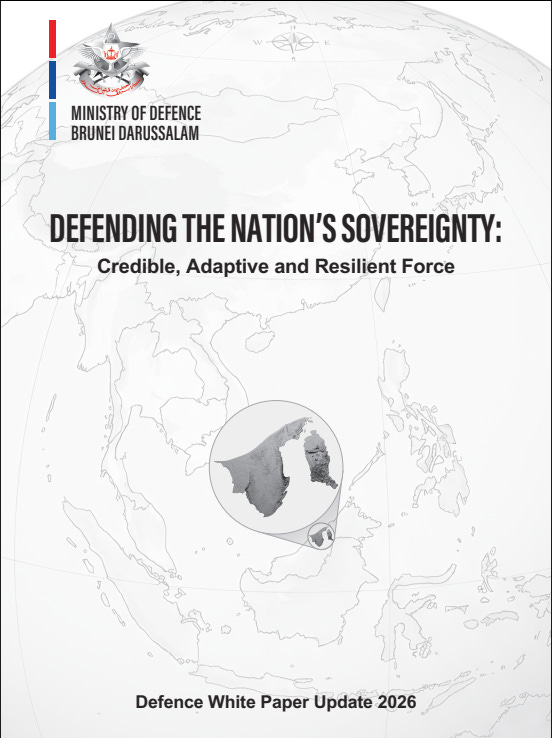
“The Defense White Paper Update 2026 represents a deliberate recalibration of our defense strategy in response to an increasingly complex, contested and uncertain security environment,” according to the foreword of Brunei’s recently-released defense white paper update following the previous edition that had been released back in 2021(link to PDF).
“Over the last twenty years alone, more than 50 new policy schools have been established across Africa, Asia, Latin America and the Middle East, developing new models of governance and public policy education,” according to a new edited volume published by the Lee Kuan Yew School of Public Policy on the future of public policy schools which includes perspectives from 58 contributors (link).

What Did the New Russia-ASEAN Summit Meeting Achieve?
What’s Behind It
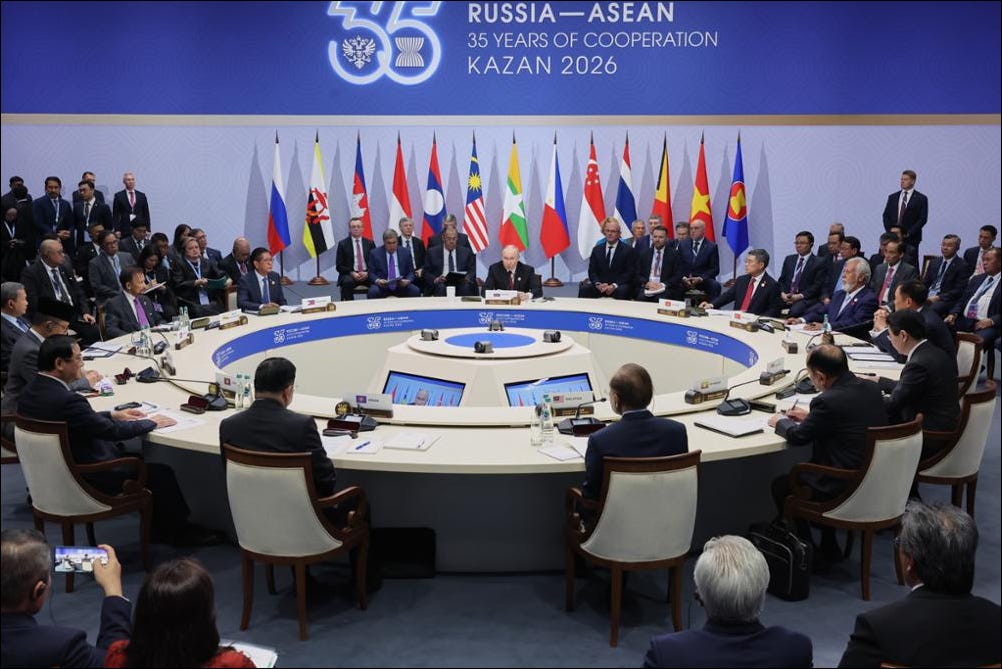
A new ASEAN-Russia summit hosted by President Vladimir Putin in Kazan spotlighted shifting ties between Moscow and Southeast Asian states1. One diplomatic source familiar with the summit dynamics noted that apart from substantive agenda items, certain metrics on optics were notable such as the degree of leader-level representation at the summit meeting, which was relatively higher than had earlier been speculated on during the early stages of talks on the engagement2. Developments unfolded amid earlier concerns expressed on this front by some other ASEAN dialogue partners, including from European countries given fallout from the Russia-Ukraine war and U.S. diplomats in regional capitals assessing Moscow’s bid to capitalize on Middle East conflict fallout.
Select Key Recent Global and Southeast Asia-Related Geopolitical and Geoeconomic Developments
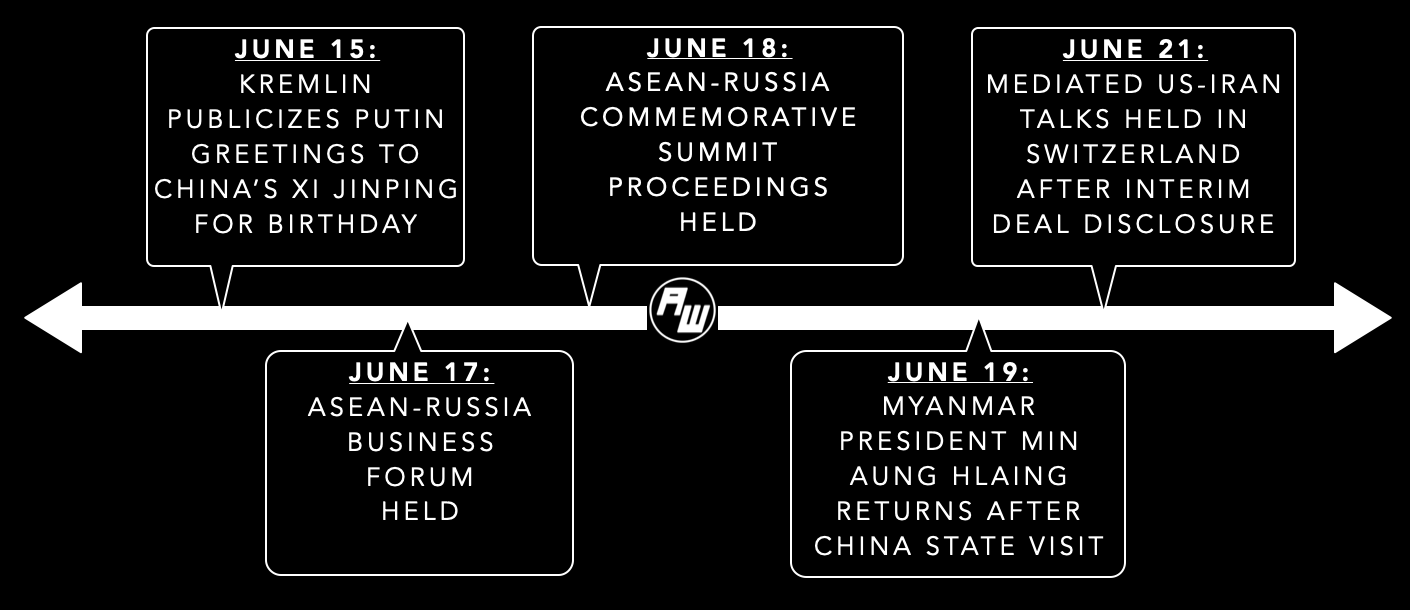
The summit dynamics also highlighted the mix of challenges and opportunities inherent in Russia’s regional engagement. Putin unsurprisingly played up convergence on a “multipolar order” and Russia’s willingness “to provide every possible assistance” to Southeast Asian states during the “situation surrounding Iran,” with Moscow also adding more engagement touchpoints with the inclusion in the summit of the secretary general of the Shanghai Cooperation Organization (SCO) as well as the chair of the Eurasian Economic Commission (EEC) Board3. At the same time, geoeconomically, virtually every engagement Putin held with visiting Southeast Asian leader saw one or both sides make direct or indirect references to the massively unrealized economic potential of ties on metrics ranging from trade balances to business-to-business linkages4.
Why It Matters
The dynamics also spotlighted datapoints to watch with wider implications (see originally generated ASEAN Wonk table below on notable areas to monitor and additional specifics. Paying subscribers can read on for more on what to expect and future implications in the rest of the “Why It Matters” and “Where It’s Headed” sections, along with paid-only sections of the newsletter as usual).
Notable Policy Datapoints, Along With Select Major Outcomes And Key Contours
