

Greetings to new readers and welcome all to the latest edition of the weekly ASEAN Wonk BulletBrief! If you haven’t already, you can upgrade to a paid subscription for $5 a month/$50 a year below to receive full posts by inserting your email address and then selecting an annual or monthly option. You can visit this page for more on pricing for institutions, groups as well as discounts. For current paid subscribers, please make sure you’re hitting the “view entire message” prompt if it comes up at the end of a post to see the full version.
For this iteration of ASEAN Wonk BulletBrief, we are looking at:
Assessing the geopolitical and geoeconomic significance of new regional initiative ministerial announcements;
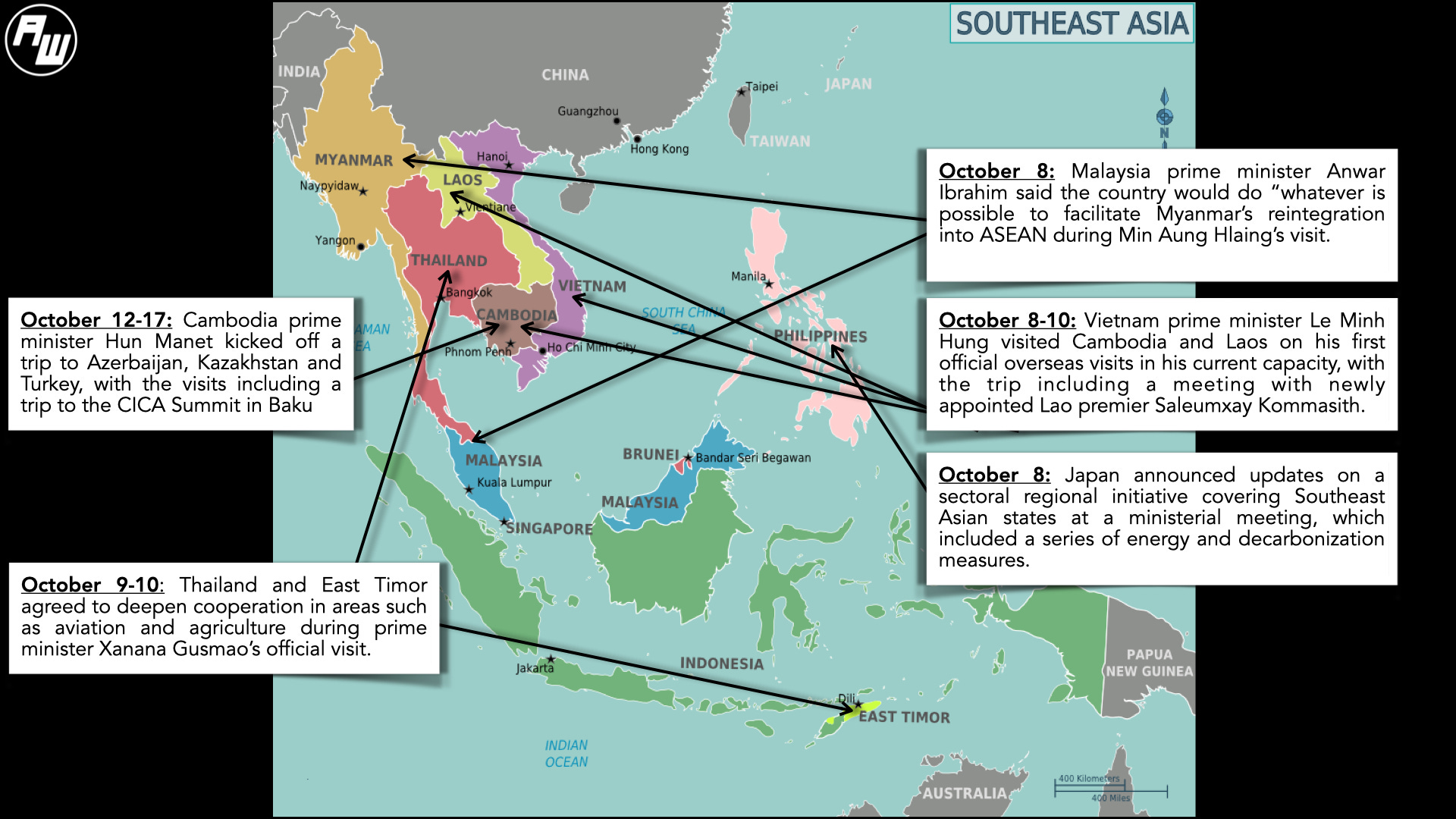
Mapping of regional developments, including new regional reintegration pledge and Central Asia leader voyage;
Charting evolving geopolitical, geoeconomic and security trends such as artificial intelligence diffusion; defense green light and investment pact review;
Tracking and analysis of industry developments and quantitative indicators including EV milestone; 2027 growth risks; economic rebalancing and more;
And much more!
This Week’s WonkCount: 2,148 words (~10 minutes)


Reintegration Pledge; Central Asia Voyage & More

Green Dominance; Energy Futures Transformation & Defection Deep Dive
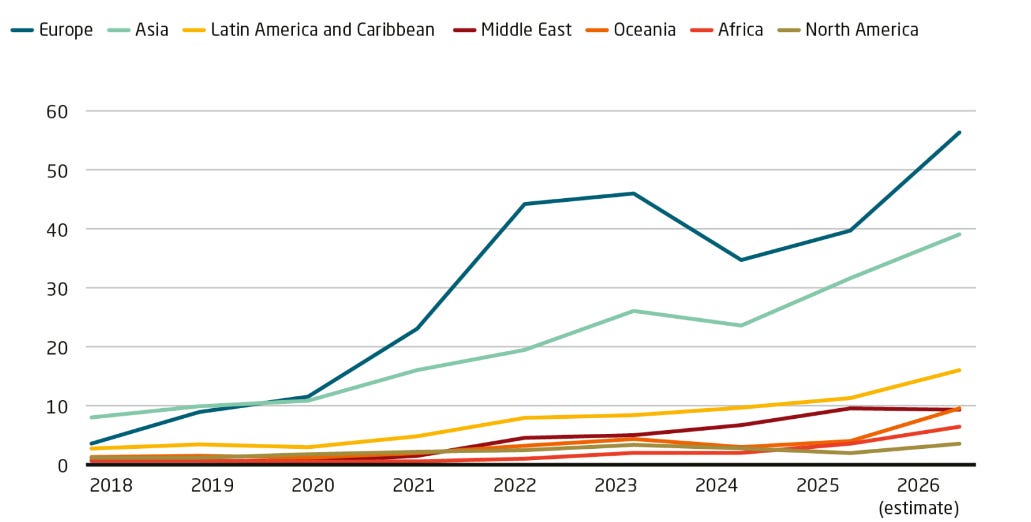
“[S]ome degree of destructive competition could also emerge in the industries that the government has outlined as priorities for the next five years and beyond, such as robots, legacy semiconductors and hydrogen technologies,” according to a new report on China’s global green tech dominance released by MERICS (link).
Select China Green Tech Exports by Region (USD Billion)
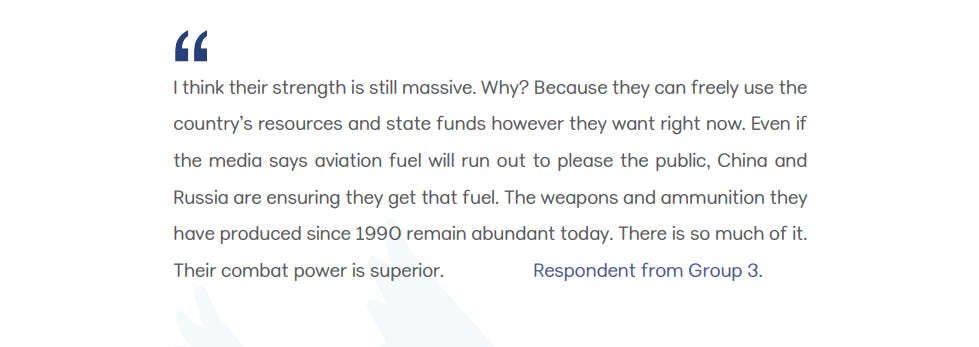
“[T]he defection process is neither a quick endeavor nor a smooth path…it is an ongoing sequence of logistical, financial, social and psychological hurdles,” per a new report on defections from Myanmar’s military and the future of the security sector published by People’s Goal which includes original interviews with former defectors (link).
Select Interviewee Report Quotation on Military Balance
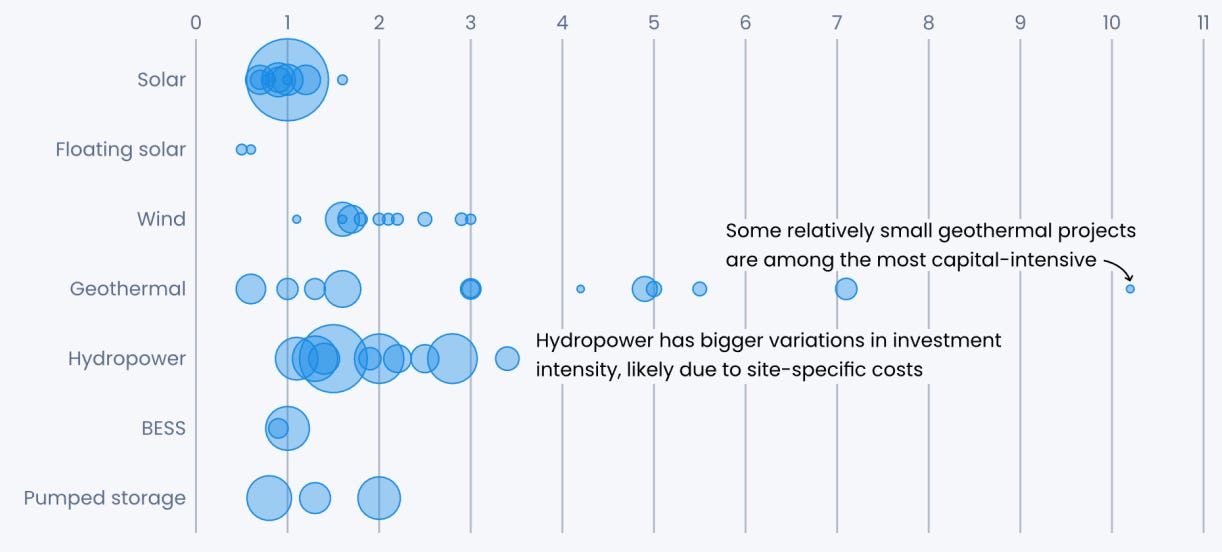
“The financing challenge is therefore not about mobilizing capital anymore but developing financing structures and market rules to cater to different characteristics of distributed renewable energy, storage, and transmission,” argues a new publication by Ember on financing ASEAN’s energy system transformation (link).
Investment in Non-Fossil Energy Projects (Bubbles Sized to Total Project Generation Capacity in MW)

Japan AZEC Inroads Bid in the ASEAN Ministerial Spotlight

What’s Behind It
The future of a new Japan-led initiative covering Southeast Asian states was in the spotlight this past week amid the latest round of scheduled ministerial meetings1. The engagements took place alongside wider global and regional geoeconomic developments. This included newly released energy and growth forecasts out to and beyond 2027 as well as the publicizing of a reported new strike against a tanker that was heading outbound through the Strait of Hormuz2.
Select Geoeconomic Developments Alongside New Regional Meetings
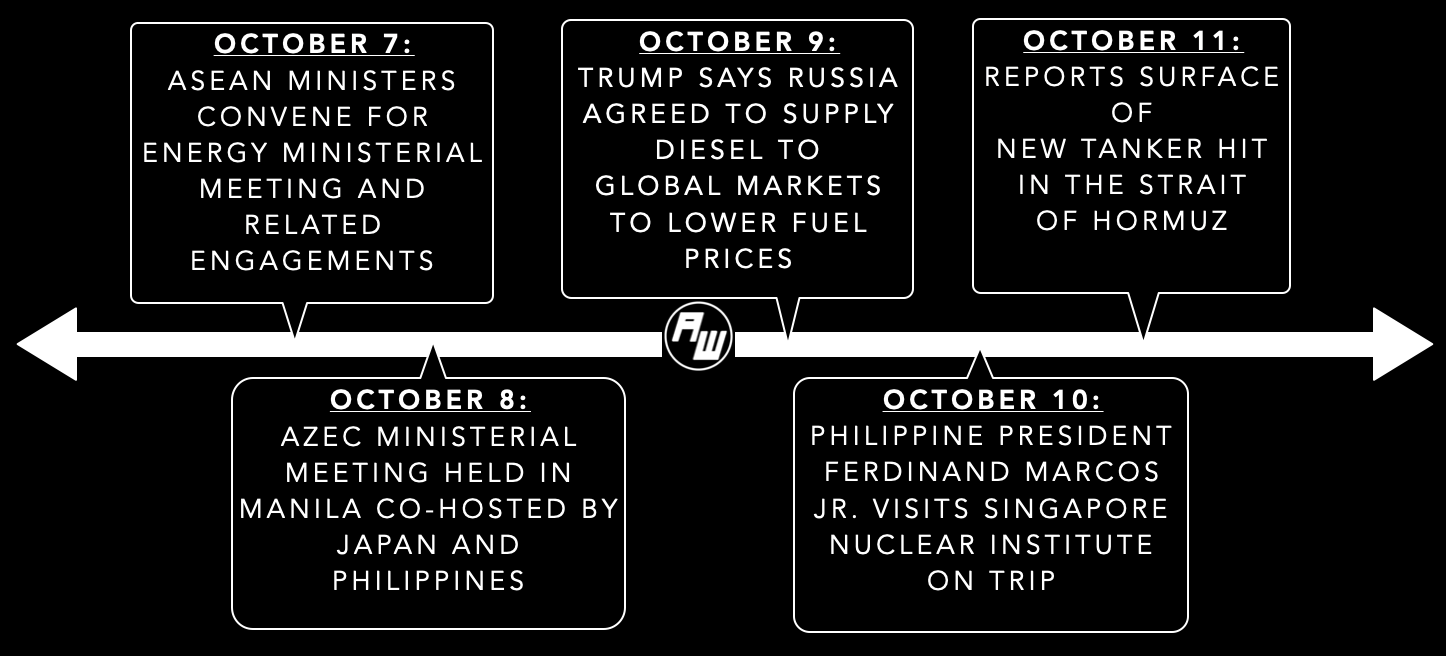
The engagement occurred alongside other regional and bilateral sectoral developments. Regionally, a newly-released forecast suggested that apart from immediate Middle East conflict fallout and some cross-regional maritime concerns, by 2060, regional energy demand could quadruple in an indicator of Southeast Asia’s wider structural challenges, with the most ambitious transition pathway requiring over 400 billion dollars in annual investment3. Separately, in one of a series of bilateral leader-level engagements, Philippine President Ferdinand Marcos Jr. played up his visit to a nuclear facility during his Singapore trip as Manila looks to make progress on its own nuclear power aspirations4.
Why It Matters
The dynamics also spotlighted datapoints to watch with wider implications (see originally generated ASEAN Wonk table below on notable areas to monitor and additional specifics. Paying subscribers can read on for more on what to expect and future implications in the rest of the “Why It Matters” and “Where It’s Headed” sections, along with paid-only sections of the newsletter as usual).
Policy Datapoints to Watch, Along With Select Major Action Areas And Key Lines of Effort
