

Greetings to new readers and welcome all to the latest edition of the weekly ASEAN Wonk BulletBrief! If you haven’t already, you can upgrade to a paid subscription for $5 a month/$50 a year below to receive full posts by inserting your email address and then selecting an annual or monthly option. You can visit this page for more on pricing for institutions, groups as well as discounts. For current paid subscribers, please make sure you’re hitting the “view entire message” prompt if it comes up at the end of a post to see the full version.
For this iteration of ASEAN Wonk BulletBrief, we are looking at:
Assessing the significance of the first-of-its-kind ASEAN Geoeconomics Report and regional and global implications for the rest of 2026;
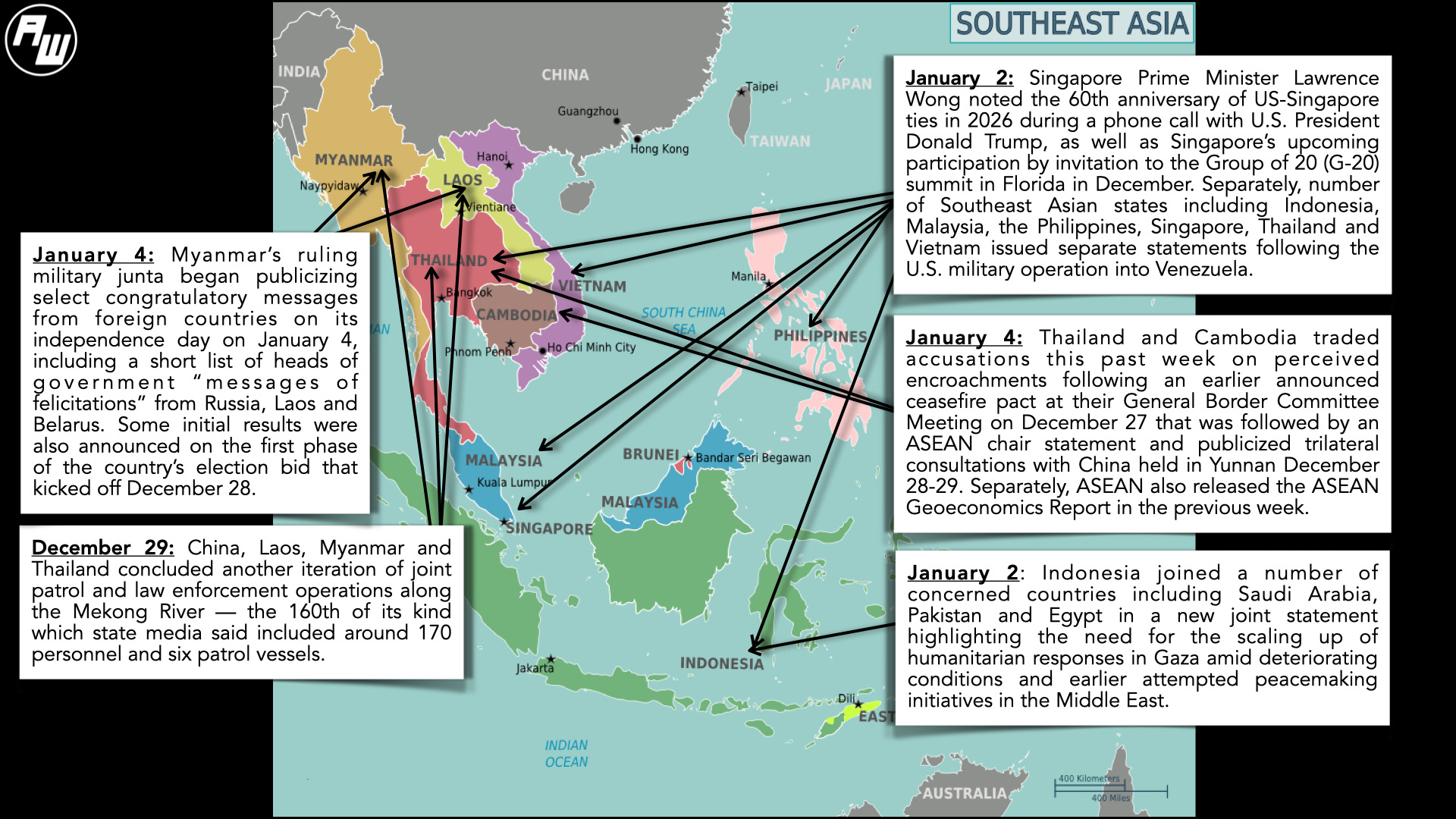
Mapping of regional developments, including joint patrols and trilateral diplomacy aftermath;
Charting evolving geopolitical, geoeconomic and security trends, such as new 5G rollout; fast-track infrastructure 2027 claim and cyber shaming;
Tracking and analysis of industry developments and quantitative indicators including sectoral geopolitical competition spillover; new digital identity system launch; and code enforcement scrutiny;
And much more! ICYMI, check out our recently-released 2026 ASEAN Wonk Futurepoints Forecast for geopolitical and geoeconomic datapoints to watch for the rest of the year and their implications.
This Week’s WonkCount: 2,017 words (~9 minutes)


Joint Patrols; Trilateral Diplomacy Aftermath & More

Power Projection Check; Asia Gen Z Protests & Outer Space Management
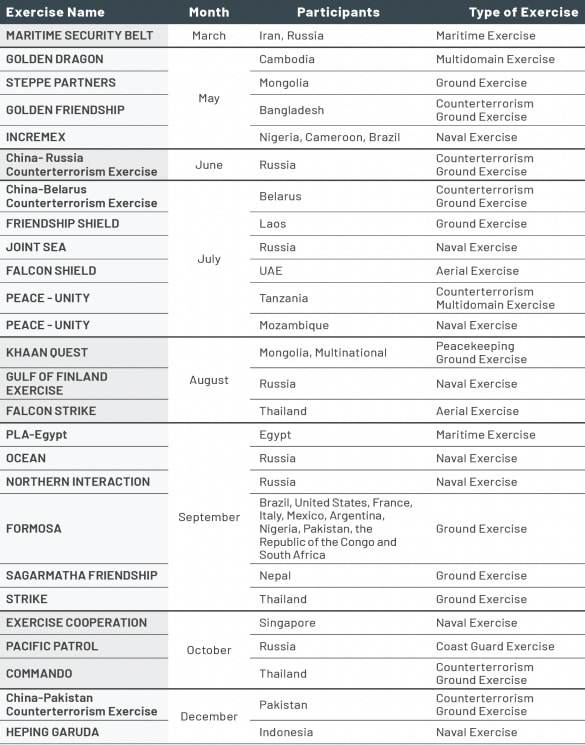
“[I]ts ability to command and operate its joint force probably defines the People’s Liberation Army (PLA) conventional military power projection to the Western Pacific and Southeast Asia in a real-world combat scenario…PLA kinetic strikes would probably be effective within 1500-2000 nautical miles from the Chinese mainland,” notes the latest iteration of the annual China Military Power report to the U.S. Congress. The report includes datapoints on Beijing’s military engagements globally, including exercises and training activities with countries in Southeast Asia via the table below (link to PDF).
Table With Select Recent Key China PLA Exercises And Training With Foreign Militaries
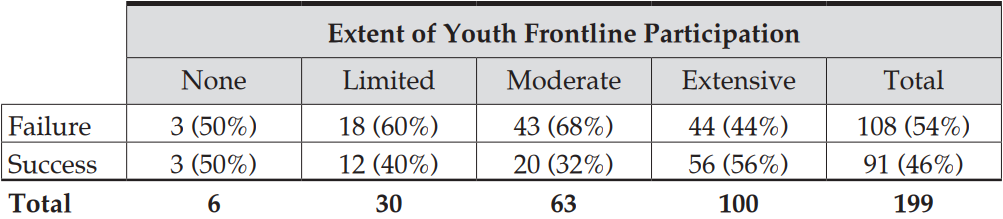
“There are reasons for both optimism and caution when making predictions about the democratizing effects of Gen-Z protests,” argues a new article published over at the Journal of Democracy that includes cases from Southeast Asia in countries such as Indonesia and the Philippines. The article identifies key aspects of these protests, including degrees of nonviolence; decentralization; issue emphasis and transition navigation (link).
Table Depicting Relative Youth Participation and Nonviolent Campaign Success, 1990-2020
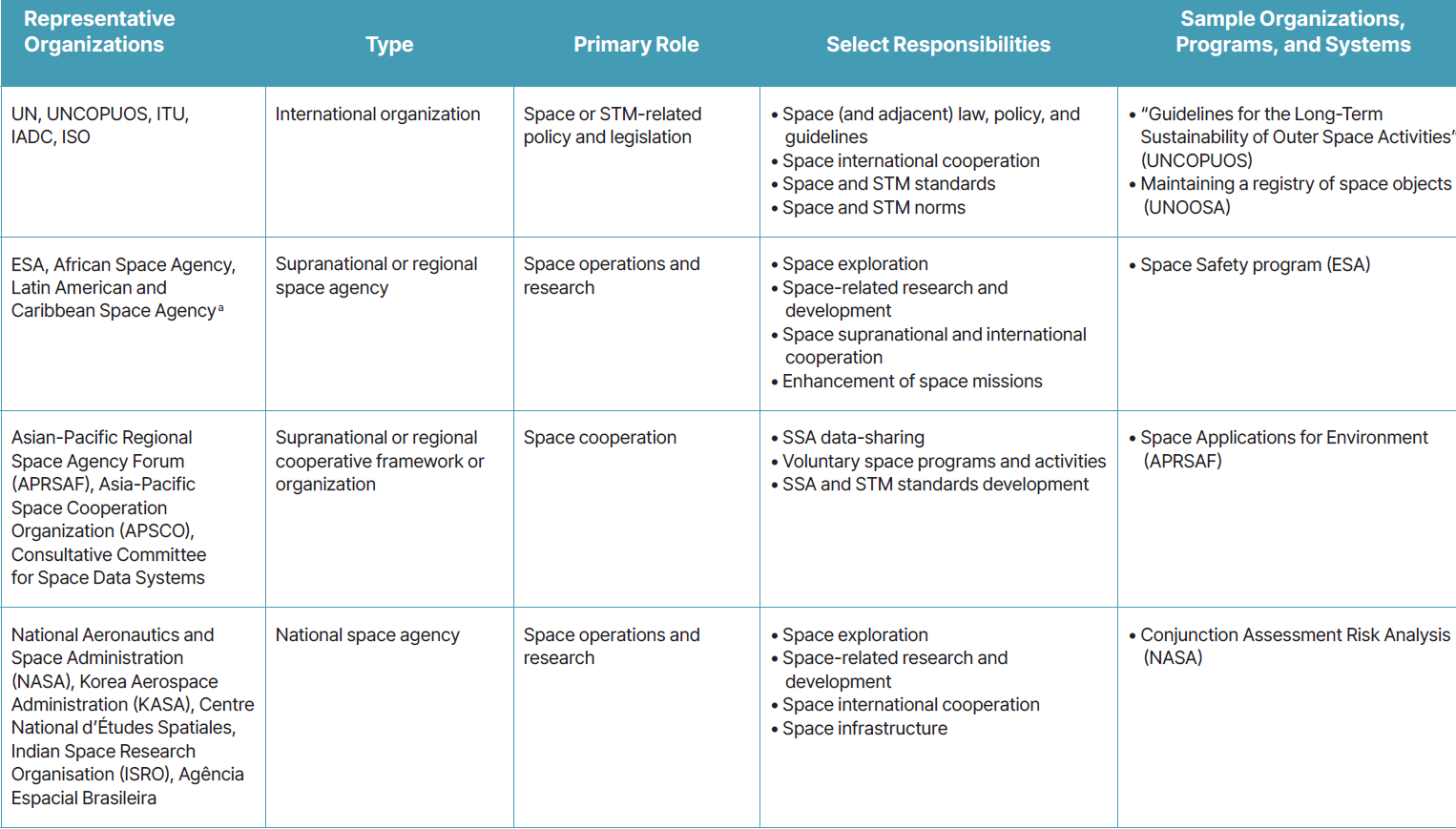
“The fragmentation…creates operational inefficiencies, an incomplete operating picture, a lack of inclusivity of perspectives, and complexity for commercial operators,” according to a new RAND report examining dynamics across space traffic management systems including in the Indo-Pacific region. The publication includes workshop responses on select questions across Asia, Europe and North America (link).
Table Displaying Select Key Global Space Traffic Management Stakeholders

New ASEAN Geoeconomics Report Reveals Future Agency Dilemma
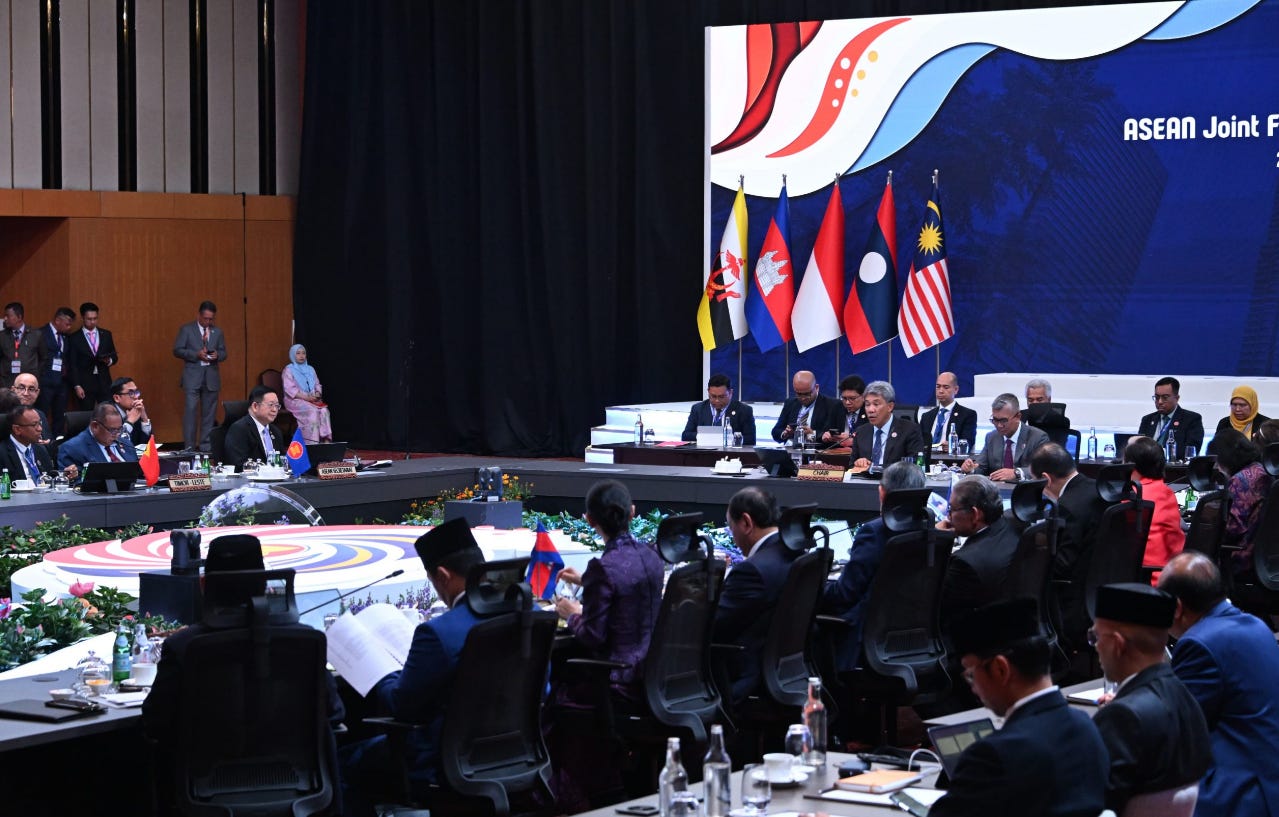
What’s Behind It
Southeast Asia saw the recent release of the first-of-its-kind ASEAN Geoeconomics Report (AGR) as the region grapples with how to maximize its agency to respond to a confluence of global challenges including U.S. tariffs and cross-continental connectivity constraints1. Apart from earlier speculation around intraregional tensions we highlighted in our annual ASEAN Wonk forecast for 2026, the final text and gripping cover image on the publicized copy — a ship sailing through volatile seas painted by former Indonesia President Susilo Bambang Yudhoyono who served the country in that capacity across two terms from 2004 to 2014 — captured the context policymakers have been contending with after prior presentations delivered to regional officials earlier in 20252.
Select Key Recent Geoeconomic and Geopolitical Developments Across ASEAN and Southeast Asia
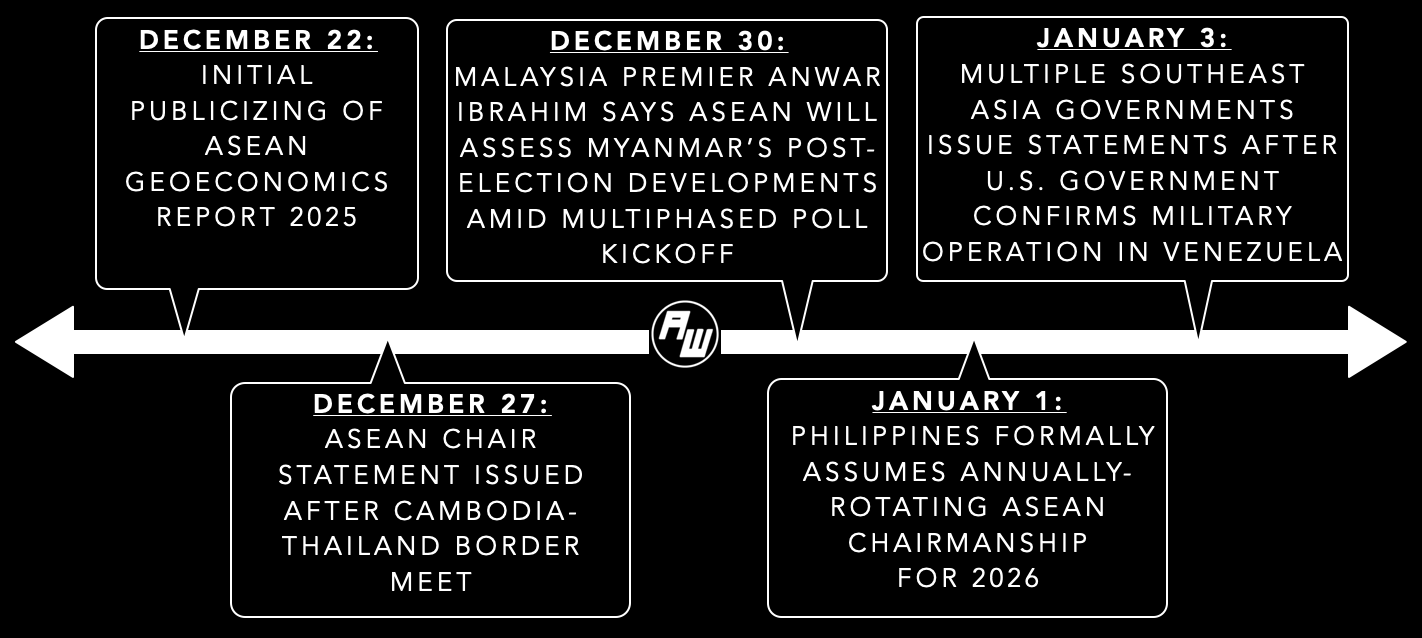
The report’s public release spotlighted regional attempts to coordinate policy responses amid individual national interests and intraregional competition evident in more headline-grabbing developments such as tariff deals and new trade pacts. ASEAN has been taking a number of initiatives on this front despite well-known constraints, including the formation of a first-ever geoeconomics task force and the convening of the first combined foreign and economic ministers’ meeting in decades3. ASEAN officials also privately point to efforts being made to boost initiatives around areas such as strategic communications and narrative building, apart from more bureaucratic lines of effort like broadening “cross-pillared” thinking as part of the newly adopted ASEAN Community 2045 vision4.
Why It Matters
The dynamics also spotlighted datapoints to watch with wider implications (see originally generated ASEAN Wonk table below on notable areas to monitor and additional specifics. Paying subscribers can read on for more on what to expect and future implications in the rest of the “Why It Matters” and “Where It’s Headed” sections, along with paid-only sections of the newsletter as usual).
Future Datapoints to Watch, Along With New Response Pillars and Key Priority Areas
