

Greetings to new readers and welcome all to the latest edition of the weekly ASEAN Wonk BulletBrief! If you haven’t already, you can upgrade to a paid subscription for $5 a month/$50 a year below to receive full posts by inserting your email address and then selecting an annual or monthly option. You can visit this page for more on pricing for institutions, groups as well as discounts. For current paid subscribers, please make sure you’re hitting the “view entire message” prompt if it comes up at the end of a post to see the full version.
For this iteration of ASEAN Wonk BulletBrief, we are looking at:
Assessing the geopolitical significance of a recently concluded ASEAN-India maritime exercise amid a series of new regional drills;
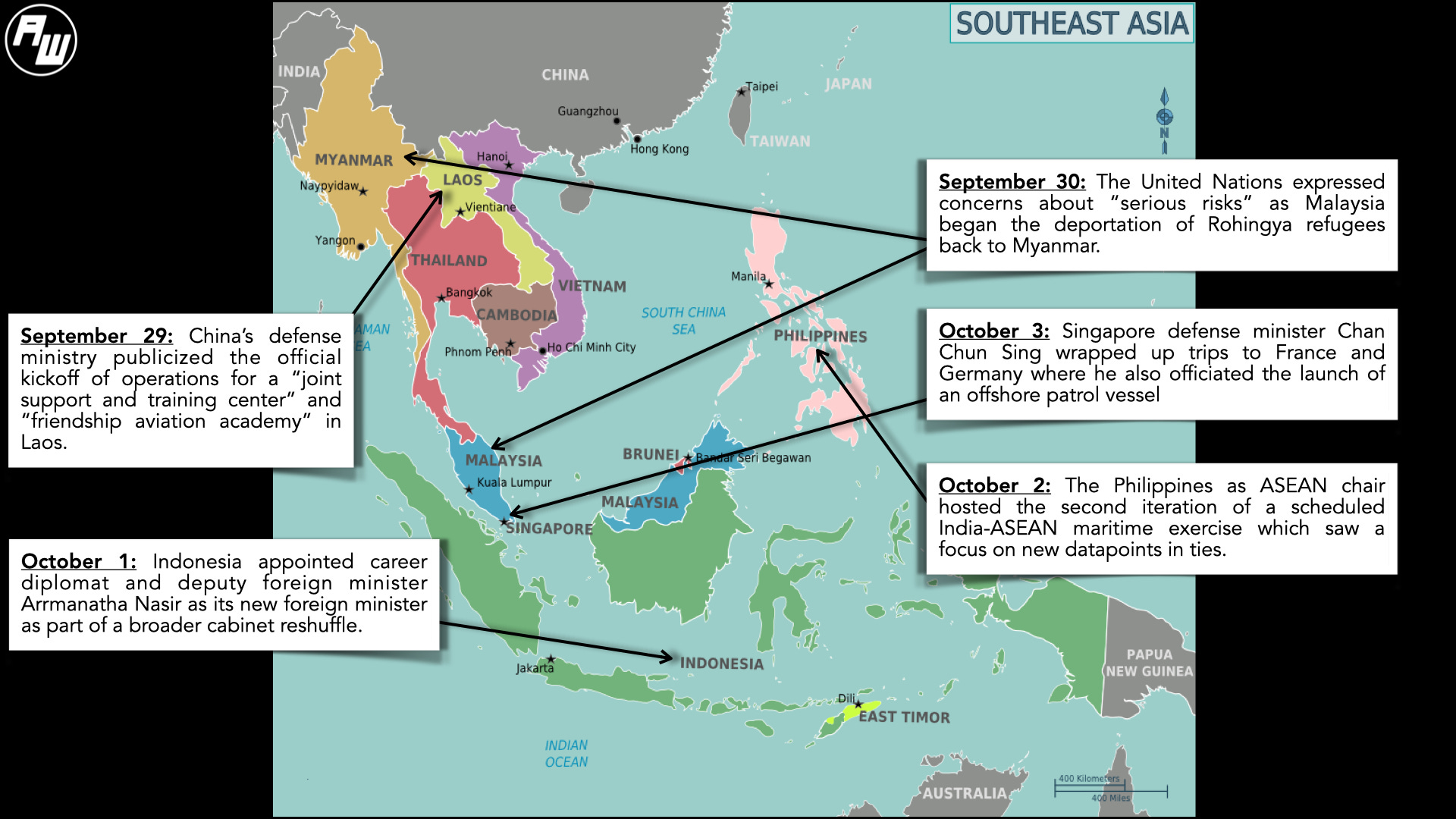
Mapping of regional developments, such as new foreign minister announcement and first patrol vessel launch;
Charting evolving geopolitical, geoeconomic and security trends including new semiconductor facility; coming investment pact; and power deal;
Analysis of industry developments and quantitative indicators including sector challenge metrics; state control shifts; energy case datapoint; and more;
And much more! ICYMI, check out our latest ASEAN Wonk review of a new book exposing unprecedented bottom-up changes reshaping Myanmar.
This Week’s WonkCount: 2,358 words (~11 minutes)


New Foreign Minister; First Patrol Vessel Launch & More

Global Multilateral Challenges; Electric Vehicles Diffusion & Regional Integration Prospects
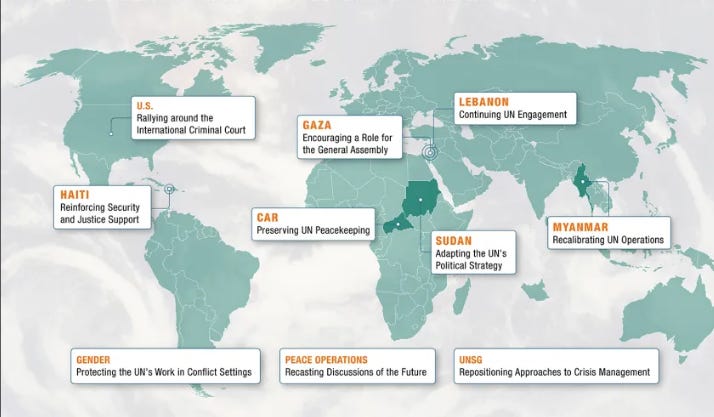
“High on the list should be bolstering the UN’s peacemaking and conflict management capabilities, mobilizing political and financial support, and making a renewed case for international cooperation,” per the findings of a newly published briefing by the International Crisis Group that examines the top challenges for the United Nations out to 2027 as the organization manages changes including the transition to a new secretary general (link).
Snapshot of Key Global UN Challenges Out to 2027
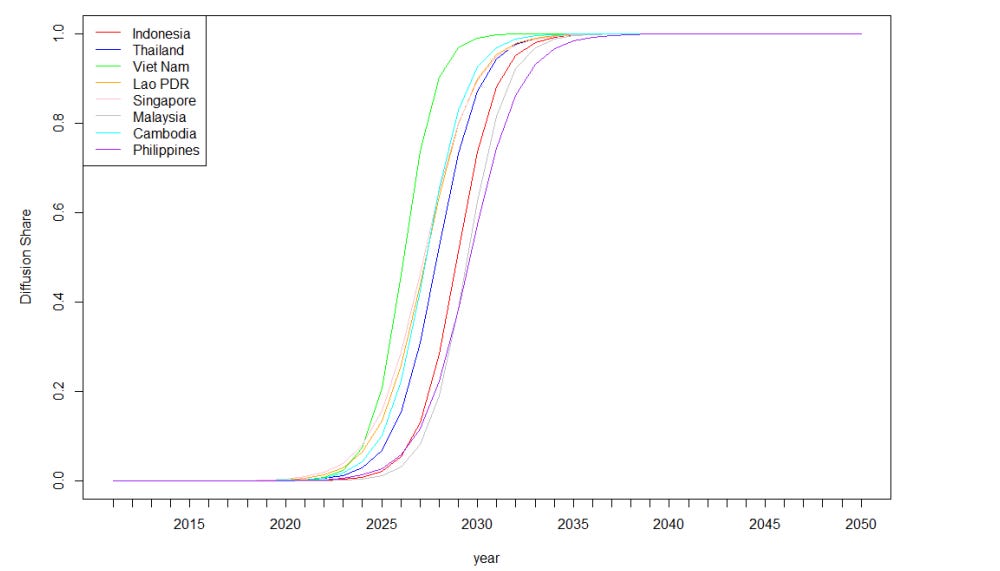
“Overall, the results suggest that EV adoption across ASEAN follows a relatively progressive diffusion path, with most countries projected to reach the assumed maximum market potential between 2030 and 2035,” according to a report modeling diffusion of electric vehicles in ASEAN and the United States published by the Economic Research Institute for ASEAN and East Asia (link).
Projection of EV Diffusion Share in Select ASEAN States
“The priority now for Dili is to…ensure that Timor-Leste’s participation in ASEAN increasingly strengthens its institutions, supports its economy, and, most importantly, delivers meaningful benefits to its people,” argues a new commentary published over at FACTS Asia on the country’s future priorities in regional integration (link).


What Did the New ASEAN India Maritime Exercise Reveal?

What’s Behind It
India and ASEAN held a new maritime exercise as the latest in a series of regional drills involving Southeast Asian states over the past few weeks1. The exercise came amid defense-related developments involving other key powers over the course of the past week in Southeast Asia. These included China’s defense ministry publicizing the kicking off of operations for a new Laos “joint support and training center” following security datapoints highlighted during its Xiangshan Forum last month and the arrival of another U.S. aircraft carrier in Thailand following a Middle East deployment2.
Select Key Recent Security-Related Developments Across Southeast Asia and ASEAN
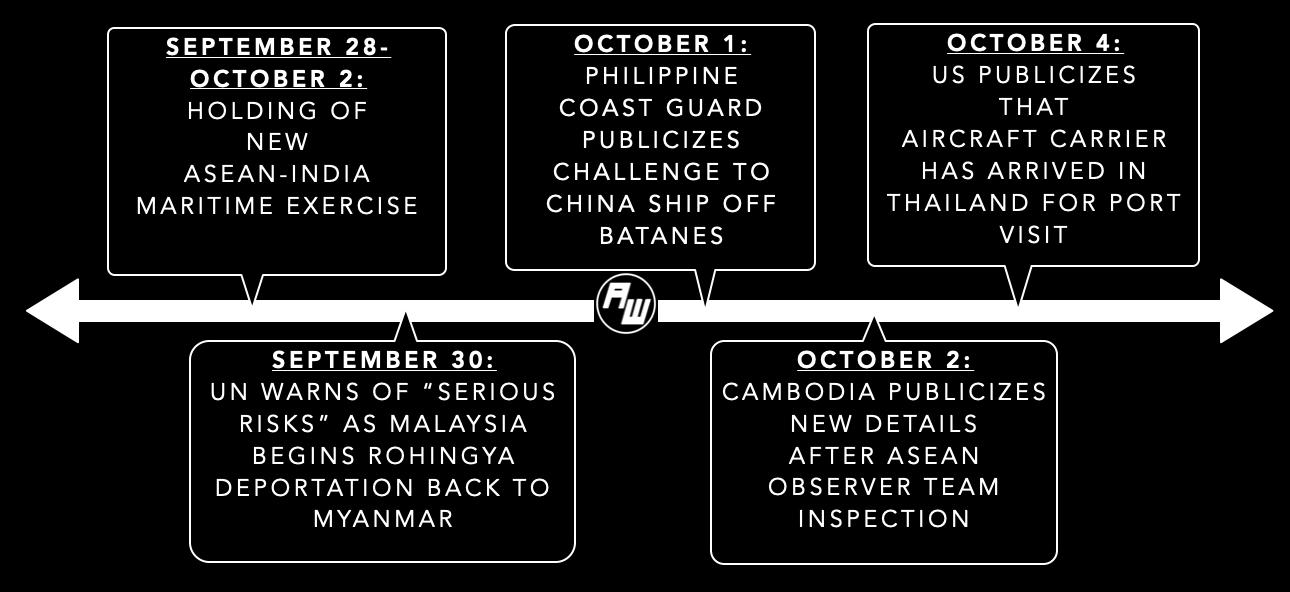
The exercise occurred alongside other regional security developments. China protested what the Philippine Coast Guard had earlier labeled as a challenge to a Chinese vessel off of Batanes as reports surfaced about the acceleration of Beijing’s own South China Sea construction efforts3. Separately, Cambodia also released new details surrounding the latest field visit for the ASEAN observer team as border dispute discussions continue with Thailand4.
Why It Matters
The dynamics also spotlighted datapoints to watch (see originally generated ASEAN Wonk table below on notable areas to monitor and additional specifics. Paying subscribers can read on for more on what to expect and future implications in the rest of the “Why It Matters” and “Where It’s Headed” sections, along with paid-only sections of the newsletter as usual).
New Policy Datapoints, Along With Major Participation Details And Select Recent Exercises
