

Greetings to new readers and welcome all to the latest edition of the weekly ASEAN Wonk BulletBrief! If you haven’t already, you can upgrade to a paid subscription for $5 a month/$50 a year below to receive full posts by inserting your email address and then selecting an annual or monthly option. You can visit this page for more on pricing for institutions, groups as well as discounts. For current paid subscribers, please make sure you’re hitting the “view entire message” prompt if it comes up at the end of a post to see the full version.
For this iteration of ASEAN Wonk BulletBrief, we are looking at:
Assessing the geopolitical and geoeconomic significance of power dynamics and security agenda items at play in the recent round of ASEAN defense meets;
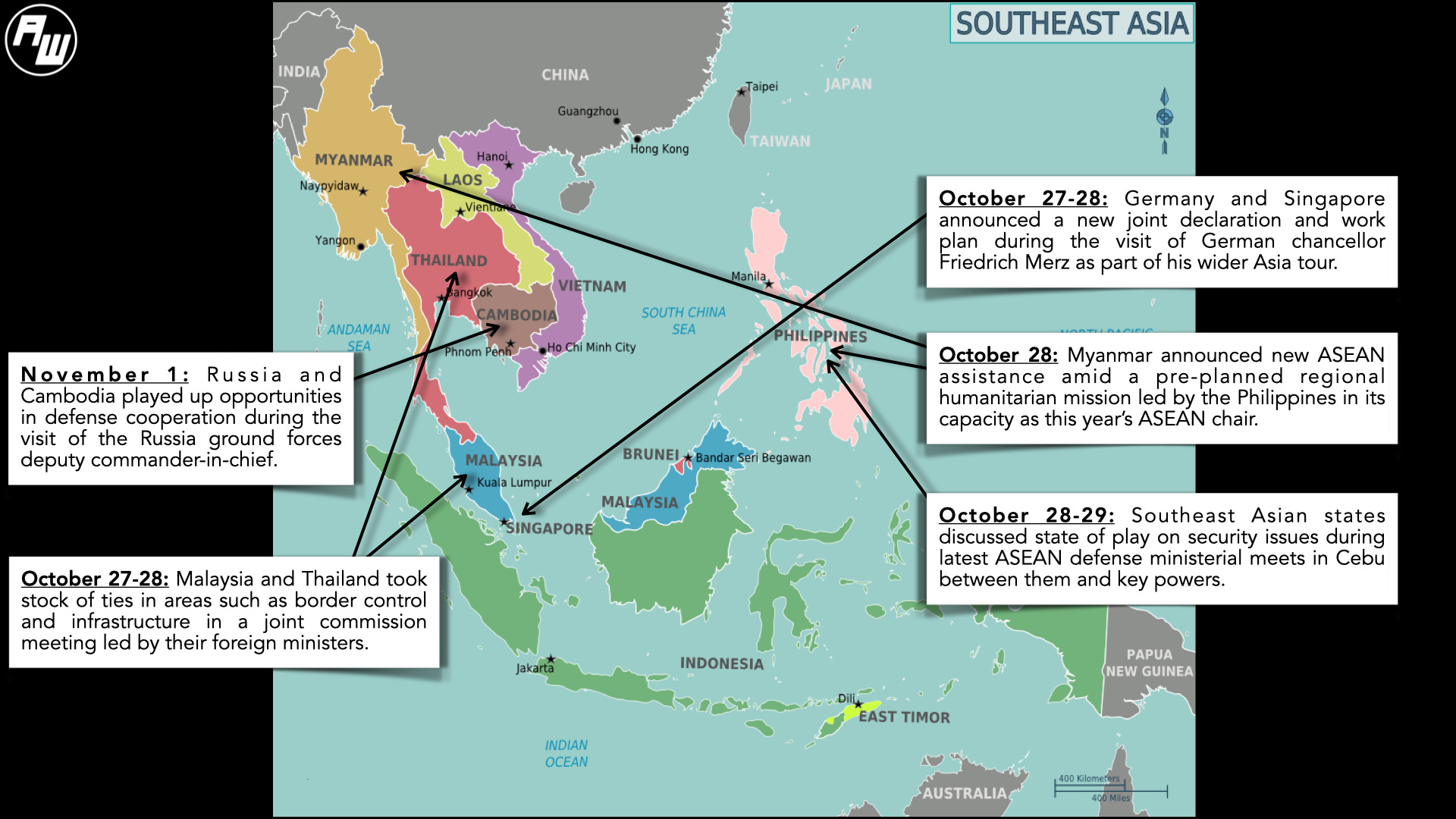
Mapping of regional developments, including new summit joint declaration and regional flashpoint mission outcomes;
Charting evolving geopolitical, geoeconomic and security trends such as transshipment crackdown; nuclear ambition claim; and trade deal inroads;
Tracking and analysis of industry developments and quantitative indicators including space signing; mineral prospects; downgrade worry and more;
And much more! ICYMI, check out our ASEAN Wonk review earlier in the week of a new book with lessons for regional states in China’s shadow.
This Week’s WonkCount: 2,267 words (~10 minutes)


New Joint Declaration; Regional Mission Outcomes & More

Global Scam Check; High-Risk Jurisdictions Call & Border Update
“Several agencies also recommended changes to enhance federal efforts, including stronger diplomatic pressure on Southeast Asian governments [and] improved oversight and accountability for U.S. telecommunications and social media companies,” according to the findings of the latest of several reports emerging from the U.S. Congress on countering global scams (link).

“In the near term, the priority should be modest steps,” cautions a new report released by the International Crisis Group on working towards a more durable thaw in the Cambodia-Thailand border conflict which addresses the role of wider regional and international actors (link).

“Myanmar will remain on the list of countries subject to a call for action until its full action plan is completed,” notes the latest Myanmar section of an update released by the Financial Action Task Force (FATF) which leads global action to tackle money laundering, terrorist and proliferation financing (link).
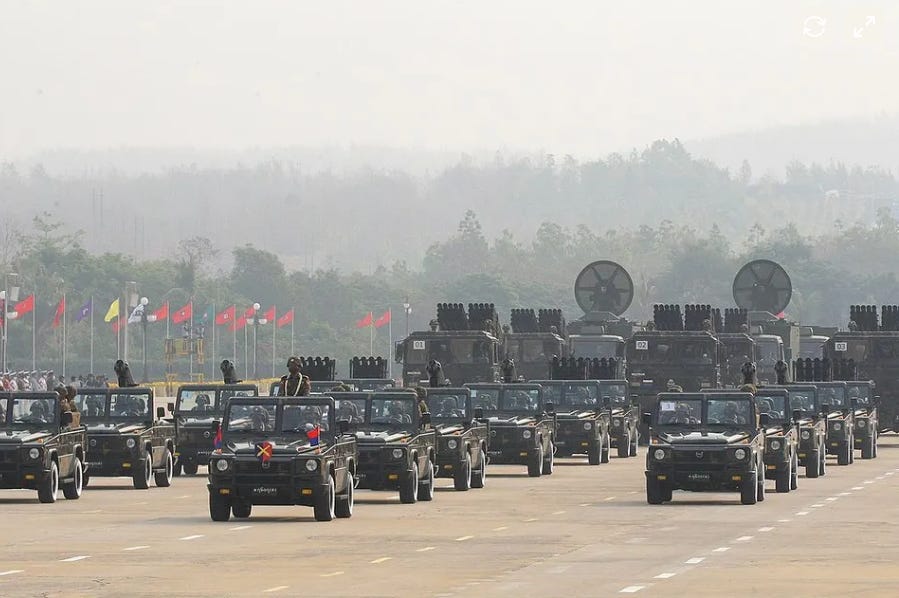

China Downgrade, US Framework Headline ASEAN Defense Meets
What’s Behind It
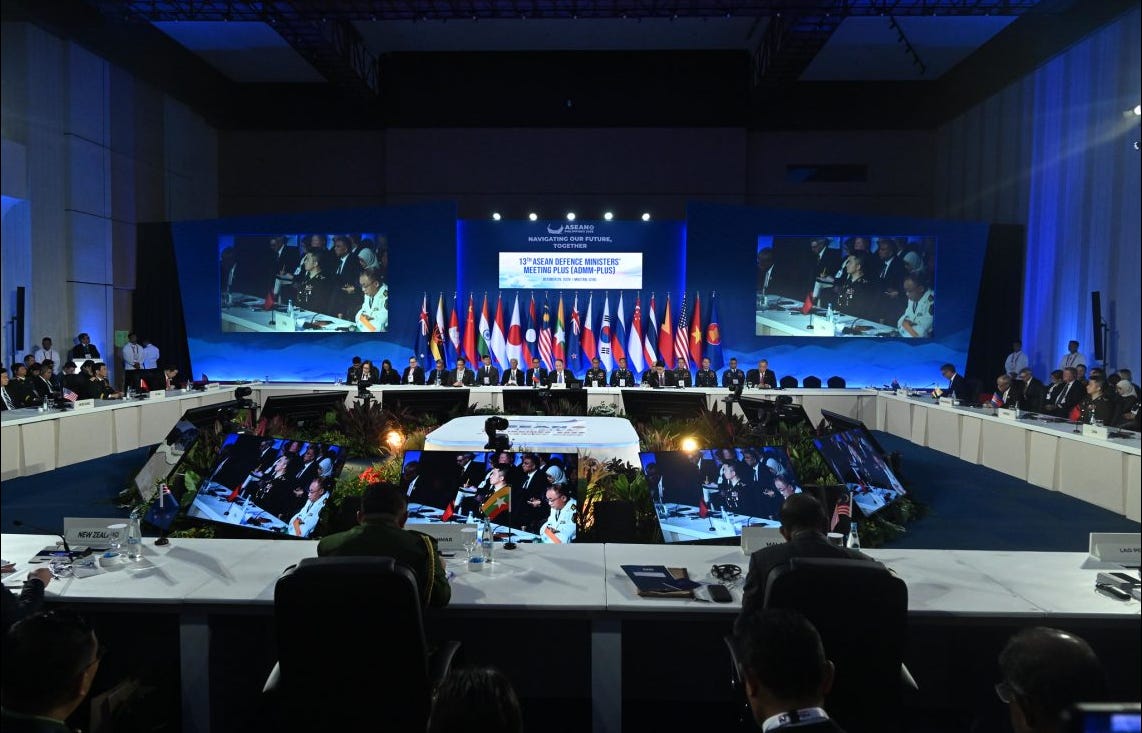
Southeast Asian states discussed the state of play on a range of security issues in ministerial defense meetings between themselves and major powers this past week1. The meetings occurred alongside other regional geopolitical developments2. The foreign ministers of the Quad grouping spotlighted some key datapoints related to Southeast Asia cooperation within the evolving regional and global geoeconomic environment3. Separately, within Southeast Asia itself, Myanmar state media highlighted the humanitarian supplies that followed a pre-planned ASEAN mission led by the Philippines as the grouping grapples with managing differing intraregional perspectives4.
Select Key Recent Geopolitical Events in Southeast Asia And The Indo-Pacific
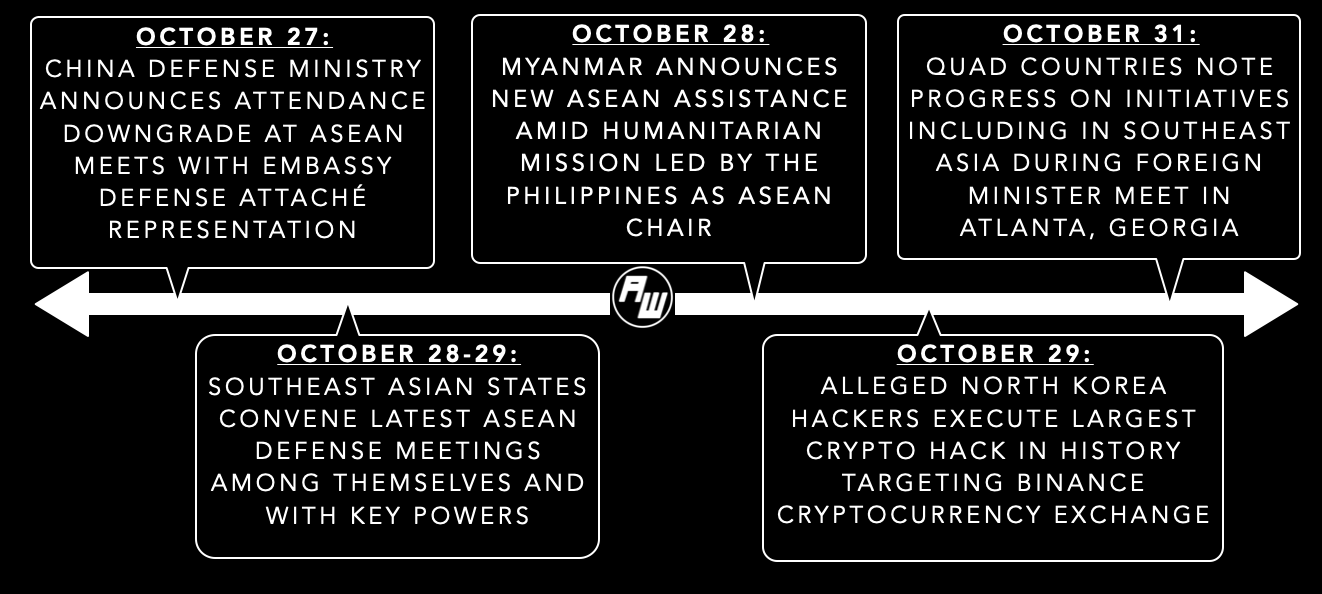
The meetings exposed ongoing dynamics between major powers and regional states. China state media amplified what Beijing had earlier confirmed as a downgrading of its presence at the regional meetings by connecting it to its views of the Philippines as the ASEAN chair which have been expressed through the year, with an embassy defense attaché attending in the lowest-level of Chinese representation of its kind to the forum5. Separately, in an example of a forward-looking datapoint, the United States publicized some details regarding ongoing conversations around a defense framework with ASEAN countries planned for 2027 during Singapore’s ASEAN chairmanship year6.
Why It Matters
The dynamics also spotlighted datapoints to watch with wider implications (see originally generated ASEAN Wonk table below on notable areas to monitor and additional specifics. Paying subscribers can read on for more on what to expect and future implications in the rest of the “Why It Matters” and “Where It’s Headed” sections, along with paid-only sections of the newsletter as usual).
Future Policy Datapoints, Along With Select Lines of Effort And Major Domains
