

From evolving U.S.-China competition to the South China Sea, a new edited volume suggests foreign policy futures in the Philippines hinge on a contested domestic landscape evolving under President Ferdinand Marcos Jr’s tenure.
WonkCount: 1,487 words (~7 minutes)

Review: Beyond Geopolitics, Where Next for the Philippines?
Context
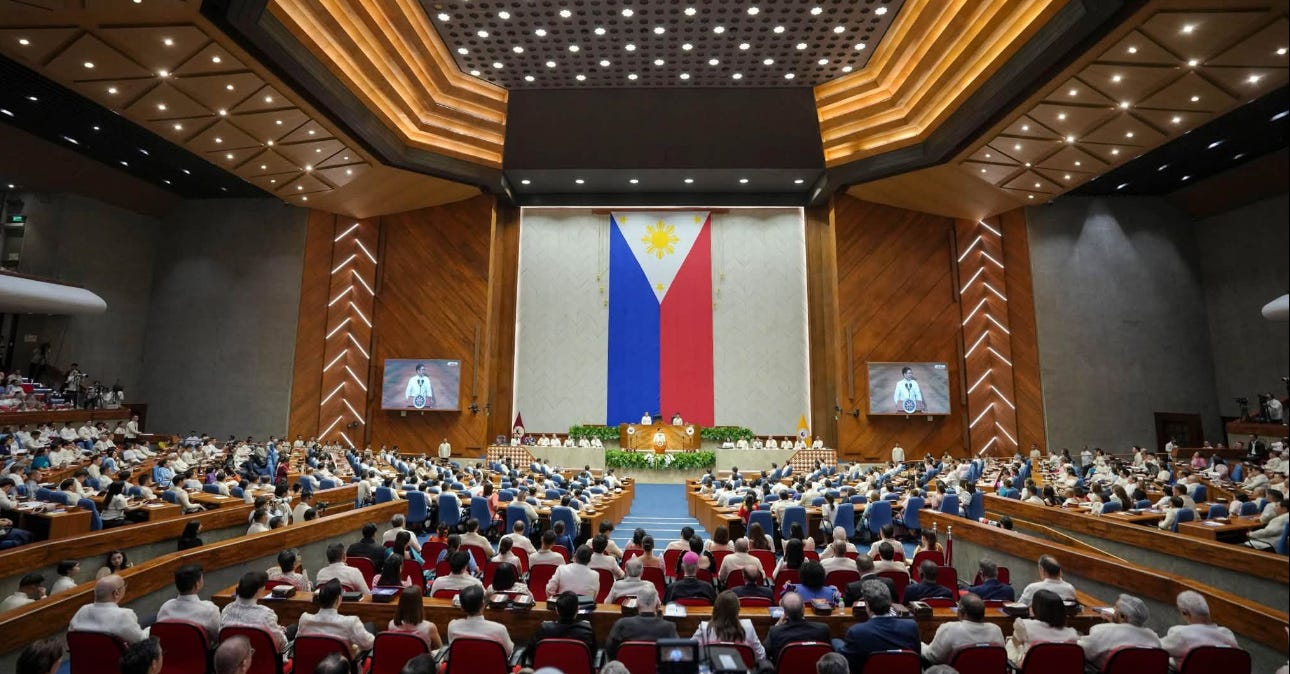
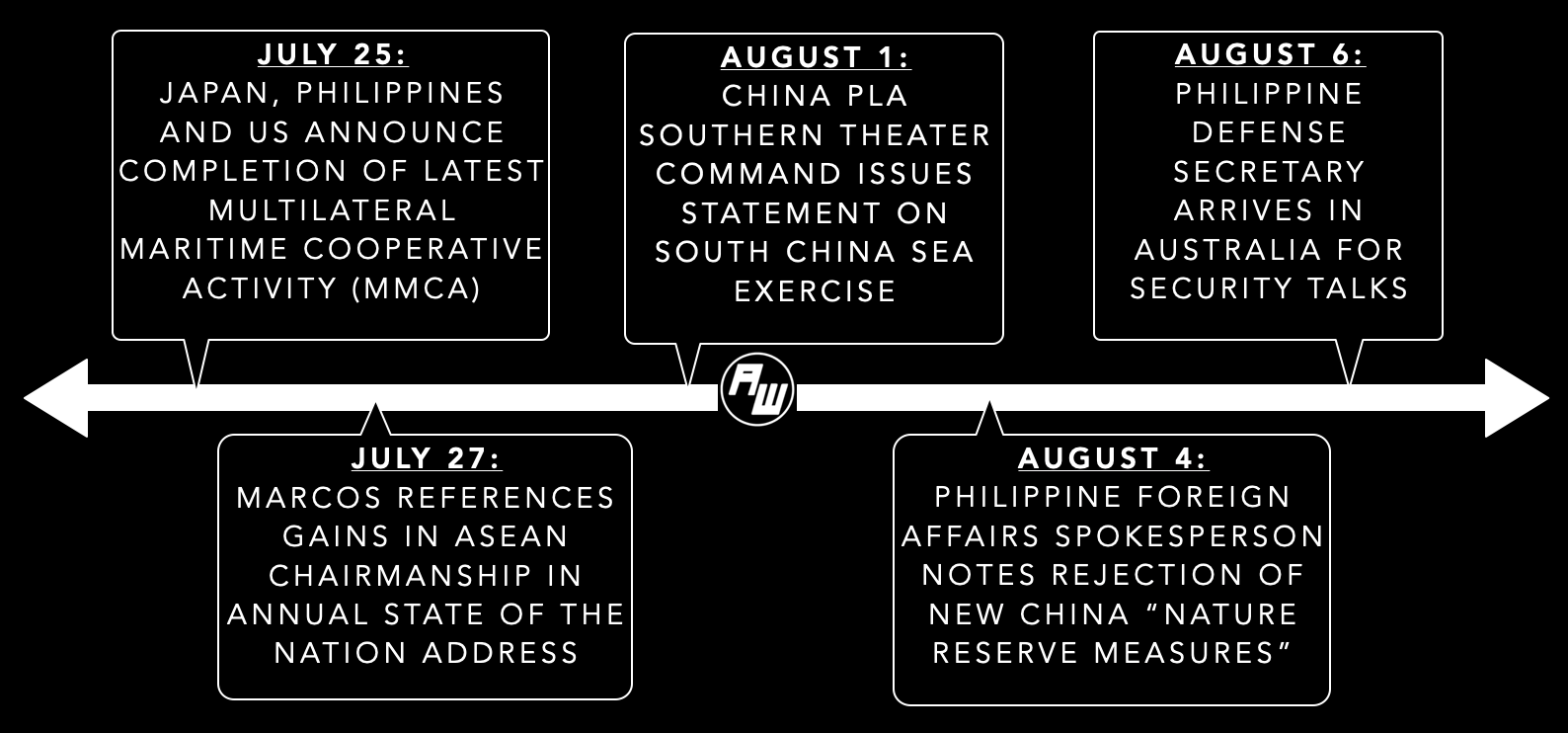
“Together, we found ways to alleviate the dire consequences of the war in the Middle East,” Philippine President Ferdinand Marcos Jr. reflected this past week on regional initiatives being undertaken during the country’s ASEAN chairmanship in the most recent iteration of his annual State of the Nation Address (SONA)1. While some of these initiatives are still in the works, Marcos’ references to global headwinds were nonetheless notable as part of ongoing attempts to connect these dynamics with domestic priorities still being advanced under his administration, with other cases in point being the South China Sea and the direction of the U.S.-Philippine alliance.
Select Key Recent Foreign and Security Policy Developments Related to the Philippines
A new book Beyond Geopolitics edited by Cleo Anne A. Calimbahin and Bjorn Dressel provides a comprehensive lens with which to view where the Philippines is and where it is headed under and beyond President Ferdinand Marcos Jr, with implications for the country’s foreign and security policy outlook2. In doing so, it provides one of the few early deep-dive assessments on dynamics surrounding the the country’s current and evolving future outlook under Marcos, beyond other book-length accounts we have reviewed here on ASEAN Wonk that addressed aspects such as the geopolitical and geoeconomic challenges amid the attempted China pivot away from the U.S.-Philippine alliance under Marcos’ predecessor Rodrigo Duterte as well as the transition between the two administrations. “These dynamics will play a significant role in shaping the competition among political families for the 2028 presidential race,” the book forecasts before going on to examine these dynamics with implications that extend out to major Indo-Pacific and global capitals3.
Analysis
The book also highlights key datapoints to watch on potential futures (see originally-generated ASEAN Wonk table below for a summary of important contours. Paying subscribers can also read the rest of the “Analysis” section and “Implications” section looking at how these dynamics play out in the future).
Future Datapoints to Watch, Along With Key Policy Aspects And Major Pillars
