

Greetings to new readers and welcome all to the latest edition of the weekly ASEAN Wonk BulletBrief! If you haven’t already, you can upgrade to a paid subscription for $5 a month/$50 a year below to receive full posts by inserting your email address and then selecting an annual or monthly option. You can visit this page for more on pricing for institutions, groups as well as discounts. For current paid subscribers, please make sure you’re hitting the “view entire message” prompt if it comes up at the end of a post to see the full version.
For this iteration of ASEAN Wonk BulletBrief, we are looking at:
Assessing the geopolitical and geoeconomic significance of outcomes out to 2027 following the recent round of APEC summitry in China;
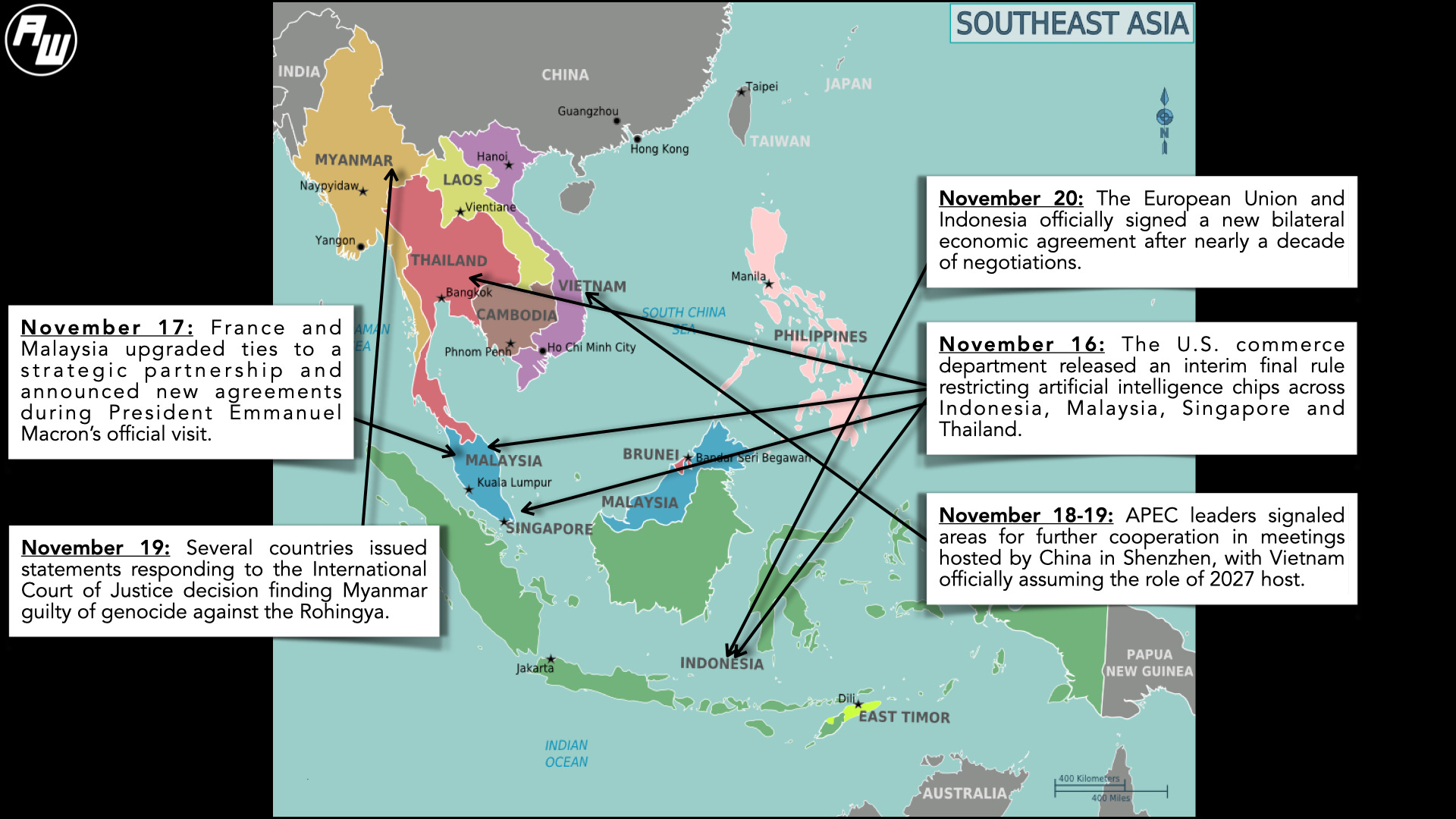
Mapping of regional developments, including artificial intelligence anxiety and new trade agreement inroads;
Charting evolving geopolitical, geoeconomic and security trends such as submarine cable deadline; rare earth restrictions; and space partnership;
Tracking and analysis of industry developments and quantitative indicators including new digital law; aviation expansion; new AI notification and more;
And much more! ICYMI, check out our new ASEAN Wonk review this past week of a new book by a former intelligence analyst on a shadowy intelligence apparatus and wider implications.
This Week’s WonkCount: 2,217 words (~10 minutes)


Artificial Intelligence Anxiety; New Trade Agreement & More

Information Integrity; Trade Deal Significance & Dispute Management
“Looking ahead, agentic AI will be an important driver of change, but it is only one part of a broader transformation,” according to a new report on information integrity published by the World Economic Forum (link).

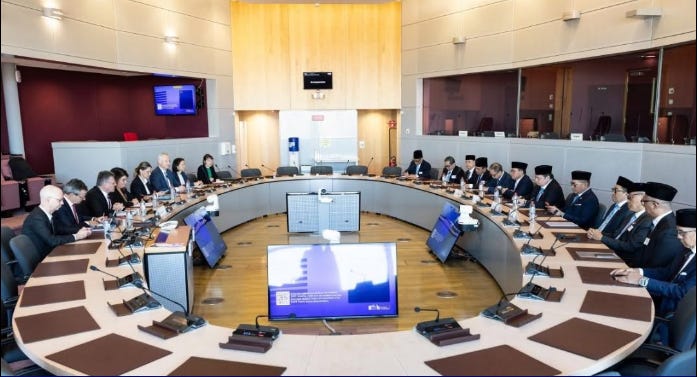
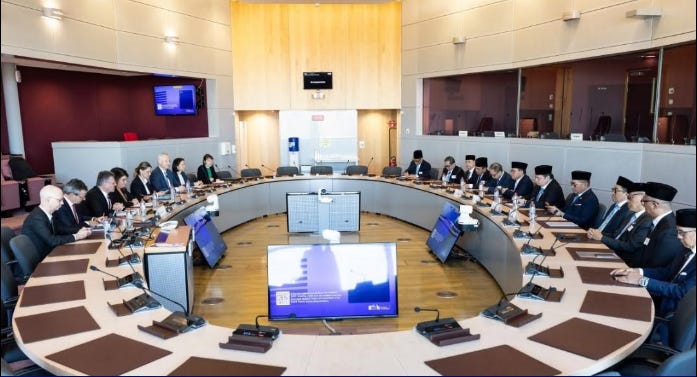
“[T]he responsibilities facing all stakeholders following the Brussels signing will grow even heavier,” argues a new op-ed by Indonesia’s coordinating economy minister in The Jakarta Post on the next steps needed to realize the gains from a recently concluded EU-Indonesia economic agreement (link).
Facebook/European Union in Indonesia “There remains a fragile border stability, and the possibility of recurring conflicts still exist between Cambodia and Thailand,” according to a new policy paper on managing Cambodia-Thailand cross border tensions published by the Institute for Strategic Policy Foundation (link).


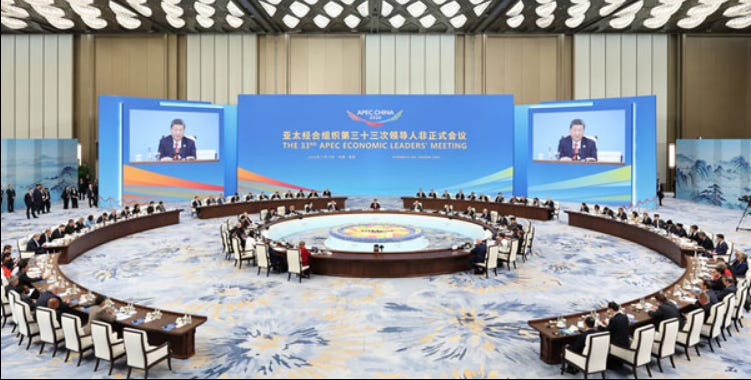
APEC Shifts to 2027 Vietnam Host Year in Trilateral Shadow
What’s Behind It
Regional leaders signaled areas for further geoeconomic cooperation into 2027 during APEC summit meetings hosted by China. The APEC meetings in Shenzhen took place alongside a series of broader notable geopolitical and geoeconomic developments in the wider Indo-Pacific region. Responses surfaced from Japan to Russian aircraft movements that were reported to have earlier landed in Vietnam as scrutiny was on the U.S.-China-Russia trilateral summit meeting within regional summitry1. There was also focus on dynamics in Taiwan ahead of local elections scheduled to take place there later this month2.
APEC Shifts to 2027 Vietnam Host Year Amid Trilateral Shadow
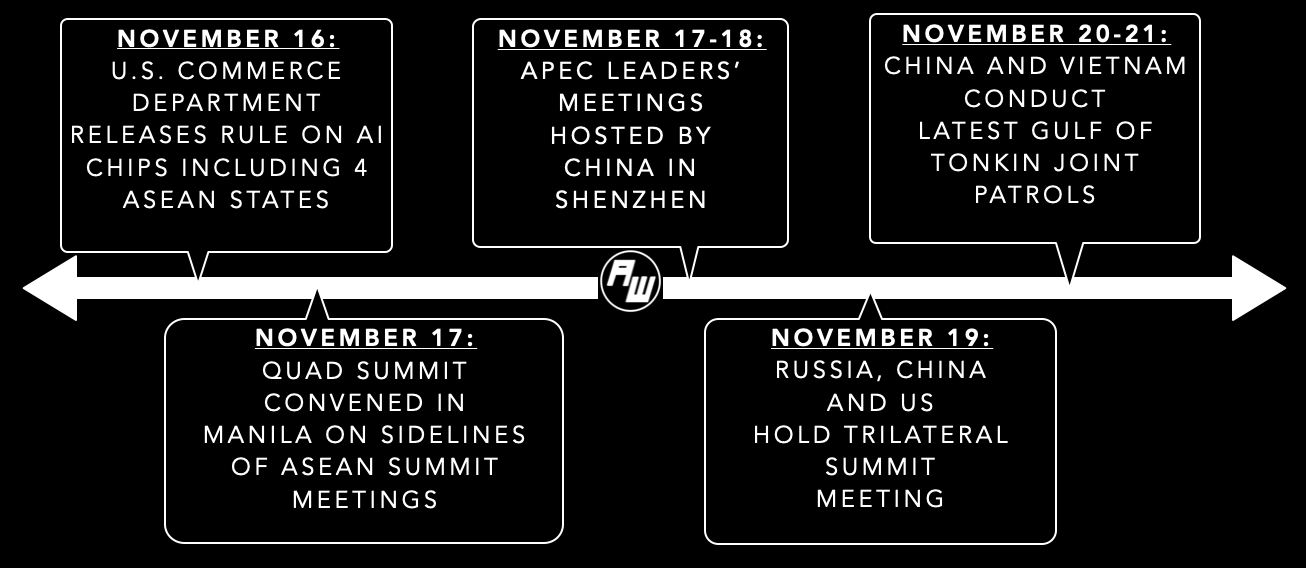
The meetings also capped off an active week of regional meetings featuring notable developments involving Southeast Asian states. Metrics-wise, officials briefed ASEAN meetings during the past week in Manila resulted in over 100 outcome documents, even though developments on certain external partners such as the United States generated more headlines including a new work plan for advancing ties during President Donald J. Trump’s attendance alongside other bilateral trade pacts3. Tensions between Cambodia and Thailand also continued to flare up alongside meetings such as the Francophonie summit as both sides work through existing mechanisms to manage cross-border challenges4.
Why It Matters
The dynamics also spotlighted datapoints to watch with wider implications (see originally generated ASEAN Wonk table below on notable areas to monitor and additional specifics. Paying subscribers can read on for more on what to expect and future implications in the rest of the “Why It Matters” and “Where It’s Headed” sections, along with paid-only sections of the newsletter as usual).
Notable Policy Datapoints, Along With Key Cooperation Areas And Major Pillars
